Transparency & Accountability
Ken Roth says AIPAC now fights Israel's critics without naming Israel
Graphic: Times of Palestine
Original Reporting
Kenneth Roth, who ran Human Rights Watch for twenty-nine years, distilled a new investigation of AIPAC's election spending into a single charge this week: the lobby now spends record sums against critics of Israel while avoiding the word Israel itself. He posted the observation on X on Monday, linking a New York Times interactive on the group's finances.
"The pro-Israel lobby AIPAC is spending a fortune to oppose candidates who criticize Israel, but Israel has become so unpopular because of its brutal repression that AIPAC rarely mentions it."
Kenneth Roth, on X, August 4, 2026
What the Times documented#
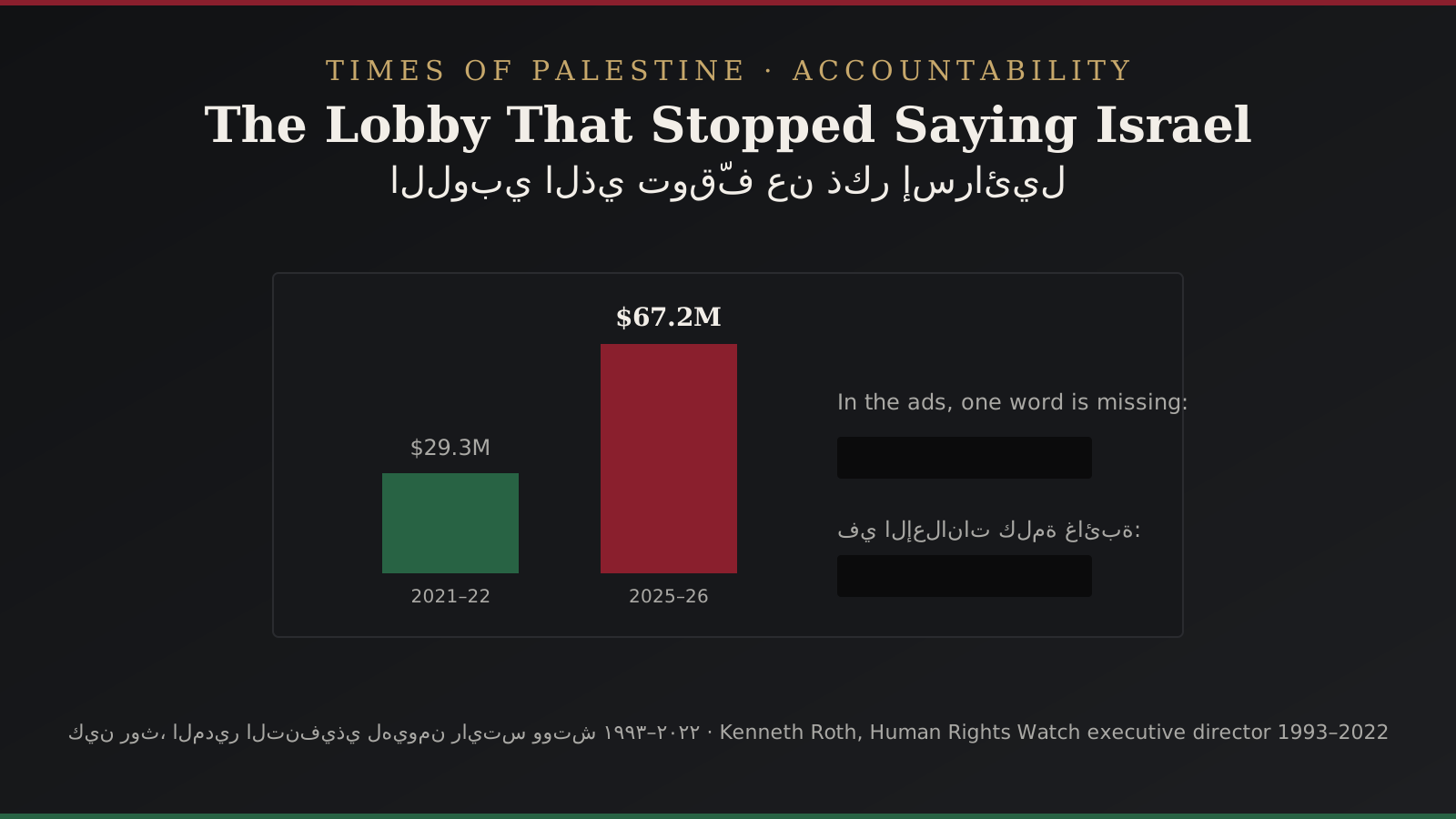
The New York Times investigation he cites, published Monday, traces how AIPAC became one of the biggest spenders in American elections in under five years. Its political action committees more than doubled their outlays, from $29.3 million in the 2022 cycle to $67.2 million — much of it aimed at Democratic primaries.
That is a rupture with the group's own history. For decades AIPAC worked as a bipartisan lobbying operation that endorsed no one and wrote no campaign checks of its own; the paper dates the turn to its decision, announced in late 2021, to enter electoral politics directly.
Roth's addition is the part the spending data cannot say about itself: what the money's messaging omits. Campaign advertising funded by the lobby's committees runs on crime, infrastructure or a rival's record, he argues, because the cause the money serves has become an electoral liability. That characterization is his; the Times ledger documents the sums, not the silence.
Who is saying it#
The charge carries the weight of the messenger's career. Roth was executive director of Human Rights Watch from 1993 to 2022, the tenure in which the organization built its Israel and Palestine files — including the 2021 report that found Israeli officials committing the crimes against humanity of apartheid and persecution. He now teaches at Princeton's School of Public and International Affairs.
Since leaving the organization he has kept up a daily stream of legal commentary on Gaza and the West Bank, and this newspaper now tracks his feed as a standing source. His post is a claim of interpretation, precisely quoted above; readers can weigh it against the Times's own figures at the source.
The pattern our own reporting found#
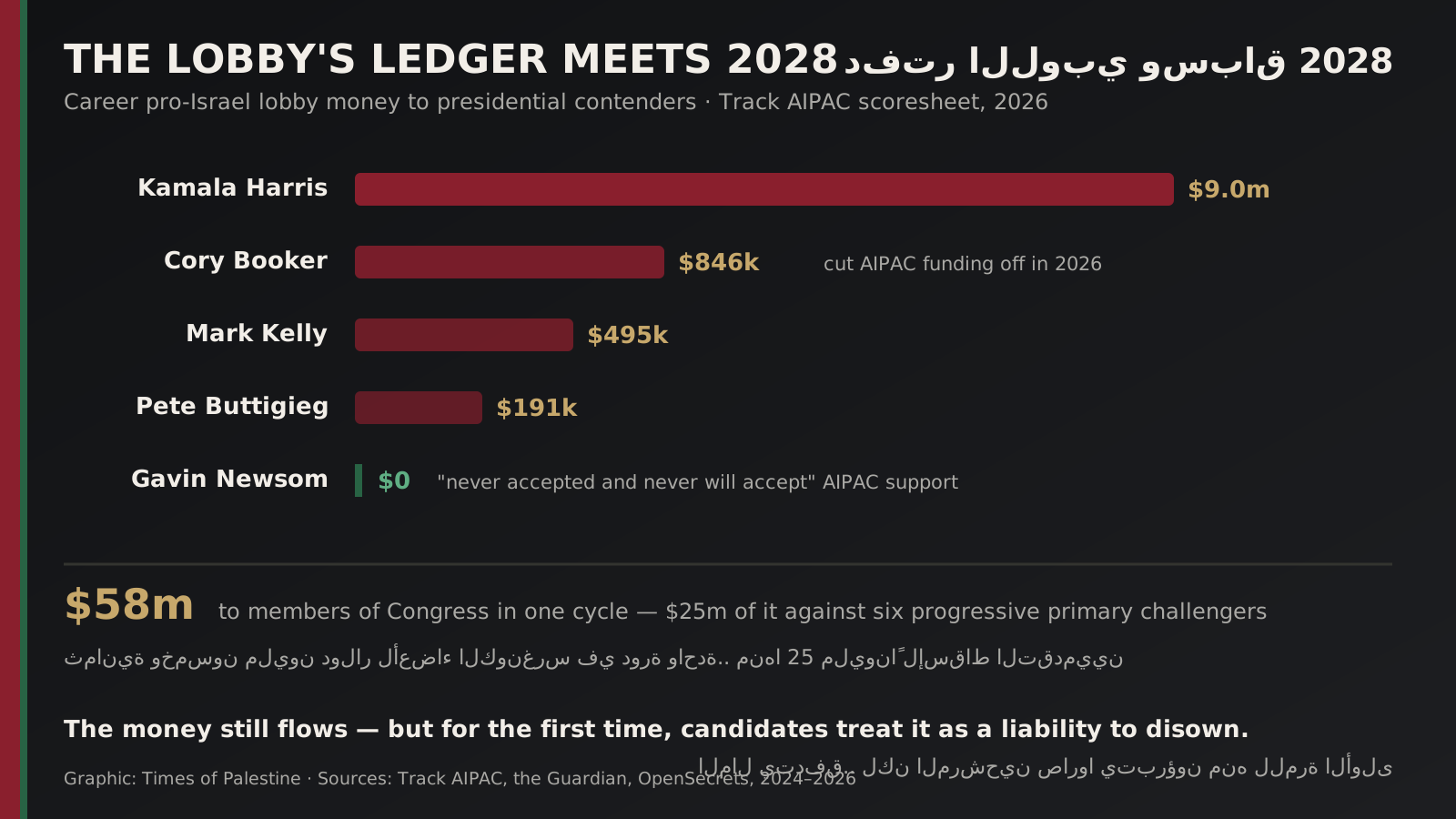
Roth's reading matches the trajectory this newspaper reported on the 2028 presidential field: candidates now disown AIPAC's endorsement while its committees route money through layered funds whose names disclose nothing. The lobby's brand retreats; its budget grows.
For Palestinians the two numbers move in opposite directions for one reason. American public opinion has shifted through three years of televised destruction in Gaza, and the cost of association with Israel's conduct is now priced into US electoral politics — high enough, on Roth's reading, that even Israel's best-funded advocate declines to say its name.