In January 2025, the official X account of the State of Israel published a post about a woman who has never held public office, never managed a budget, never been charged with an offence in any jurisdiction, and was nine years old when her father died.
The post said Zahwa Arafat is worth eight billion dollars. It said she owns prime real estate across London. It said she lives in Paris. It said that despite this she qualifies as a refugee under UNRWA's criteria, and it offered her as proof of how the agency operates.
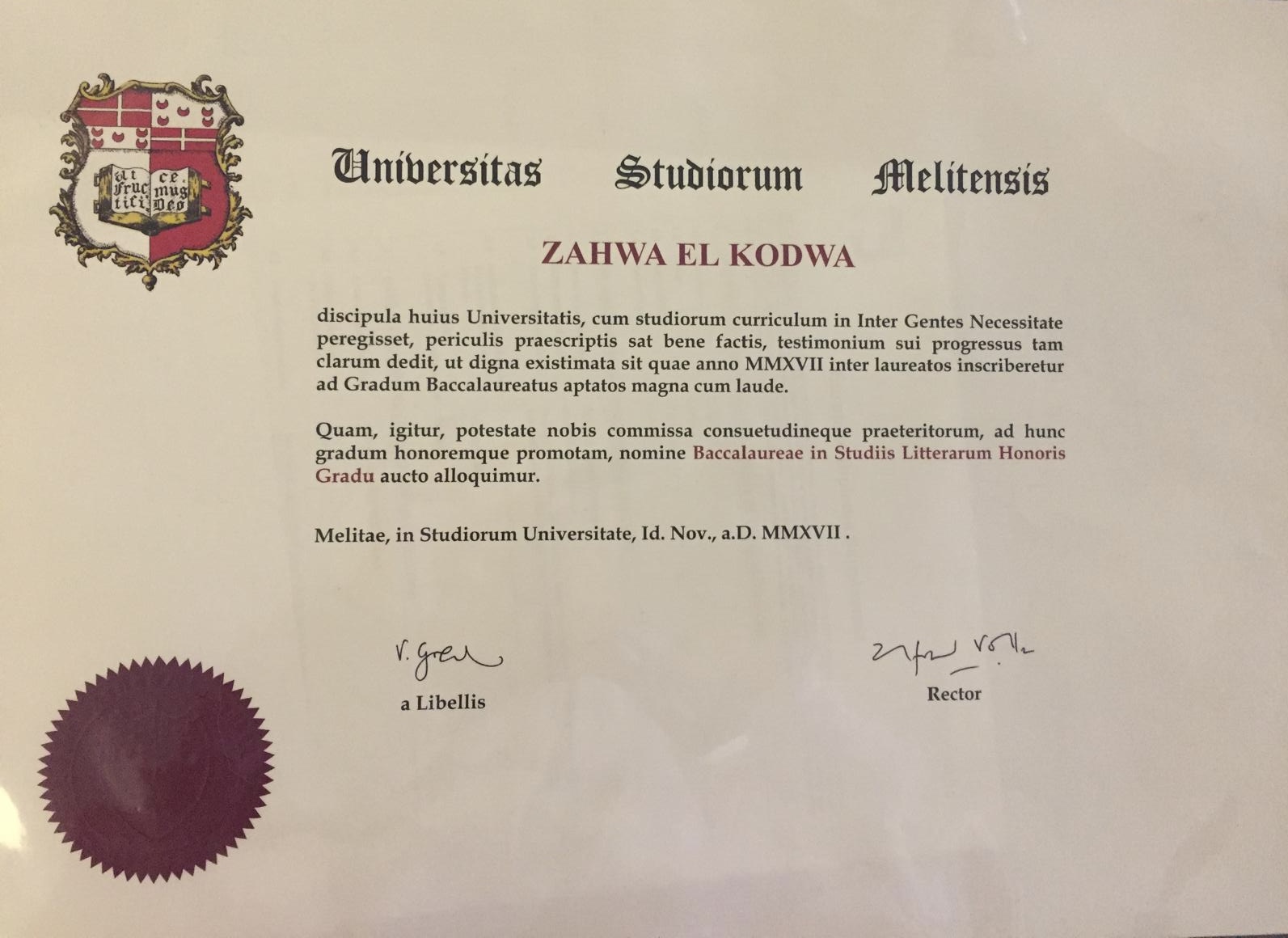
Start with the checkable part. Zahwa Arafat does not live in Paris. She has lived in Malta since she was a child, a fact recorded in wire copy, in photo captions filed by AFP from her mother's home, and in her mother's own on-the-record interviews going back more than fifteen years. She took a bachelor's degree at a Maltese university. If the easiest verifiable detail in a four-sentence claim is wrong, the reader is entitled to ask what standard of care was applied to the other three.
There is no public record — no filing, no registry entry, no court document, no audit, no named source — supporting an eight-billion-dollar figure attached to this woman. There is no evidence she owns property in London. There is no evidence she has ever received a dollar from UNRWA. The number appears to have entered circulation through social media, was amplified by a state account with millions of followers, and has since been reproduced in Instagram reels, Threads posts, Substack essays and search-engine "net worth" pages that exist to harvest advertising revenue from curiosity. When users have asked AI chatbots to verify it, the machines have hedged — describing the figure as unverified while gesturing at "credible estimates" in the millions, which is itself a laundering operation: the specific fabrication is downgraded, but the underlying premise, that this private person is sitting on stolen Palestinian aid, survives the correction intact.
This is what a smear looks like in 2026. Not a single libel but a sediment — a claim repeated until repetition becomes its own evidence.
Figure 5 ANATOMY OF A CLAIM
Four assertions about a private citizen
Posted January 2025 by the official account of the State of Israel, concerning Zahwa Arafat — born 1995, no public office, never charged with anything, anywhere.
Billionaire, real estate owner, and eligible for UNRWA funds: Zahwa Arafat, the daughter of Yasser Arafat, is worth $8 billion, thanks to the “Palestinian aid” she inherited from her father. She owns prime real estate across London, lives in Paris, yet, according to UNRWA’s standards, she is considered a refugee and eligible to receive funds. This is how UNRWA operates.
View the original post on X · Reproduced verbatim as the exhibit under examination.
She is worth $8 billion
No filing, registry entry, audit, court record or named source has ever been produced.
UnevidencedShe owns prime real estate across London
No title record, company filing or address has ever been produced.
UnevidencedShe lives in Paris
She has lived in Malta since childhood. Wire photographs filed from her family’s Malta home in 2011 and 2012; family interviews from 2009 to 2025; a degree from a Maltese university.
False — and checkableShe is eligible for UNRWA funds as a refugee
No evidence has been offered that she has ever registered with, applied to, or received anything from UNRWA.
UnevidencedThe post remains publicly visible. No correction has been issued.
The story of how that sediment formed is a Palestinian story, and it is not a simple one. It is not the story of two innocent women wronged by outsiders. It is the story of a real crisis of Palestinian public finance, a real failure of accountability, and the way a woman's name became the place where that failure was buried instead of the place where it was excavated.
I. What is actually on the record
Any honest account has to begin by conceding the part that is documented, because the smear's durability comes precisely from its proximity to something true.
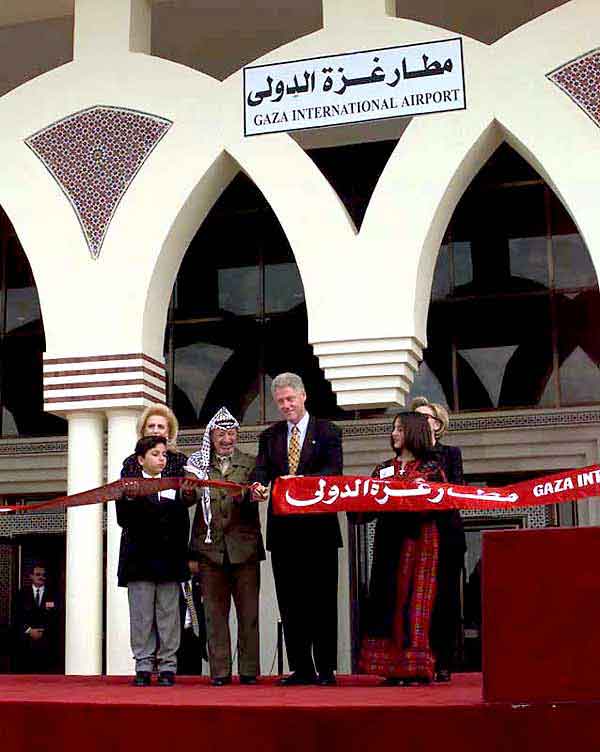
Palestinian public money under Yasser Arafat was not properly accounted for. This is not an Israeli talking point; it is the finding of the institutions Palestinians themselves invited in. In September 2003 the International Monetary Fund's resident representative in the West Bank and Gaza stated publicly that some nine hundred million dollars in Palestinian Authority revenue had been routed between 1995 and 2000 into a special account under Arafat's personal control rather than into the treasury. The money came from Israeli tax transfers and from Authority monopolies on cement, fuel and cigarettes. The IMF added an important qualification that is almost never quoted alongside the headline figure: most of it had been invested in Palestinian assets, and by the time of the audit the reformist finance minister Salam Fayyad had brought it under public control.
A parallel forensic audit, commissioned by Arafat's own finance ministry and led by American accountants, traced a secret investment portfolio worth close to a billion dollars — holdings in a Ramallah bottling plant, a Tunisian mobile operator, venture funds in the United States and the Cayman Islands. Fayyad published the portfolio's details rather than bury them.
So: a national leadership ran its finances as a personal fief, opaquely, for a decade. Palestinians paid for that, in schools not built and salaries not paid and, ultimately, in the moral authority the national movement forfeited. Anyone who wants to defend Suha Arafat by denying this record will lose the argument in the first exchange, and should.
But notice what the record establishes and what it does not. It establishes that Yasser Arafat controlled money that should have been in the treasury. It establishes that most of the traced portion was recovered by Fayyad's reforms. It does not establish where the untraced remainder went, and it does not, anywhere, establish that Suha Arafat holds it.
That gap — between a documented institutional failure and an undocumented personal accusation — is where the entire smear lives.
II. The genealogy of a number
Follow the money figures attached to Suha Arafat over twenty years and you find not an investigation but a game of telephone.
Figure 1 THE LEDGER OF FIGURES
What Suha Arafat was said to receive
Alleged monthly payments in circulation, 2003–2020. Same person, same period, same currency.
US newsmagazine, Nov 2004 — “people familiar with Arafat’s finances”
US network television, Nov 2003 — Israeli officials; later an unnamed PA official
Arabic press, 2011 — unattributed; she denied it specifically
Suha Arafat, Asharq Al-Awsat, 2011 — plus rent, described as the PLO pension
Suha Arafat, Israeli broadcaster Kan, 2020 — the same account, nine years later
A sixteen-fold spread. They cannot all be true.
Compiled from contemporaneous wire and broadcast reporting, 2003–2020.
One hundred thousand dollars a month. This is the load-bearing figure, the one everything else rests on. It entered mass circulation in November 2003 through an American network television investigation into Arafat's finances, sourced to Israeli officials. Wire agencies subsequently attributed the same figure to an unnamed senior official in Arafat's own office. It was never accompanied by a bank record, a transfer instruction, a budget line, or a named source willing to stand behind it. It was repeated in hundreds of subsequent articles as established fact.
Two hundred thousand dollars a month. An American newsmagazine, reporting in November 2004 on the succession fight, doubled it — sourced to unnamed "people familiar with Arafat's finances."
Twenty-two million dollars a year. This one is attributed to unnamed Palestinian officials in the chaotic weeks after Arafat's death, describing a settlement supposedly agreed with the widow out of secret accounts. It has been recycled ever since, including by media-monitoring organisations presenting it as a suppressed fact the world press refuses to report. Nobody has ever produced the agreement.
Fifty thousand dollars a month. Circulated in the Arabic press around 2011. She denied it publicly and specifically.
Twelve thousand dollars a month, plus rent. This is her own account, given on the record to a London-based Arabic daily in 2011 and repeated to an Israeli broadcaster in 2020, when the figure she named was ten thousand euros. She described it as the pension due to the head of the PLO and Fatah, paid to his widow, with her housing costs covered by the Authority.
Set these side by side. The spread between the lowest and highest monthly figures is more than sixteen-fold. They cannot all be true. Yet in the public record they do not compete — they coexist, each cited where it is most useful, none ever retracted. The only figure in the sequence that comes with a named source willing to be quoted and held to it is the smallest one, offered by the accused.
There is no honest way to say what the correct number is. There may well have been a stipend far larger than twelve thousand dollars in the Paris years; a woman living in the sixteenth arrondissement was not living on a modest pension. The point is narrower and harder to escape: after two decades, nobody outside the PLO's own accounts department has ever produced a document. An accusation this specific, repeated this often, by parties with this much investigative capacity, that still cannot be evidenced, is telling you something about the parties.
The most instructive single item is the hotel. It was widely reported that she had occupied an entire floor of a five-star Paris hotel for more than a year at a cost variously given as twelve and a half thousand euros or sixteen thousand dollars a night. The hotel said she had never stayed there. The denial was printed. It changed nothing. The detail was too good — too vivid, too easy to picture, too perfectly calibrated to enrage a family in Jabalia — to be given up merely because the only party in a position to know had said it was false.
And the hotel genre traveled, early and upmarket. In 2006, in the weeks after Hamas's election victory put Western aid to the Palestinians on the table, David Frum — the former White House speechwriter, by then a resident fellow at the American Enterprise Institute — wrote a column addressed to Canadian readers under the headline “Why Are We Subsidizing Palestinian Extremism?”, arguing that Canada's twenty-five million dollars a year in Palestinian aid should be rethought. His exhibit was the widow: she “reportedly occupies one of the last private houses on rue St. Honore” and “maintains a reception suite in the nearby Hotel Bristol, where rooms begin at $955 per day” — from which the column concluded there must be better uses for the money “than the subsidization of extravagant lifestyles or terrorist murder.” The word bearing the entire weight is reportedly: no document, no named source, the 2003–04 sediment recycled whole, down to a street address and a room rate for a hotel whose management had already denied she stayed there. Note the date, and note the function. Nineteen years before a state account offered a daughter's invented billions as proof of “how UNRWA operates,” a mother's unsourced hotel bills were already being offered, from one of Washington's most influential think tanks, as a reason to stop funding Palestinians. The aid-cutting argument did not stumble across the smear; it reached for it. The column remains on the institute's website, uncorrected.
III. The investigation that never became a case
In October 2003 the Paris prosecutor's office opened a preliminary inquiry into transfers totalling around eleven and a half million dollars from a Swiss institution into two accounts held in France by Suha Arafat. It became public in February 2004 when a satirical weekly published it, and it went around the world in a day.
Almost everything the coverage implied was wrong about what had actually happened.
French officials went out of their way at the time to describe the inquiry's limits. It was preliminary. Police were not involved. No formal investigation had been ordered, because the threshold for one — a determination that the funds were of illicit origin — had not been met. The referral had originated in a Bank of France inspection and a routine anti-money-laundering flag. Prosecutors said they would know within months whether there was any basis to proceed further.
She was never charged. No formal investigation was ever opened. No indictment, no trial, no verdict, no asset seizure, no public disposition of any kind was ever reported in the two decades since. The inquiry simply stops appearing in the record.
Consider what happens to a reputation in that silence. The opening of a preliminary examination generated global headlines. Its evaporation generated none. In the public memory the sequence collapses into a single impression — she was investigated for money laundering — which is true, and which functions, in every practical sense, as a conviction. Every subsequent article can now cite the investigation. None has to report that it produced nothing, because nothing is not a story.
Her own response at the time was combative and, in one respect, revealing. She did not deny that money had reached her accounts. She asked what was strange about a husband sending money to his wife, said the funds had arrived legally, and offered to answer any question about their source or use. She also accused Ariel Sharon of driving the leak to deflect from the corruption investigations then closing around his own sons — a charge that was self-serving and also happened to describe an accurate feature of the moment. Both things can be true. The timing of a leak is not a defence to its substance; nor is the substance of a leak a defence to its timing.
IV. Tunisia: the part that is not a smear
Any article that treats Suha Arafat purely as a victim will not survive contact with Tunisia, and Palestinian readers deserve better than a brief that collapses under cross-examination.
Figure 2 CLAIM VS. RECORD
What was announced, and what was ever established
Six claims that shaped the public memory of the Arafat family finances.
Suha Arafat was investigated for money laundering in France
Preliminary inquiry opened October 2003. French officials stated the illicit-origin threshold was not met. No formal investigation, no charge, no public disposition, ever.
She lived on an entire floor of a five-star Paris hotel
The hotel said she had never stayed there. The denial was published. The claim continued to circulate unchanged.
She received $100,000 a month from Palestinian funds
No bank record, transfer instruction, budget line or named source has been produced in twenty-two years.
Zahwa Arafat is worth $8 billion and owns London property
No filing, registry entry, audit or court record exists. The same post places her in Paris; she has lived in Malta since childhood.
She was subject to a Tunisian arrest warrant
Correct. Issued October 2011 over a private school venture with the Ben Ali family’s circle — a Tunisian commercial matter, not Palestinian public money.
$900 million of Palestinian revenue was diverted, 1995–2000
Correct, per the IMF. Into an account controlled by Yasser Arafat. Most of the traced portion was recovered under Salam Fayyad’s reforms.
Sources: Paris prosecutor statements 2003–04; IMF, September 2003; Tunisian Justice Ministry, October 2011; wire reporting.
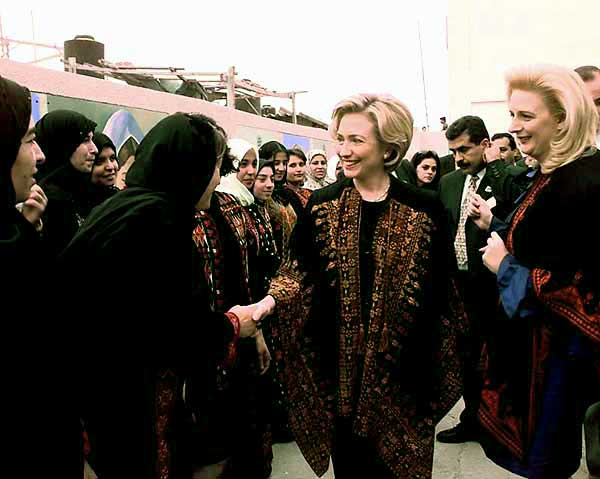
After her husband's death she moved to Tunis, where the PLO had been headquartered in exile. In 2006 she was granted Tunisian citizenship and became a fixture alongside Leila Trabelsi, the president's wife, whose extended family had by then captured a substantial share of the Tunisian economy. Together they founded an international school in Carthage. This was not the conduct of someone at arm's length from power; it was the conduct of someone who understood exactly how proximity to a ruling family converts into commercial opportunity, in Tunis as anywhere else.
Then it went wrong. The two women fell out — reportedly over a move by Trabelsi against a competing school. A United States diplomatic cable later released by WikiLeaks records Suha Arafat meeting the American ambassador and speaking with striking contempt about the ruling family, describing a president who did whatever his wife told him. In 2007 a presidential decree stripped her of the citizenship she had held for less than a year. She was declared persona non grata and expelled. She went to Malta, where her brother was serving as Palestinian ambassador.
After the revolution that ousted Ben Ali, Tunisia's new authorities began pursuing hundreds of cases connected to the old regime. In October 2011 they issued an international arrest warrant naming her in connection with the school. Her account, given immediately and consistently: she had put in three hundred thousand dinars borrowed from a Tunisian bank, repaid the loan, sold her shares to a niece of Trabelsi, and cleared thirty thousand dinars on the transaction. She said she had documents, had instructed a Tunisian lawyer, and would produce them.
That warrant is not a fabrication and should not be described as one. But its meaning has been systematically misrepresented, in both directions.
It is routinely deployed as evidence that she looted Palestinian aid money. It is not. It concerns a private commercial venture in a third country, financed on her account by a Tunisian bank loan, in a jurisdiction that was at the time issuing warrants by the hundred against anyone who had transacted with the Trabelsi clan, and which has since seen its judiciary criticised by international human rights organisations for exactly this kind of instrumentalisation. She was, sequentially, a beneficiary of that regime's patronage, a target of its retaliation, and then a defendant in the revolution's dragnet against it. All three are true. None of them is a finding about Palestinian public money.
V. Who wanted this story, and what it bought them
A smear is not a mistake. It is a product, and products have buyers. There were four.
Figure 3 THE MARKET FOR A STORY
Four buyers, and what each one got
A smear is not a mistake. It is a product, and products have buyers.
2002–2004
The Israeli government
What they put into circulation
Military intelligence briefs the Knesset that Arafat personally controls $1.3bn. Israeli officials are the sourcing behind the $100,000-a-month figure.
What it bought them
Converts a national leadership into a criminal enterprise. Once a movement is a racket, the question of what it is owed politically stops being asked.
2004–present
The PA and Fatah old guard
What they put into circulation
The largest and least sourced figures — $22m a year, “hundreds of millions inherited” — are attributed to unnamed Palestinian officials, not Israeli ones.
What it bought them
Neutralises a widow who had criticised PA corruption publicly, controlled access to the dying president, and knew where accounts were.
2007–2011
Ben Ali’s Tunisia
What they put into circulation
Strips her citizenship by decree after she disparages the ruling family to the US ambassador. Post-revolution, her name joins the Trabelsi dragnet.
What it bought them
Removes an inconvenient guest, then supplies the world with a court document that reads, at a glance, as proof of everything else.
2010s–now
The content economy
What they put into circulation
“Net worth” pages, viral posts, AI-generated encyclopedia entries. A state account puts $8bn in front of millions at zero cost.
What it bought them
Revenue, engagement, and a permanent answer to anyone who says Palestinians in Gaza need food.
Analysis. Attributions are to the reporting cited in this article.
The first buyer was the Israeli government between 2002 and 2004. This was the period of the "no partner" doctrine — the argument that there existed no Palestinian interlocutor with whom a settlement could be reached, and therefore no negotiation to be had. Arafat was confined to a shelled compound in Ramallah. Israeli military intelligence briefed the Knesset that he personally controlled 1.3 billion dollars; Palestinian officials called it an attempt to discredit him, which it was, whether or not the number had any basis. Israeli officials were the sourcing behind the hundred-thousand-a-month figure. The corruption frame did specific political work: it converted a national leadership into a criminal enterprise, and a national movement into a racket. Once that conversion is made, the question of what Palestinians are owed politically stops being asked. The wife in Paris was the perfect vehicle — she required no strategic analysis, only a photograph.
The second buyer was inside the Palestinian house. This is the part that Palestinian readers most need to sit with, because it is the part that Israeli and Palestinian narratives converge on and neither is inclined to examine.
Suha Arafat was a problem for the Authority's old guard long before her husband died. She had denounced Palestinian corruption, cronyism and human rights abuses publicly and repeatedly, from a position of unusual immunity. When her husband lay dying in a French military hospital, she controlled physical access to him — French medical privacy law gave her, not the Authority, the final say — and she accused his successors on live television of trying to bury him alive. Reporting from that period describes emissaries offering her a two-million-dollar settlement, which she refused, and a fight over what she knew about the location of accounts.
A widow who possessed information about PLO finances and had shown a willingness to use a microphone was a live threat to men whose own exposure was considerably greater than hers. Discrediting her in advance was cheap, effective and permanent. It is not a coincidence that some of the largest and least sourced figures in the entire archive — the twenty-two million a year, the "hundreds of millions inherited" — are attributed to unnamed Palestinian officials rather than to Israeli ones. When she publicly criticised the Authority again in 2020, she said openly that she feared her stipend would be cut in retaliation.
The old guard's incentive was straightforward. Every hour the Palestinian public spent asking what Suha Arafat had was an hour it did not spend asking what Mohammed Rashid had, or what became of the untraced portion of the nine hundred million, or why no Palestinian institution has ever published a full accounting. She was a lightning rod, and lightning rods are installed on purpose.
The third buyer was Ben Ali's Tunisia, which expelled her by decree for insulting the ruling family and then, after the revolution, found her a convenient name to add to a list.
The fourth buyer is the machine we all now live inside. The 2020s smear is not authored by anyone in particular. It is generated by a content economy in which "net worth" pages about people who have no public financial profile are produced at scale because the search traffic monetises; in which a state account can put an unsourced eight-billion-dollar figure in front of millions of people at no cost; in which the claim is then re-encoded into AI-generated encyclopedia entries and chatbot answers that reproduce the frame while gently hedging the number. The correction is always smaller than the claim, and it always arrives later.
VI. The asymmetry that gives the game away
Here is the detail that should end the argument for any reader paying attention.
Figure 4 THE ASYMMETRY
Who held the money. Who holds the blame.
Both columns are drawn from the same body of reporting — including the most hostile.
Yasser Arafat
Control of funds
- IMF: $900m in revenue routed to an account under his personal control, 1995–2000
- Forensic audit: a secret portfolio worth close to $1bn
- Sole signatory over monopolies on cement, fuel and cigarettes
How he is remembered
- Ascetic. Frugal. Lived in a shelled compound.
- A former head of the Palestinian National Fund: no house, no orchard, no personal account.
- His accusers volunteered his personal austerity.
Suha Arafat
Control of funds
- No budget authority. No signing power. No office.
- Never charged, anywhere, with taking Palestinian public funds.
- No bank record has ever been produced.
How she is remembered
- The shopping. The hotel. The fashion shows.
- Her uncovered hair. Her Western clothes.
- A neighbour’s verdict, printed in a US daily: Paris and money do that to a person.
Sources: IMF September 2003; forensic audit commissioned by the PA finance ministry; contemporaneous US and Israeli reporting.
The man who actually controlled the money is remembered as an ascetic. This is not a Palestinian invention — it is the consistent testimony of the reporting, including the most hostile reporting. The same American television investigation that accused Arafat of diverting a billion dollars observed that he lived in a wrecked compound and did not spend on himself. Israeli officials making the case against him routinely conceded his personal frugality. A former head of the Palestinian National Fund said he owned no house, no orchard, no personal account.
The woman who did not control the money carries the entire reputational cost of it.
Reread the coverage from the period and the mechanism is not subtle. The complaints are about her uncovered hair. Her Western clothes. Her seats at fashion shows. Her cars. Her shopping. A Los Angeles newspaper quoted a Gaza City shopkeeper who said he had thought she was a bad woman even before the marriage. Her mother's Ramallah neighbour, who had known her as a child, offered the explanation that Paris and money do that to a person.
None of this is financial evidence. It is a genre — the grasping widow, the convert who was never really one of us, the foreign woman who took the old man's head — and it long predates the Arafats. It attaches to women in national movements with a reliability that ought to make any Palestinian reader suspicious, because the same genre has been used against Palestinian women in politics, in journalism and in civil society for a century, usually by people who wanted something else out of the way.
The asymmetry is the tell. If the object were really the recovery of Palestinian public money, the investigative energy would have gone where the control was. Instead it went where the skirt was.
VII. The daughter
Zahwa Arafat was born in a hospital outside Paris in July 1995. She was nine when her father died. She has lived in Malta for most of her life, with her mother and her grandmother, the writer Raymonda Tawil. She took her degree there. She has given no political interviews, held no office, run no organisation, controlled no budget, and has never been charged with anything, anywhere, by anyone.
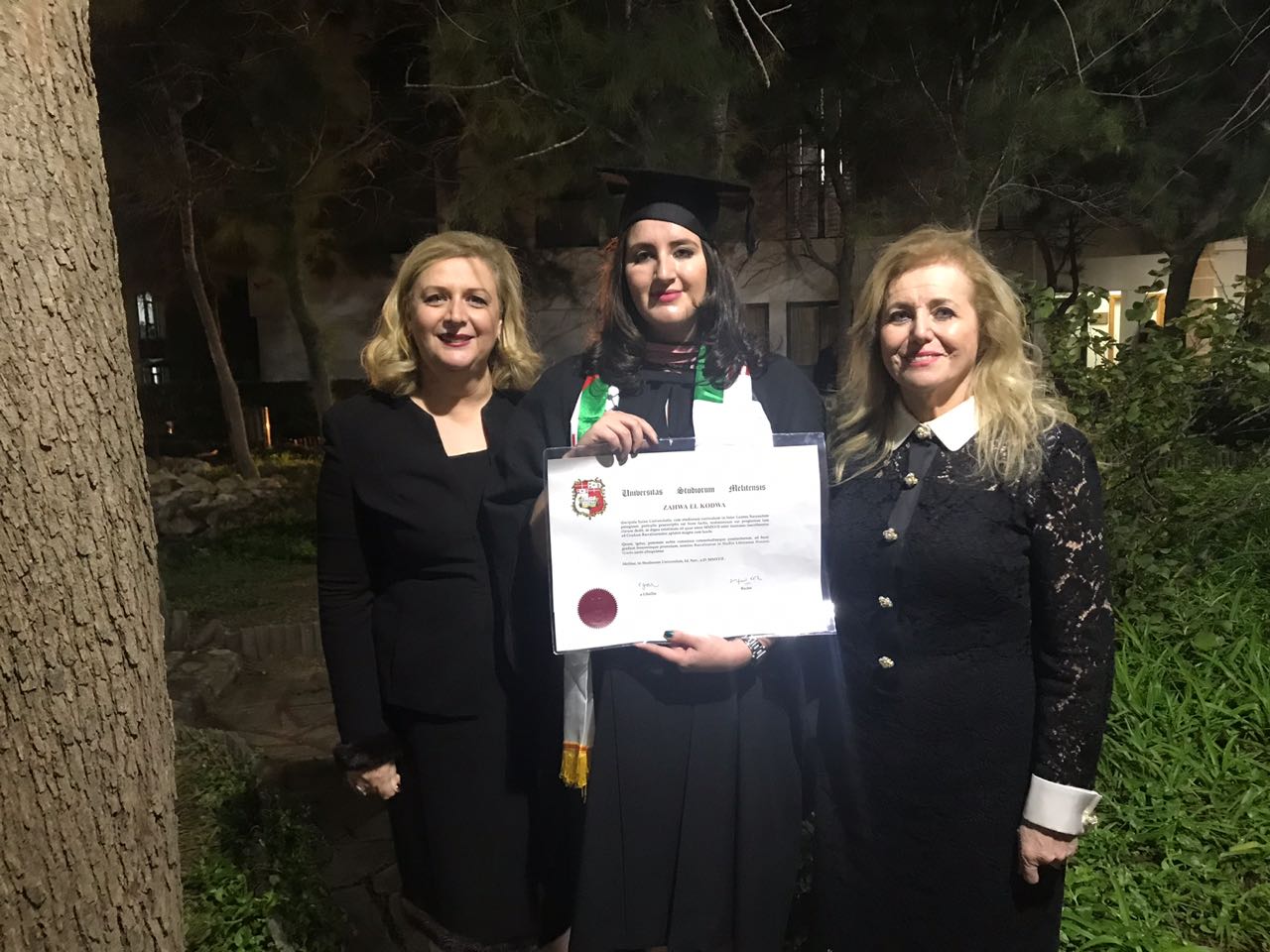
She is a private person. Whatever anyone believes about her parents, there is no theory of justice under which a child inherits an accusation.
Yet she is now the subject of a viral claim, boosted by a sovereign state, that she personally holds eight billion dollars of stolen humanitarian aid. The claim is unsourced. It is wrong about where she lives. It contains an assertion about UNRWA eligibility for which no evidence has ever been offered. And it has a function: it converts an abstract argument about aid governance into a face, and it converts a private woman into a standing rebuttal to the humanitarian claims of her entire people. Every time someone argues that Palestinians in Gaza need food, this photograph is available as an answer.
That is the actual purpose. Not to describe Zahwa Arafat's finances, about which the people circulating the claim know nothing and care less, but to make her useful.
The recycling has not stopped. During Fatah's Eighth General Conference in May 2026 — the movement's first leadership election in a decade — a campaign-style poster circulated on social media announcing "the candidate for the Revolutionary Council: Zahwa Yasser Arafat, 'Umm Yasser'," dressed in the movement's yellow and framed by her father's portrait. There was no such candidacy. She was not a candidate, did not attend the conference, and appears nowhere in its published record: not on the candidate lists reported by the official news agency WAFA, not in the results, not in any of the coverage. The portrait the poster carried does not appear to be her at all. The dynastic candidacy that actually happened that week was real and documented — Yasser Abbas, the president's 64-year-old businessman son, was elected to Fatah's Central Committee, to loud criticism inside the movement. A fabricated Arafat succession proved easier to share than the real Abbas one was to examine.
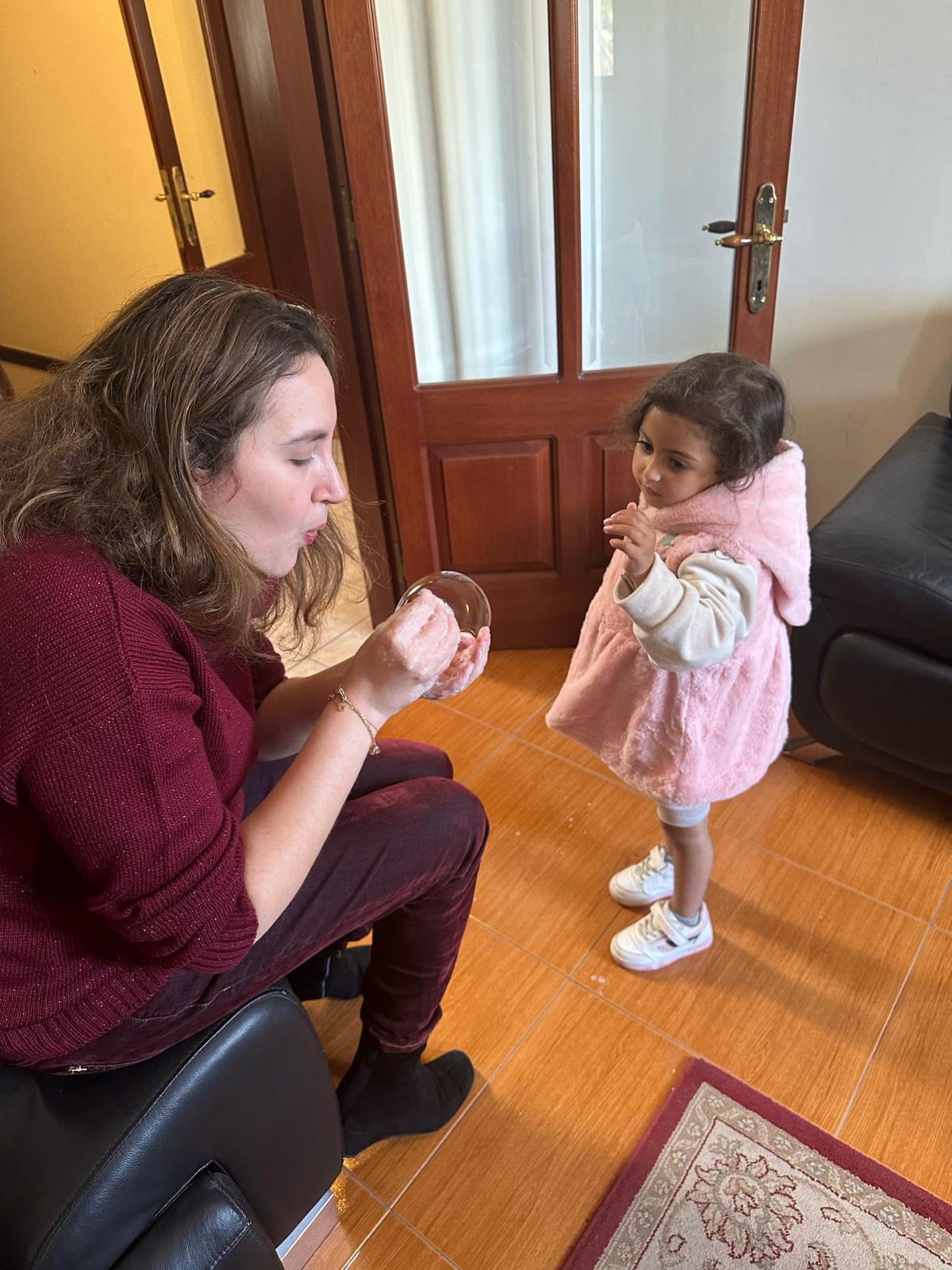
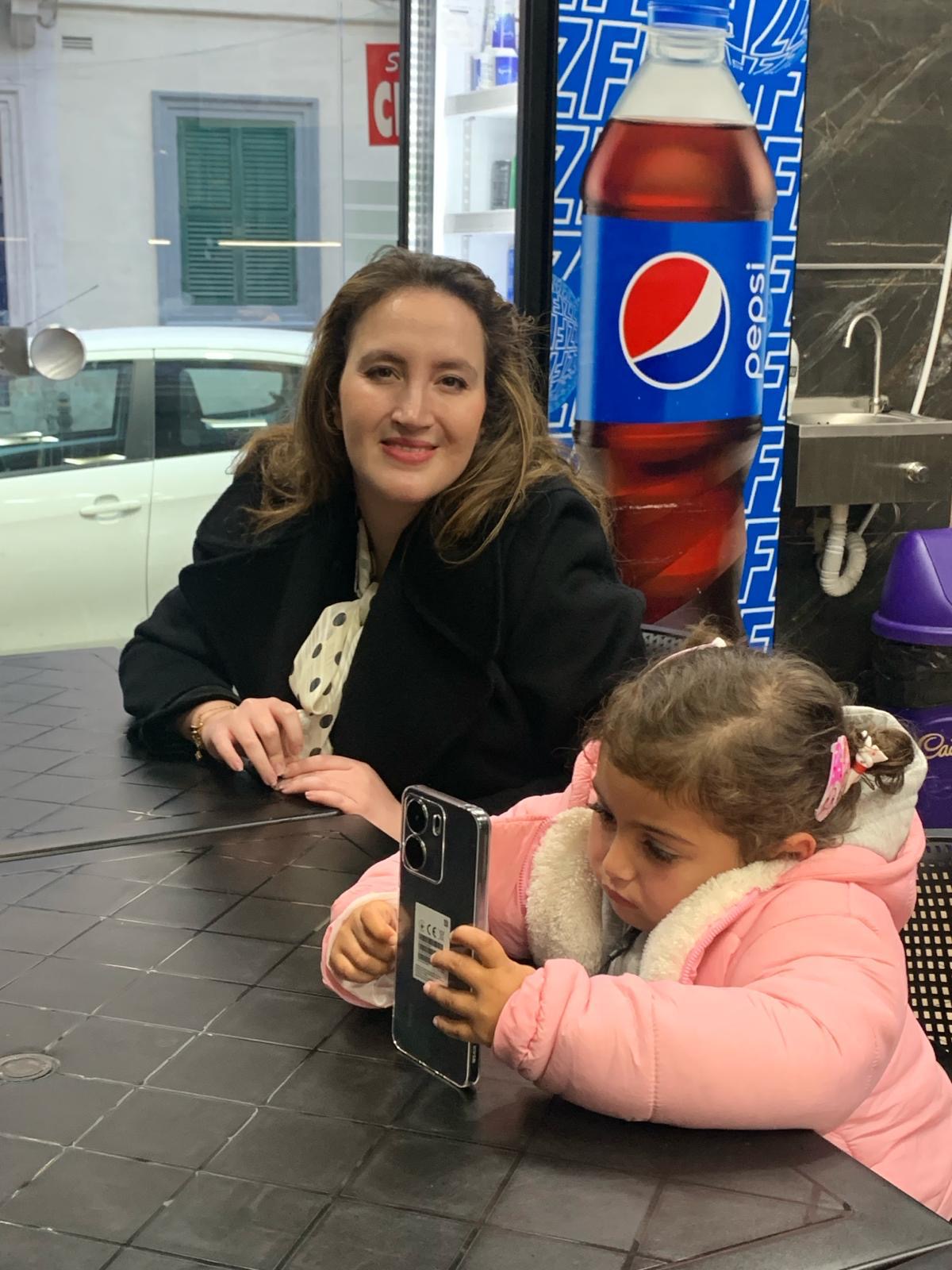
What she actually does is also documented, and it is quieter. Photographs obtained by Times of Palestine show her in Malta, where she works with the Palestinian embassy; among her duties is receiving the wounded children of Gaza who arrive for treatment in Maltese hospitals — a corridor whose existence is a matter of public record, from the World Health Organization's evacuation registers to the Maltese prime minister's bedside visit to a Gaza boy at Mater Dei Hospital in December 2025. One of the children she received is Silla, a girl who was wounded in Gaza and lost both her parents.
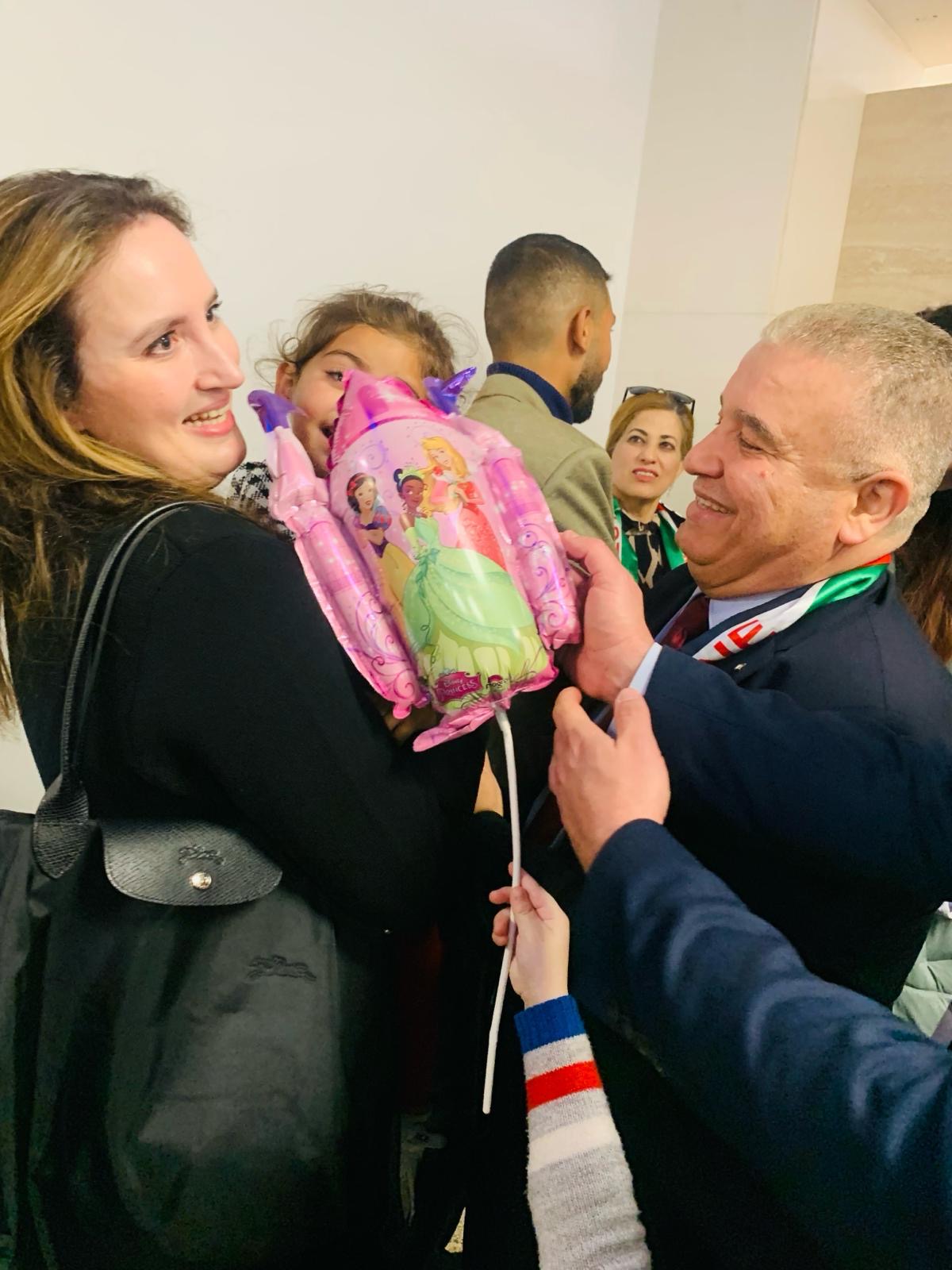
Those who know the family describe a life in a rented flat, ordinary work, no visible wealth of any kind. This publication has not independently verified those details and does not need to. The burden was never on her. It sits, entirely and permanently, with the people who published the number.
VIII. What Palestinians should take from this
The temptation is to read this as a story about two women who were wronged, express sympathy, and move on. That would be the least useful conclusion available.
The useful conclusion is this: the smear is not merely unjust to the Arafats. It is the mechanism by which Palestinians were prevented from getting an accounting.
Consider what a real reckoning would have required. It would have required Palestinian institutions to publish a full audit of PLO and Authority finances from 1994 onward. It would have required naming the intermediaries who moved money through Swiss and Israeli banking channels under the commercial arrangements the Oslo framework created. It would have required asking who signed for the monopolies, who held the portfolio, who benefited from the villas that went up around Ramallah while refugee camps were not connected to sewerage. It would have required Palestinians to confront the fact that the corruption of that era was not an accident of one man's personality but a structure — one that suited several parties, including some that were not Palestinian at all.
None of that happened. What happened instead is that a woman in Malta became the answer to the question. Twenty years of Palestinian anger about stolen money has been decanted into a single name, and that name is the one name in the entire affair least likely to yield anything if you pulled on it.
So Palestinians should be precise about this, not out of sentiment for Suha Arafat — who is a complicated figure with a genuine Tunisian legal history and a Paris apartment she has never explained to anyone's satisfaction — but out of self-interest.
Precision is the whole argument. The moment a Palestinian repeats the eight-billion-dollar figure about Zahwa Arafat, they have conceded that a claim needs no source to be worth repeating, and they have handed that principle to everyone who will use it against them tomorrow. The occupation is documented. The blockade is documented. The casualty figures are documented, in registries and morgue records and UN databases that have withstood a decade of adversarial scrutiny. That evidentiary discipline is the most valuable asset the Palestinian case possesses, and it cannot be spent selectively.
And the money is still missing. Not eight billion — that number is a fiction. But the untraced portion of what the IMF identified, the assets Fayyad's reforms never reached, the accounts nobody has ever published: that is real, it belongs to Palestinians, and it has not been recovered.
It is not in a flat in Sliema. It never was.
The people who told you it was are the people who did not want you looking anywhere else.