Transparency & Accountability
Palestinian military court leaves Nizar Banat case unresolved
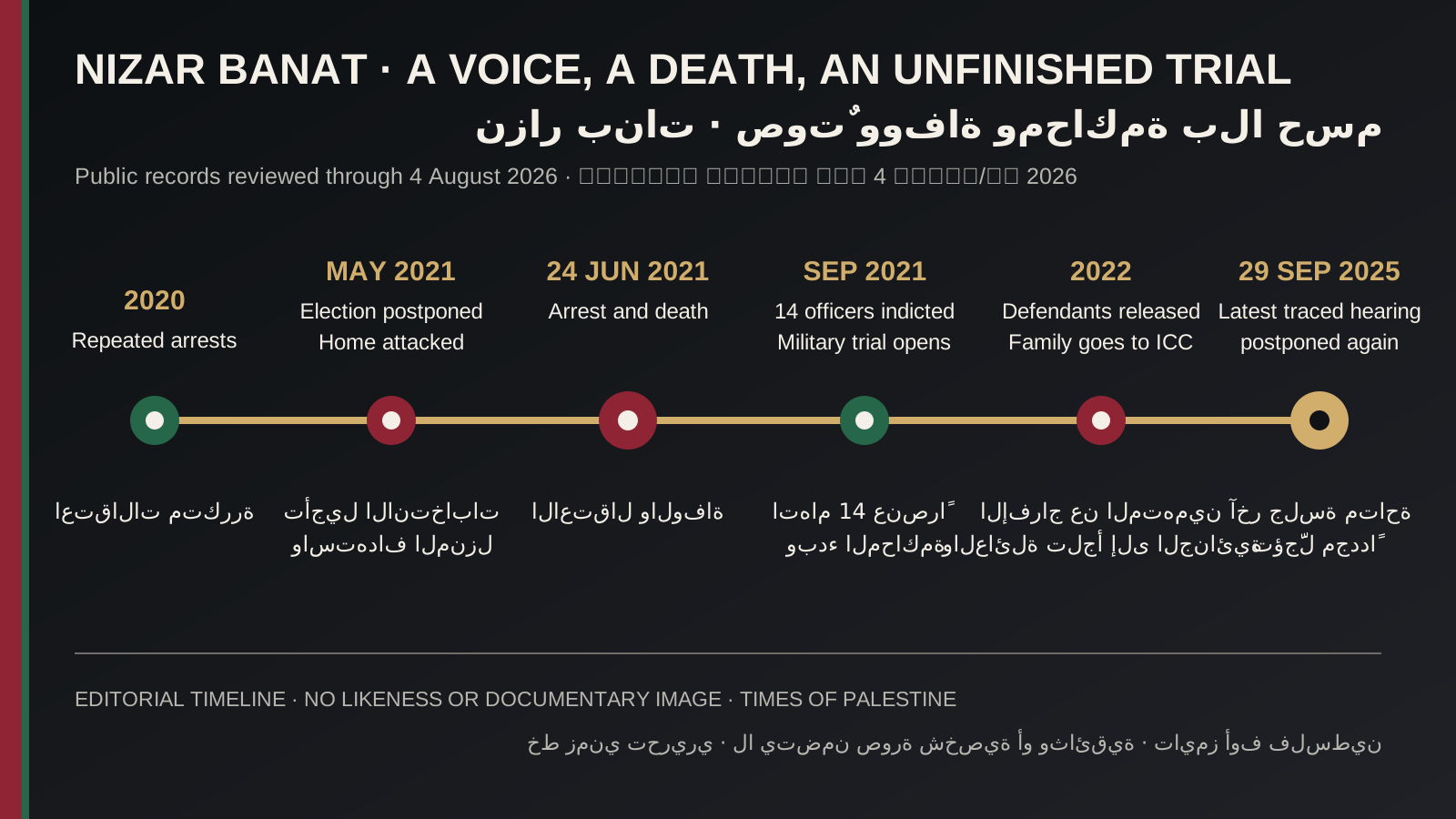
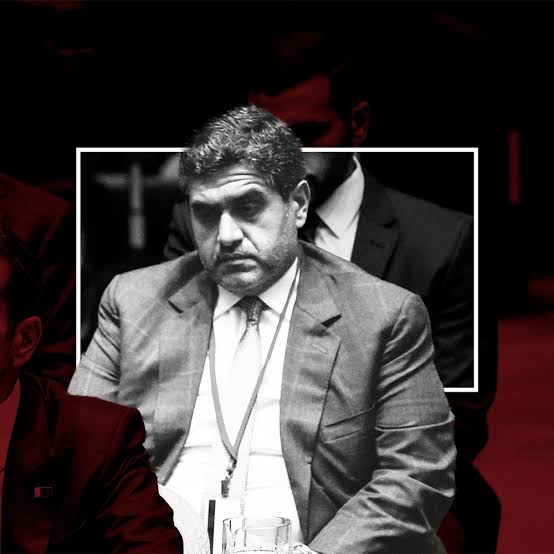
Graphic: Times of Palestine
Original Reporting
HEBRON — Nizar Banat built his political life in public, speaking into a phone camera about corruption, elections, security power and the everyday failures of Palestinian government. His death came out of public view: inside a relative’s home before dawn, during an arrest by Palestinian security officers on 24 June 2021.
Five years later, the central facts are no longer obscure. Witnesses described a violent raid. A preliminary autopsy documented injuries across his body and classified the death as unnatural. Fourteen members of the Preventive Security Service were charged. Their military trial began in September 2021.
What remains absent is a final judgment. The latest hearing Times of Palestine could trace was postponed on 29 September 2025, for the third time over the absence of the same defense witness. The court set 6 October 2025, but no later judgment appears in the public records reviewed through 4 August 2026.
That unfinished case is now part of Banat’s story. It began with one Palestinian’s insistence that national liberation could not excuse unaccountable rule, and became a test of whether Palestinian institutions can judge their own security forces.
A critic who chose the camera#
Banat was born in 1978 and came from Dura, southwest of Hebron. The public record contains far more about the political voice he became than about his private life, and this account does not fill those gaps with legend.
His political method was direct. In long, blunt videos posted online, he addressed viewers without a party studio or institutional platform. He accused the Palestinian Authority of corruption, authoritarianism and human-rights abuses, and attacked its handling of public money and the failed 2021 Covid-19 vaccine exchange with Israel.
His style was combative and intensely personal. Supporters heard a citizen saying what established politicians would not. Opponents heard provocation. The important legal fact is simpler: his criticism was political expression, and the summons that preceded his final arrest accused him of “defaming public authorities,” a misdemeanor under the law then applied in the West Bank.
Banat had already been detained more than once. Al-Haq documented an August 2020 arrest after he posted videos critical of the PA. A United Nations communication also recorded a November 2020 detention following his criticism of the restoration of Palestinian coordination with Israel.
An election offered a different route#
The planned 2021 legislative election gave Banat a formal path into politics. He joined the Freedom and Dignity list, an independent civil-society slate formed to contest the first Palestinian parliamentary election since 2006. The European Council on Foreign Relations records him as one of its candidates.
President Mahmoud Abbas postponed the vote indefinitely on 30 April 2021, saying Israel had not provided assurances that Palestinians in occupied East Jerusalem could participate. Banat’s list answered by urging the European Union to suspend funding to the PA. It was a confrontational demand, but also a political one made after an election he intended to contest had been cancelled.
On 2 May, gunfire, stun grenades and tear gas struck Banat’s family home in Dura, according to the joint fact-finding report later issued by the Independent Commission for Human Rights and Al-Haq. Banat blamed people connected to the governing Fatah movement. That attribution was his allegation; no public investigation established who carried out the attack.
The violence drove him from the house. He moved into the Israeli-controlled H2 section of Hebron, apparently believing Palestinian security forces could not reach him there. The assumption proved wrong.
Authorities recast a speech case as a security risk#
The warrant behind the June operation had been issued on 2–4 May over the public-authority defamation allegation. The ICHR–Al-Haq fact-finding team found that a joint security meeting on 23 June nevertheless placed Banat first on a list of 15 wanted people and treated him as the most dangerous person on it.
The investigators said Banat was unarmed and posed no threat to public order that justified that classification. Their report also set an important limit on its own findings: the account of what happened inside the apartment came from witnesses who were there, and the team could not independently interview the officers in the room.
That distinction matters. Witness evidence can establish a serious case; it is not a substitute for a court testing every account and the defense answering it.
The eight minutes before the vehicle left#
Shortly after 3 a.m. on 24 June, a joint force from Preventive Security and General Intelligence entered the Hebron home where Banat was sleeping. The UN communication put the force at roughly 15 to 17 officers; one cousin later told Amnesty International he saw about 25. The records agree on the operation’s character even though they differ on the number.
Relatives said officers broke through the door, held people in the house at gunpoint and went directly to Banat’s room. They alleged that officers struck him repeatedly with batons, including on the head, and sprayed his face with pepper spray. The assault inside lasted about eight minutes, according to the witnesses cited by the UN experts.
The relatives said officers stripped Banat to his underwear and dragged him to a security vehicle. They described him as conscious when he was taken away. Roughly an hour separated the arrest and his death, the family’s lawyer told Amnesty International.
Hebron governor Jibreen al-Bakri gave the official first account. He said prosecutors had issued a summons, Banat’s health deteriorated during the arrest and he was transferred to Hebron Government Hospital, where he was pronounced dead. That account acknowledged custody but did not describe the force used inside the house.
His body supplied evidence the first statement omitted#
Doctors representing the family and ICHR attended the autopsy alongside the official forensic team. The preliminary findings, summarized in the UN communication and the joint fact-finding report, recorded bruises and abrasions on Banat’s head, neck, shoulders, chest, back and limbs; restraint marks; fractured ribs; and blood in the lungs.
The examination classified the death as unnatural. The findings did not support a story of an unexplained medical collapse detached from the arrest.
They also did not, by themselves, decide the criminal responsibility of each person in the operation. That required an independent investigation capable of following the chain of command as well as the conduct of the officers who entered the room.
A death in custody became a street demand#
Banat’s death drew Palestinians into the streets of Hebron and Ramallah. The demonstrations were not only memorials. Protesters called for President Abbas to leave office and connected Banat’s death to cancelled elections, arbitrary detention and the concentration of power in the executive.
Security forces and groups of men in civilian clothes attacked protesters and journalists, according to Palestinian rights organizations and UN experts. Women reporters and demonstrators reported threats and sexual harassment. The crackdown widened the case: an arrest over speech had ended in death, and people demanding accountability were then subjected to force.
The PA announced an official inquiry chaired by Justice Minister Mohammad al-Shalaldeh. It completed its work within days and sent the file onward, but the report itself was not published. That secrecy prevented the public from seeing which orders the commission examined, which witnesses it heard and why responsibility stopped where prosecutors later drew it.
Fourteen officers entered a military trial#
On 2 July 2021, the security forces’ spokesperson said 14 members of the arrest patrol had been referred to the judiciary. On 6 September, the military prosecution said it had indicted all 14, all members of Preventive Security in Hebron.
The charges presented in court included joint beating leading to death, abuse of authority involving violence, complicity and violation of military instructions. The defendants pleaded not guilty. Times of Palestine is not naming them because this account does not assess individual evidence and no final verdict was found.
The first session opened before a special military court in Ramallah on 14 September 2021. Hearings initially moved through prosecution witnesses, medical evidence and cross-examination. Then the process slowed.
In February 2022, the military court was told the defendants had refused to leave prison to attend a hearing. In May, the prosecution said coordination problems caused by the occupation prevented their transfer from Jericho. On 21 June, the military attorney general released them from custody, initially citing a Covid-19 outbreak. Palestinian officials later described the release as bail and said the defendants continued to attend the trial.
The release, one year after the death, broke the family’s remaining confidence. Banat’s relatives and their lawyer had already withdrawn fully from the proceedings on 18 May, saying repeated delays and the treatment of witnesses made the military forum incapable of delivering independent justice.
The Authority says the process was impartial#
The Palestinian Authority has not accepted the description of the case as a cover-up. During its 2022 review before the UN Committee against Torture, the State of Palestine’s delegation said it had formed a transparent and impartial commission, gathered evidence and conducted professional proceedings.
The delegation said the 14 defendants were on bail, attending court and receiving due-process guarantees. It also said international and civil-society observers were present, demonstrating the trial’s transparency. Those are the PA’s formal answers to the principal fairness allegations.
The Committee against Torture reached a different conclusion. It said the state had failed to ensure accountability and called for everyone responsible—including higher-ranking officials who may have been involved—to be prosecuted in a civilian court with fair-trial safeguards.
That recommendation protects two rights at once: Banat’s family’s right to an effective remedy, and the defendants’ right to have guilt decided by an independent court rather than public anger.
The family carried the file abroad#
Amnesty International reported in 2023 that outspoken Banat relatives faced repeated detention, job dismissals and delays in government paperwork after they continued seeking justice. The PA told the UN that legal matters involving relatives were unrelated to the Banat case. No public independent investigation has resolved that dispute.
In December 2022, the family submitted information to the Office of the Prosecutor of the International Criminal Court. The filing alleged that the death and pressure on the family formed part of crimes within the court’s jurisdiction. An ICC submission is a request for examination, not a criminal charge or a finding; no public ICC action on the referral was found in this review.
Inside the West Bank, the military case continued in the defense-evidence phase. Hearings in April and May 2024 were postponed over the absence or notification of defense counsel. By September 2025, Lawyers for Justice said the court had postponed three hearings for the same absent witness: al-Shalaldeh, the former justice minister who led the official inquiry.
The person asked to explain the inquiry had not appeared. The inquiry report remained unpublished. The trial that was supposed to turn state power into evidence had instead become another record of delay.
What an ending would require#
Banat’s entire story cannot be reduced to the brutality of his final hour. He was a Palestinian critic trying to convert an online audience into electoral power. He opposed occupation and also rejected the idea that opposition to Israel required silence about Palestinian government.
Nor can the story end by declaring guilt that a competent court has not adjudicated. The public record supports a narrower and more demanding conclusion: Banat died after a security operation launched over political speech; extensive injuries were documented; 14 officers were charged; and Palestinian institutions have not produced a publicly traceable final judgment five years later.
A credible ending would publish the official inquiry, account for the command decisions behind the operation, protect witnesses and relatives, and finish an independent trial without presuming its result. It would explain why a misdemeanor speech allegation generated a high-risk security raid—and who had the authority to make that choice.
This article reconstructs the case from the ICHR–Al-Haq fact-finding report, UN communications and treaty-body records, official Palestinian statements, monitored court updates and international rights reporting.
Times of Palestine reviewed English and Arabic records through 4 August 2026, treated witness accounts as allegations unless corroborated by medical or official records, and found no final judgment. If a later court record or official inquiry report becomes public, this account will be corrected and updated.