Arab Support
Yemeni and Kuwaiti donors keep Gaza health students enrolled
Graphic: Times of Palestine
Original Reporting
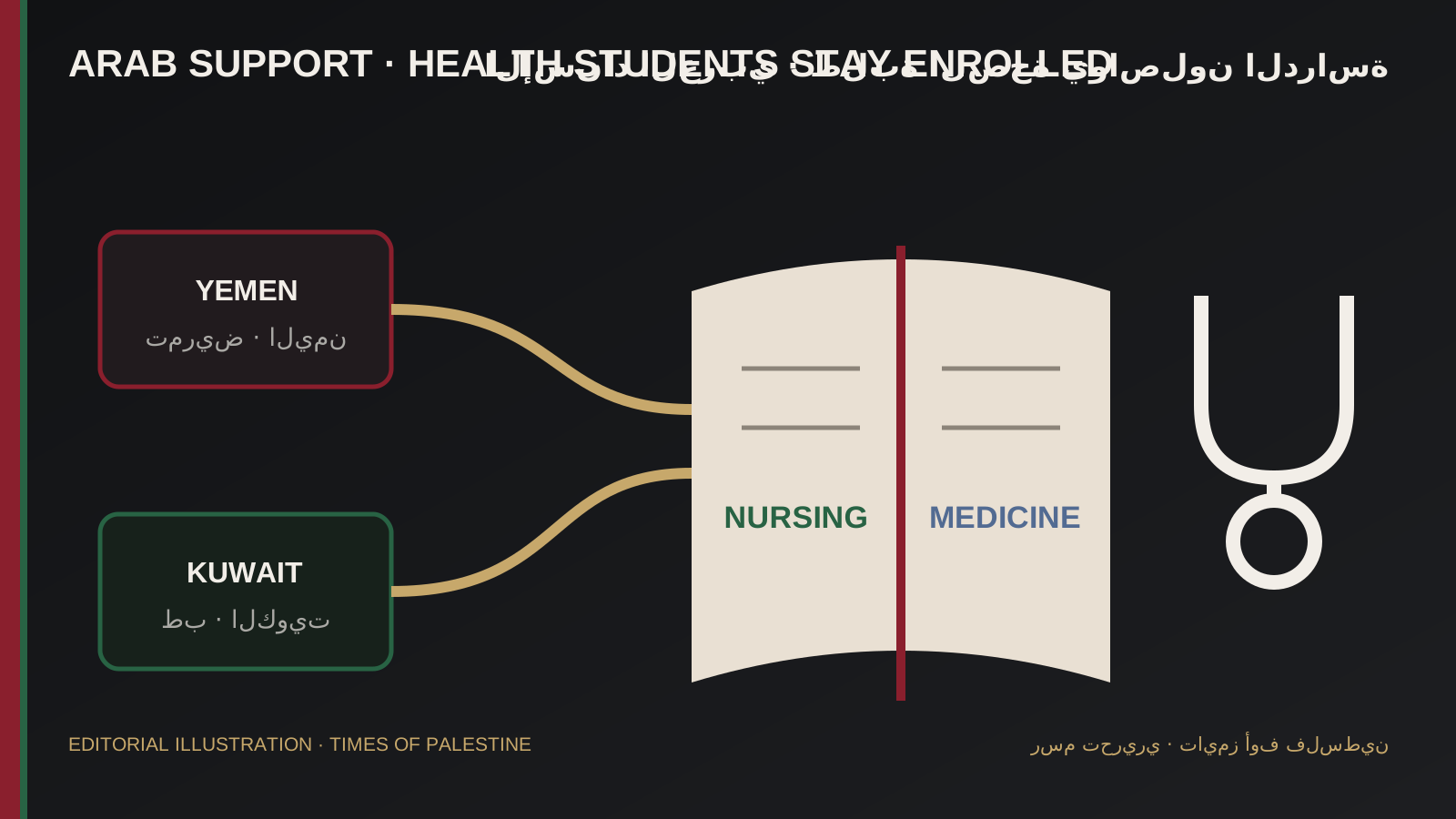
Donors in Yemen and Kuwait have paid separate grants for Gaza nursing and medical students, moving Arab educational support from appeals into university accounts and students’ hands.
The two programmes differ in scale and disclosure. The Islamic University of Gaza reported on 18 July that Al-Aqsa Association in Yemen funded tuition support for nursing students affected by the war, supervised by Al Khair International. The university documented a distribution ceremony and beneficiaries but did not publish the number of students or total value.
At Al-Azhar University–Gaza, the university reported on 2 March that the Kuwait Campaign to Support Gaza provided $300 to each of 100 new medical students through Midad Palestine. That makes the disclosed distribution $30,000.
Two grants, two levels of transparency#
Both universities describe money already distributed, not a future fundraising target. That is the essential first distinction. The Kuwaiti grant also provides enough information to calculate its total: 100 recipients multiplied by $300. The Yemeni programme’s public page identifies the donor, implementer and faculty but leaves its headcount and value undisclosed.
The missing numbers do not negate the nursing support. They prevent readers from measuring reach, cost per student and the share of tuition covered. A useful follow-up from the Islamic University, Al-Aqsa Association or Al Khair International would publish those three figures without naming students or exposing their personal circumstances.
Al-Azhar’s disclosure gives another denominator. University officials said its medical faculty has more than 3,000 students across levels. A grant to 100 new students is therefore targeted relief, not a solution for the whole faculty. The university said many students’ families had lost income and that laboratories, clinics and other facilities at its western campus were destroyed.
Supporting students also supports the health workforce#
Nursing and medical grants have a longer horizon than emergency cash. They help students stay attached to courses that produce the staff Gaza’s health system will need for years. That does not mean a scholarship guarantees graduation or employment; it means tuition is one less immediate reason to stop.
The Yemeni and Kuwaiti programmes also show two routes for Arab support. One moves through an overseas association and an international supervisor into a university faculty. The other moves from a national solidarity campaign through a Palestinian charity to named recipients at a second university. Publishing the route matters because it lets donors and students see who controls each stage.
A shared disclosure standard would multiply trust#
Universities can make small grants more useful by reporting them in a consistent form: donor, implementing partner, amount received, amount distributed, number of recipients, eligibility rules, date of transfer and administrative costs. They can do so without publishing names.
For the Kuwaiti programme, the public record supplies most of that ledger but not the campaign’s administrative cost or selection rules. For the Yemeni programme, the value and number of recipients are the largest gaps. Filling them would make the two models easier to repeat and compare.
This article compared separate statements by the Islamic University of Gaza and Al-Azhar University–Gaza, published on 18 July and 2 March 2026 and accessed on 3 August. It labels undisclosed values rather than estimating them. The grants are reported as university-verified distributions; no allegation is made and no adverse right of reply was required.