Her Story
Times of Palestine opens Her Story for Palestinian women's accounts
Graphic: Times of Palestine
Original Reporting
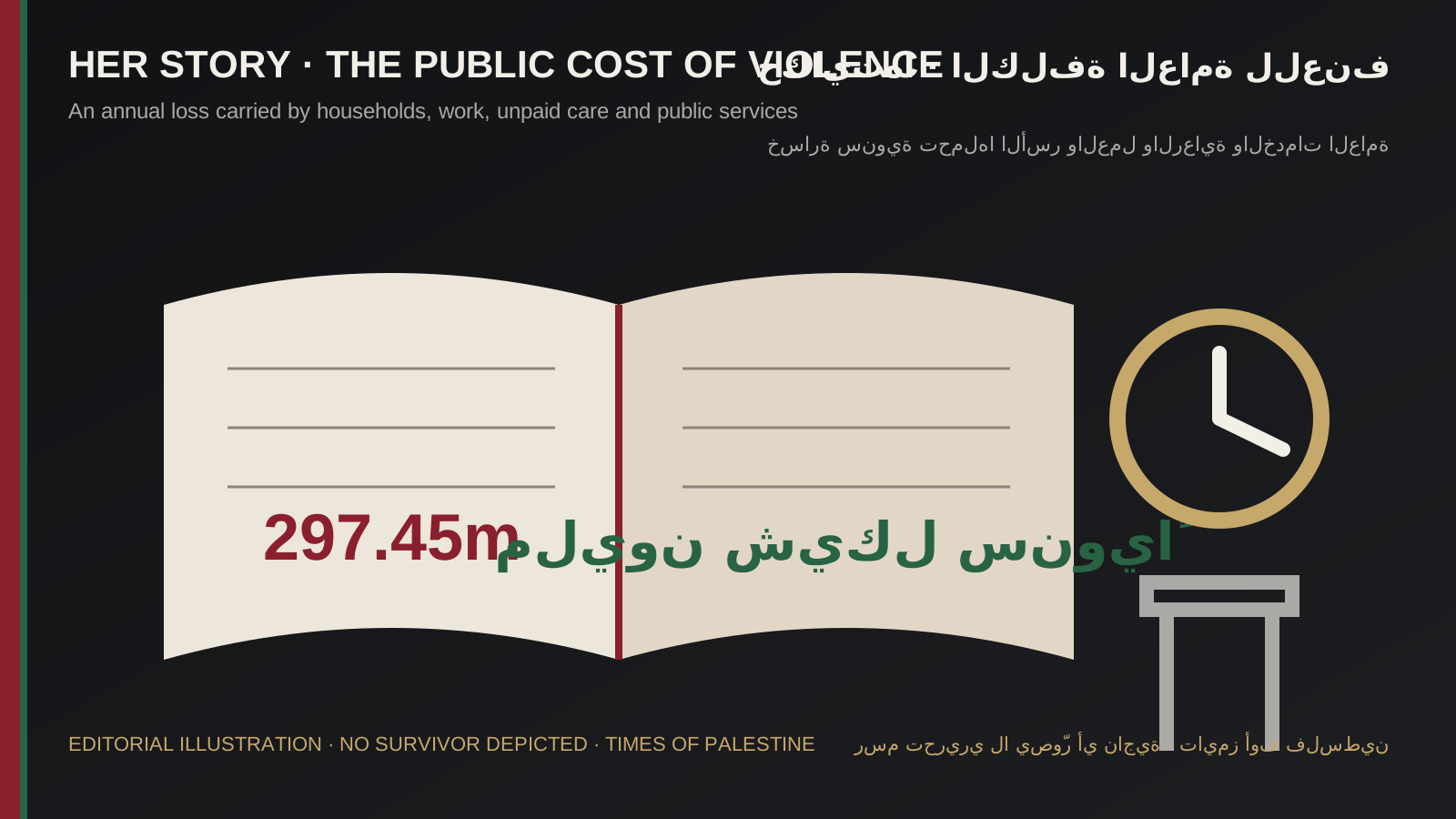
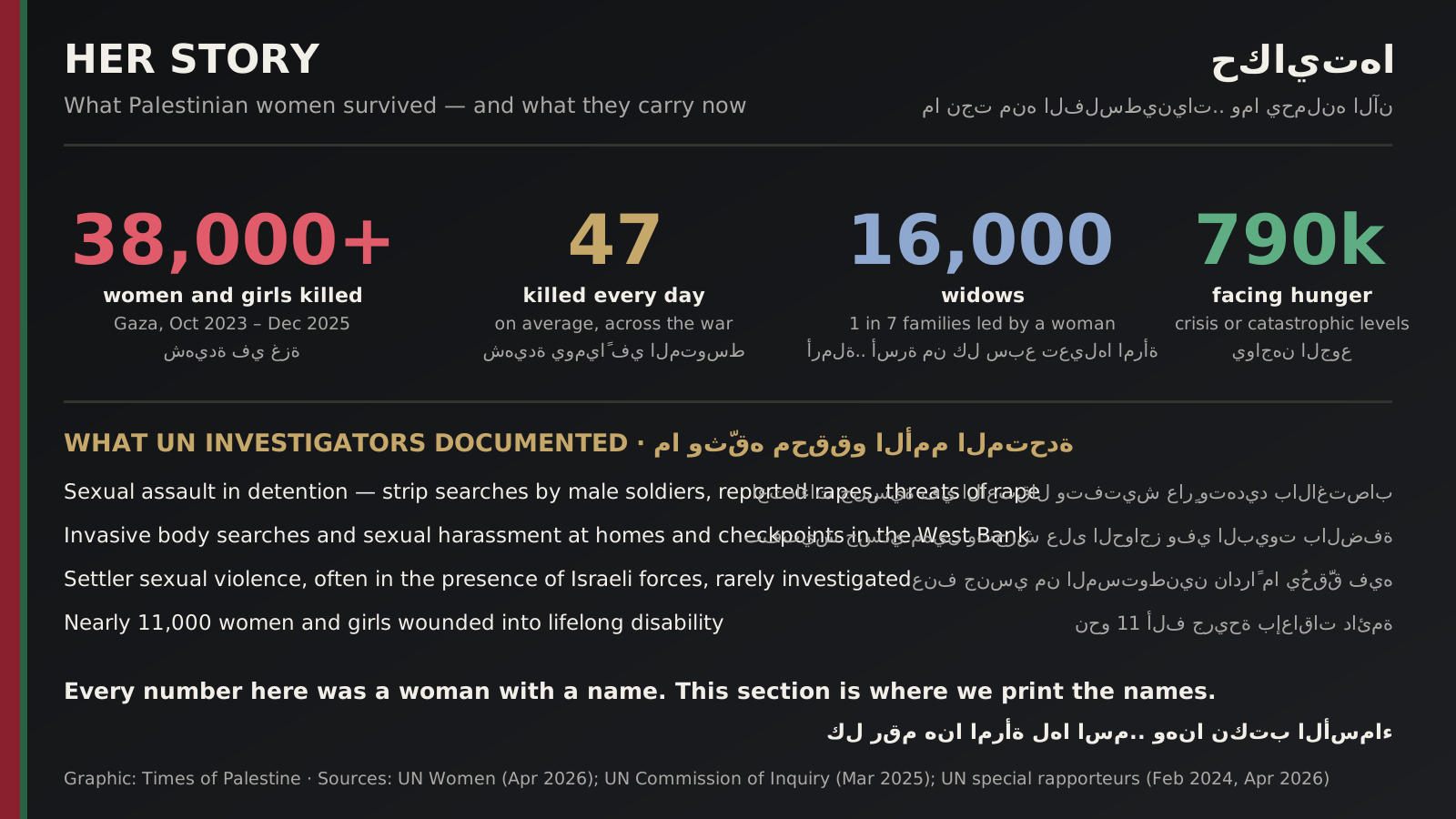
UN Women counted more than 38,000 women and girls killed in Gaza between October 2023 and December 2025 — over 22,000 women and 16,000 girls, an average of at least 47 a day. Nearly 11,000 more were wounded into lifelong disability.
Roughly 16,000 women lost their husbands, and one in seven families in Gaza is now led by a woman. Nearly 790,000 women and girls have faced crisis or catastrophic food insecurity, and close to a million have been displaced, many of them four times over.
Pregnant women, the agency reported this spring, are three times more at risk than they were a year earlier.
Those are the figures. They are not the story.
Behind each of them is a woman who had a name, a trade, a home she furnished, an opinion about the war and about the men conducting it — and who, in the overwhelming majority of the world's reporting, appears only as a number in a casualty line or a figure weeping in the background of someone else's photograph.
Times of Palestine opens Her Story — «حكايتها» — as a standing section for the other part: what Palestinian women survived, what they say about it in their own words, and what they carry now.
The section's first duty is the violence itself, reported precisely.
In February 2024, United Nations special rapporteurs said they were appalled by reports that Palestinian women and girls in Israeli detention had been subjected to multiple forms of sexual assault — stripped naked and searched by male soldiers, with at least two detainees reportedly raped and others threatened with rape.
In March 2025, the UN's Independent International Commission of Inquiry concluded in a report titled "More than a human can bear" that sexual, reproductive and other forms of gender-based violence had been used against Palestinians to terrorise them and sustain a system of oppression.
In April 2026, UN experts warned that sexual and gender-based violence against Palestinians was itself driving displacement, describing invasive body searches — including anal and vaginal searches — sexual harassment in and near homes, and settler sexual violence in the West Bank carried out in the presence of Israeli forces and rarely prevented, investigated or prosecuted.
Each of those findings belongs to a specific body, on a specific date, and this section will always say which.
The second duty is everything the violence does not contain. Gaza's widows now run households in tents and administer the impossible arithmetic of flour and fuel. Midwives deliver babies by phone light in hospitals without power.
Women who were engineers, pharmacists, teachers and farmers before October 2023 are the sole earners in families that no longer have a house to earn for. Girls who lost a school year, then two, are studying from salvaged textbooks under plastic sheeting.
In the West Bank, women whose land sits behind a settler outpost make a daily calculation about whether the olive harvest is worth the risk. In the diaspora, Palestinian women are running the legal campaigns, the medical corridors and the scholarship funds that keep other women alive.
None of that is softer news than the casualty count; it is the same war, told by the people who are living through it rather than about them.
Her Story follows the rules that govern the rest of this newspaper, with two of its own.
Survivors of sexual violence are never named without their explicit consent, and no woman's account is published in a form that could identify her against her wishes; where a survivor asks for anonymity, the account still runs, because the alternative is silence that serves only the people who caused the harm.
And the section reports the issue, never the individual: Palestinian women's suffering is not raw material for outrage, and this section will not stage it. Women's own words lead; our summary follows.
This is an open desk. Palestinian women — in Gaza, the West Bank, Jerusalem, the camps in Lebanon, Jordan and Syria, and across the diaspora — who want their account on the record can reach the newsroom through the secure tip line on this site, on Signal or Telegram, anonymously if they choose.
Women journalists reporting from inside Palestine are invited to file here; their bylines run on their own work. The section publishes in both languages, always, because a Palestinian woman's account belongs first to Arabic readers and then to everyone else.