West Bank & Jerusalem
Israel gives settlers three times the water Palestinians receive
Graphic: Times of Palestine
Original Reporting
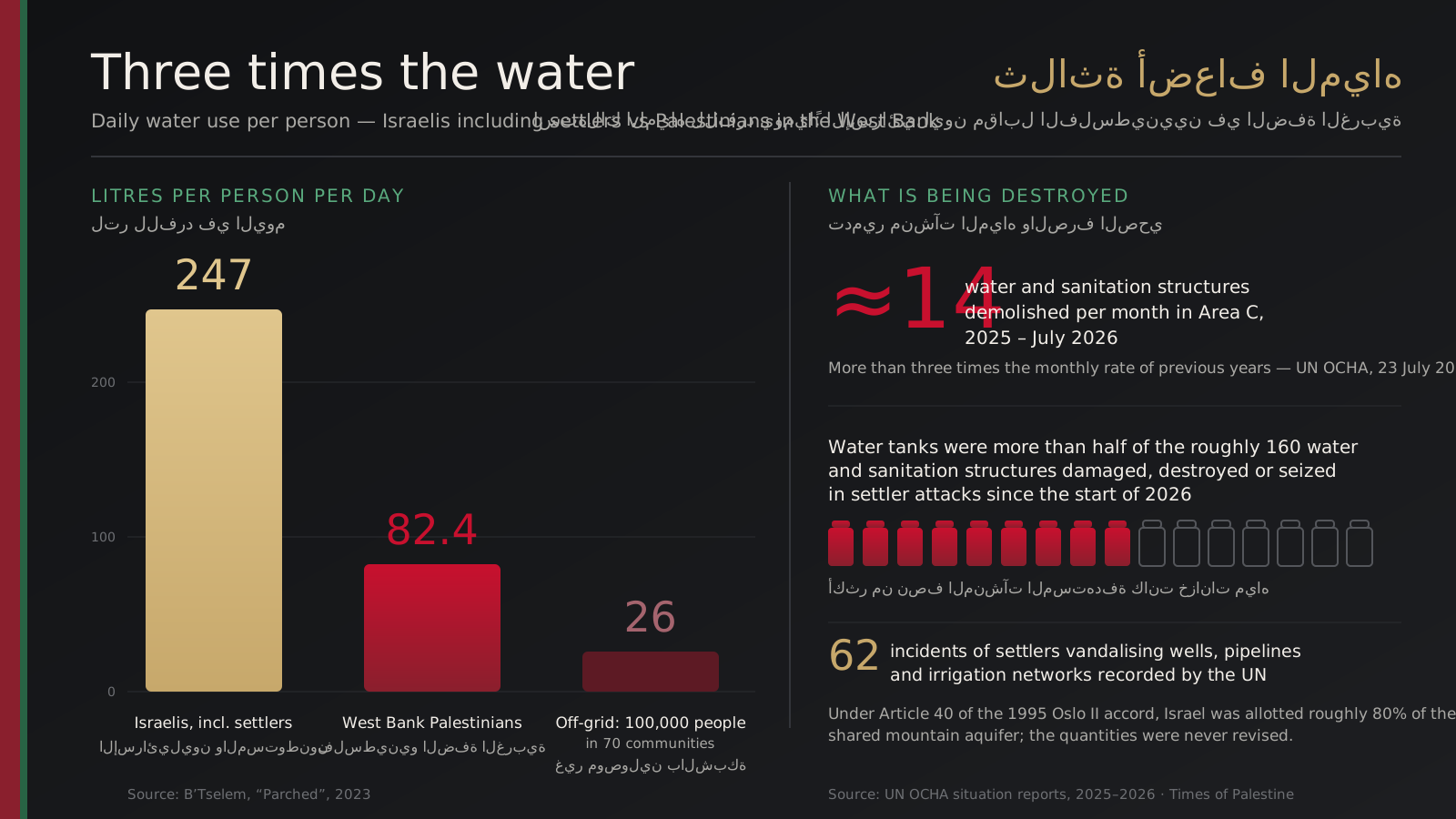
Israeli authorities demolished an average of about 14 water and sanitation structures a month in Area C of the West Bank during 2025 and the first seven months of 2026 — more than three times the monthly rate of previous years — according to the UN Office for the Coordination of Humanitarian Affairs in its situation report of 23 July 2026.
The same report found that since the start of 2026, water tanks accounted for more than half of roughly 160 water and sanitation structures damaged, destroyed or seized in settler attacks across the West Bank. OCHA's 12 June report counted more than 100 demolition and settler-violence incidents in 2026 damaging or destroying over 190 such structures.
The demolitions fall on a population already consuming far below the World Health Organization's minimum. B'Tselem, in its 2023 report Parched, put daily consumption at 82.4 litres per person for West Bank Palestinians against 247 litres for Israelis including settlers — three times as much.
The organisation found that only 36 per cent of West Bank Palestinians have running water every day, and that about 100,000 people in 70 communities are not connected to the grid at all, living on some 26 litres a day, a level B'Tselem compared to disaster zones.
Figures differ by source and year. The Palestinian Central Bureau of Statistics reported 88 litres per person per day in the West Bank for 2023, out of total consumption of 95.5 million cubic metres, and noted that the figure includes commercial and industrial use, so household supply is lower still.
Amnesty International has used 73 litres, and cited OCHA data showing consumption as low as 20 litres a day in some herding communities. OCHA reports that Jordan Valley communities off the network fall below 50 litres, while all households in nearby settlements have permanent, unlimited piped supply.
The allocation itself dates to Article 40 of Annex III of the 1995 Oslo II agreement, which recognised Palestinian water rights but deferred them to permanent-status talks. Under that article Israel was allotted roughly 80 per cent of the shared mountain aquifer, and 94 per cent of the Western Aquifer was designated for use inside Israel. The quantities were set for a five-year interim period and were never revised.
Article 40 created the Joint Water Committee to approve water and sewage projects. Middle East Eye reported in 2023 that the arrangement split water services, handed to the Palestinian Authority, from water resources, which stayed under Israeli control, and that the committee's structure gave the Israeli side an effective right of objection over Palestinian proposals.
A World Bank assessment of restrictions on the Palestinian water sector, published in April 2009 at the Palestinian Authority's request, found Israeli extraction from West Bank aquifers running about 80 per cent above the Oslo figure while Palestinian abstraction remained within its agreed share.
The trade publication MEED, summarising the report, said it found Palestinians with access to about a fifth of the available supply.
A later World Bank sector note on water in the West Bank and Gaza recorded that the Palestinian Authority is charged the full production cost of desalinated water that Mekorot supplies to Jordan at a discounted rate.
The committee stopped functioning for six years. Ynet reported that on 15 January 2017 the head of COGAT, Maj. Gen. Yoav Mordechai, and the Palestinian Authority's civil affairs minister, Hussein al-Sheikh, signed an agreement to restart it.
Al Jazeera reported that the accompanying deal provided for Israel to sell 32 million cubic metres of water to the Authority, 22 million of it to the West Bank at 3.3 shekels per cubic metre.
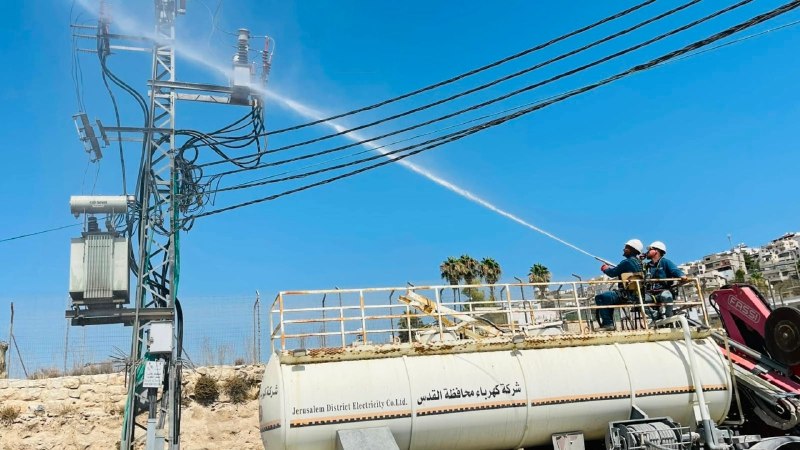
Supply has since been cut repeatedly. The Palestinian Water Authority said in April 2025 that Mekorot reduced flow on the Deir Sha'ar line serving Hebron and Bethlehem by 5,500 cubic metres a day.
Hebron city council member Abdel Karim Farrah told Al-Araby Al-Jadeed that supply had fallen from 22,000 cubic metres a month to around 8,000.
OCHA reported in August 2025 that Mekorot supply to Jerusalem and Ramallah governorates was reduced by at least 10 to 15 per cent with no clear reason given, on a network serving Ramallah, al-Bireh, ten towns, five refugee camps and more than 40 villages.
Water infrastructure is now a large share of what is destroyed. OCHA reported in May 2026 that about 71 per cent of some 400 structures demolished in Area C that year for lacking Israeli permits were agricultural, livelihood or water and sanitation structures.
In Khallet Athaba' in Masafer Yatta on 5 May 2025, OCHA recorded the demolition of 39 structures including six cisterns and the community water network, leaving the village without water.
The Palestinian news agency WAFA reported that on 29 July 2026 Israeli forces demolished the installations of three artesian wells at Atouf and Ras al-Ahmar, southeast of Tubas, after filling them in two weeks earlier.
COGAT told CNN in April 2026 that Israel transfers about 90 million cubic metres of water to the Palestinian Authority each year, that responsibility for supplying Palestinians in the West Bank "lies with the Palestinian Authority", and that "widespread water theft on the Palestinian side" explains occasional shortages.
It called claims that Israel uses water as a means of control biased. Data from the Israeli Water Authority's hydrological service, reported by Al-Araby Al-Jadeed, estimated losses from unlicensed wells at about 52 million cubic metres a year across more than 440 wells in the mountain aquifer.
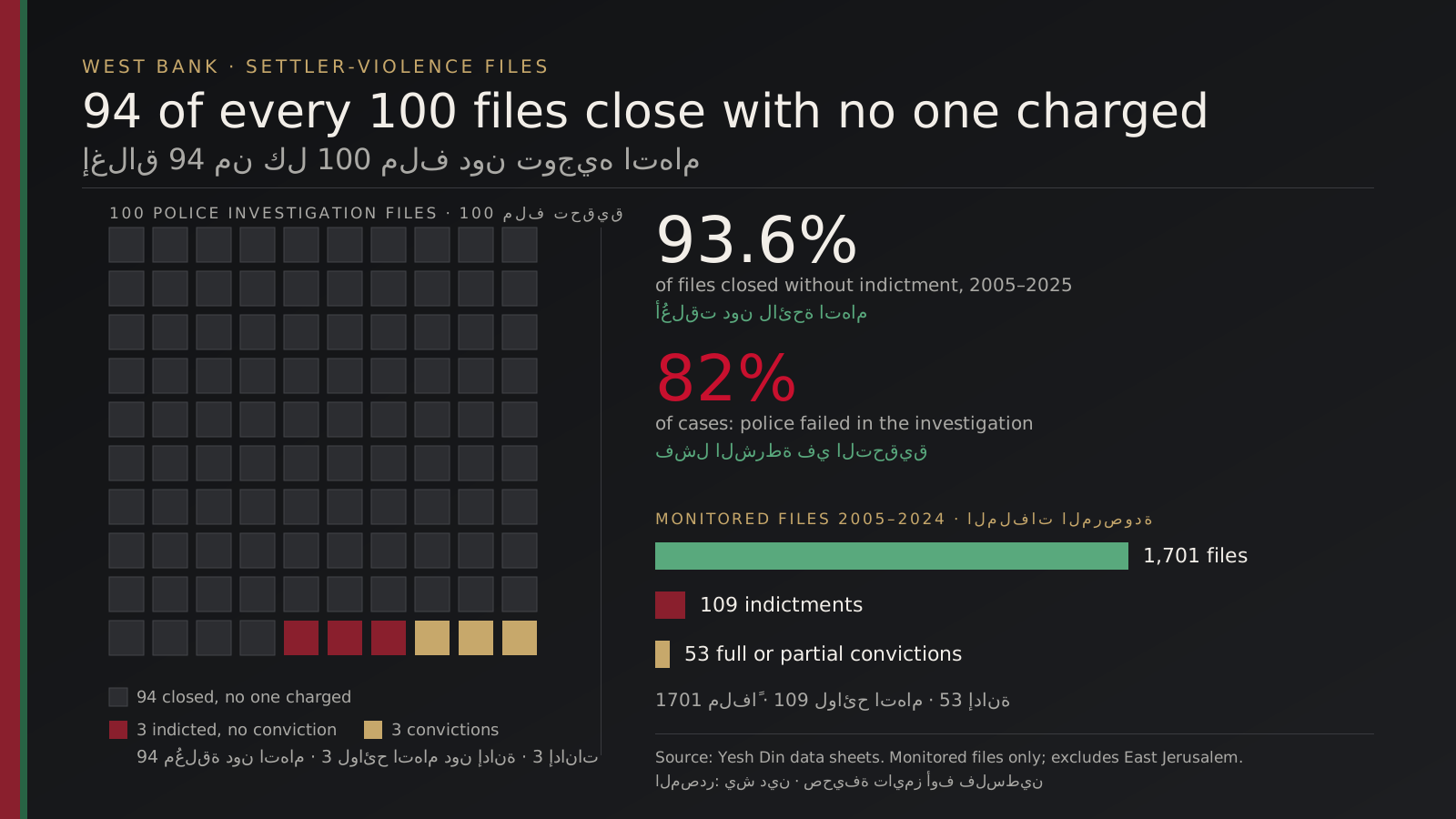
Reuters reported that the Israeli military acknowledged receiving multiple reports of Israeli civilians deliberately damaging water infrastructure, and said no suspects had been identified. The UN recorded 62 incidents of settlers vandalising wells, pipelines and irrigation networks. Whether any of those files produced charges is not on the public record.
The Joint Water Committee's approvals are not published, so it cannot be established from the record which pending Palestinian projects are stalled and why. Mekorot has not stated publicly what technical or allocation basis governs this year's reductions, and the summer supply period runs to October.