West Bank & Jerusalem
Israeli police close 94 percent of settler-violence files
Graphic: Times of Palestine
Original Reporting
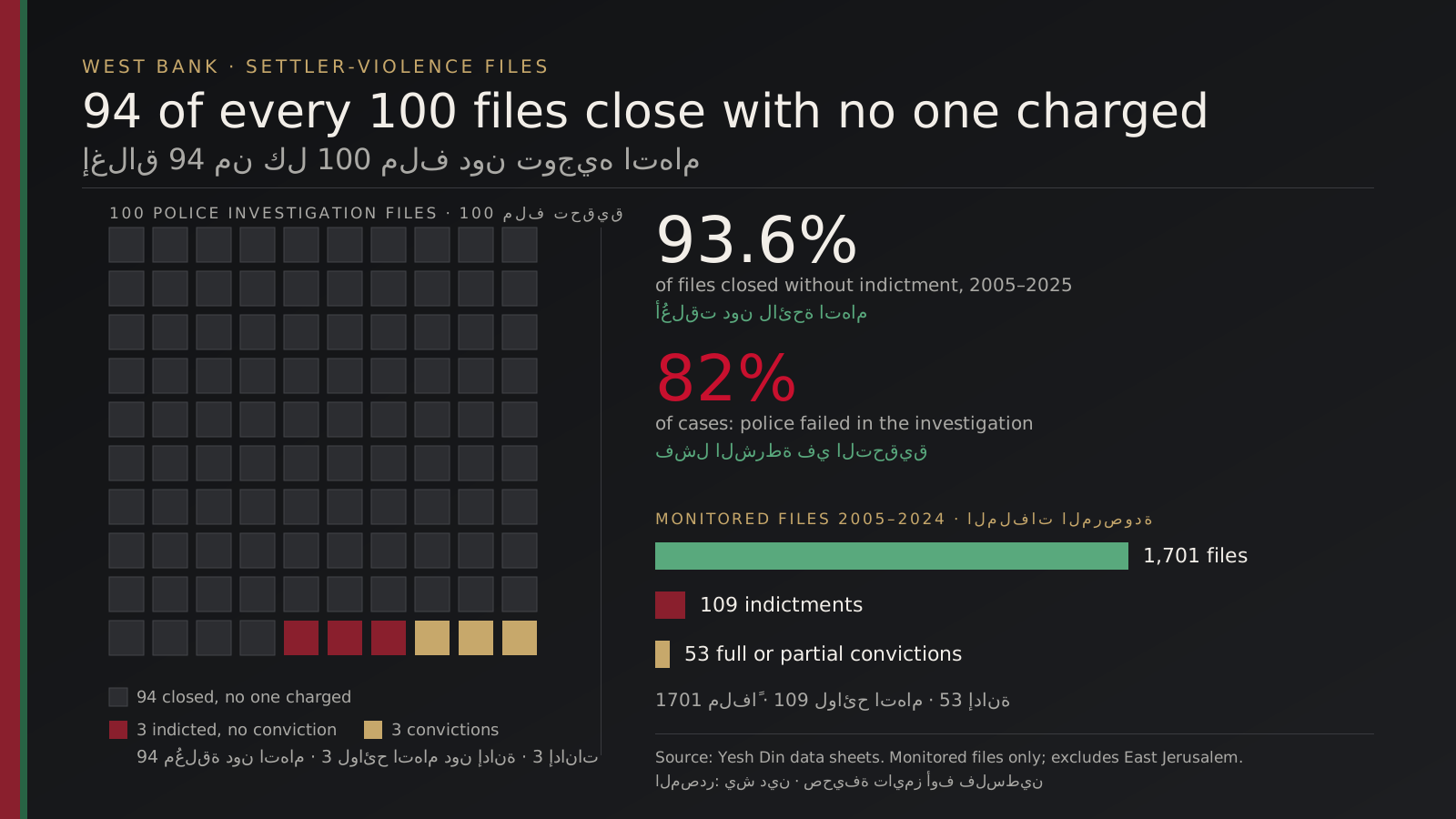
Of every 100 police investigations into ideologically motivated crimes by Israelis against Palestinians in the West Bank since 2005, roughly 94 close without anyone being charged and three end in a conviction, according to the Israeli rights group Yesh Din, which has tracked the files for two decades.
Its most recent data sheet, covering 2005 to 2025, puts the share of files closed without indictment at 93.6 percent and finds that police failed in the investigation of 82 percent of cases — closures on grounds indicating that officers did not identify a suspect or gather evidence.
The rate has barely moved in a decade. Yesh Din recorded an indictment rate of 8.5 percent in July 2013, 7.4 percent in November 2014 and 7.3 percent in October 2015. In its 2005-2024 count, 1,701 monitored files produced 109 indictments and 53 full or partial convictions.
Prosecution is not the end of the funnel. In the group's December 2023 data sheet, of 93 indictments with known outcomes, 50 produced a full or partial conviction and 43 ended in nothing — either because the court found the defendant guilty but declined to enter a conviction, or because the indictment was vacated or withdrawn.
The Yesh Din series is not a census. It covers only files the organisation monitors on behalf of Palestinian complainants, and it excludes East Jerusalem. Palestinians who never file a complaint, or whose complaints are never opened as files, do not appear in it at all.
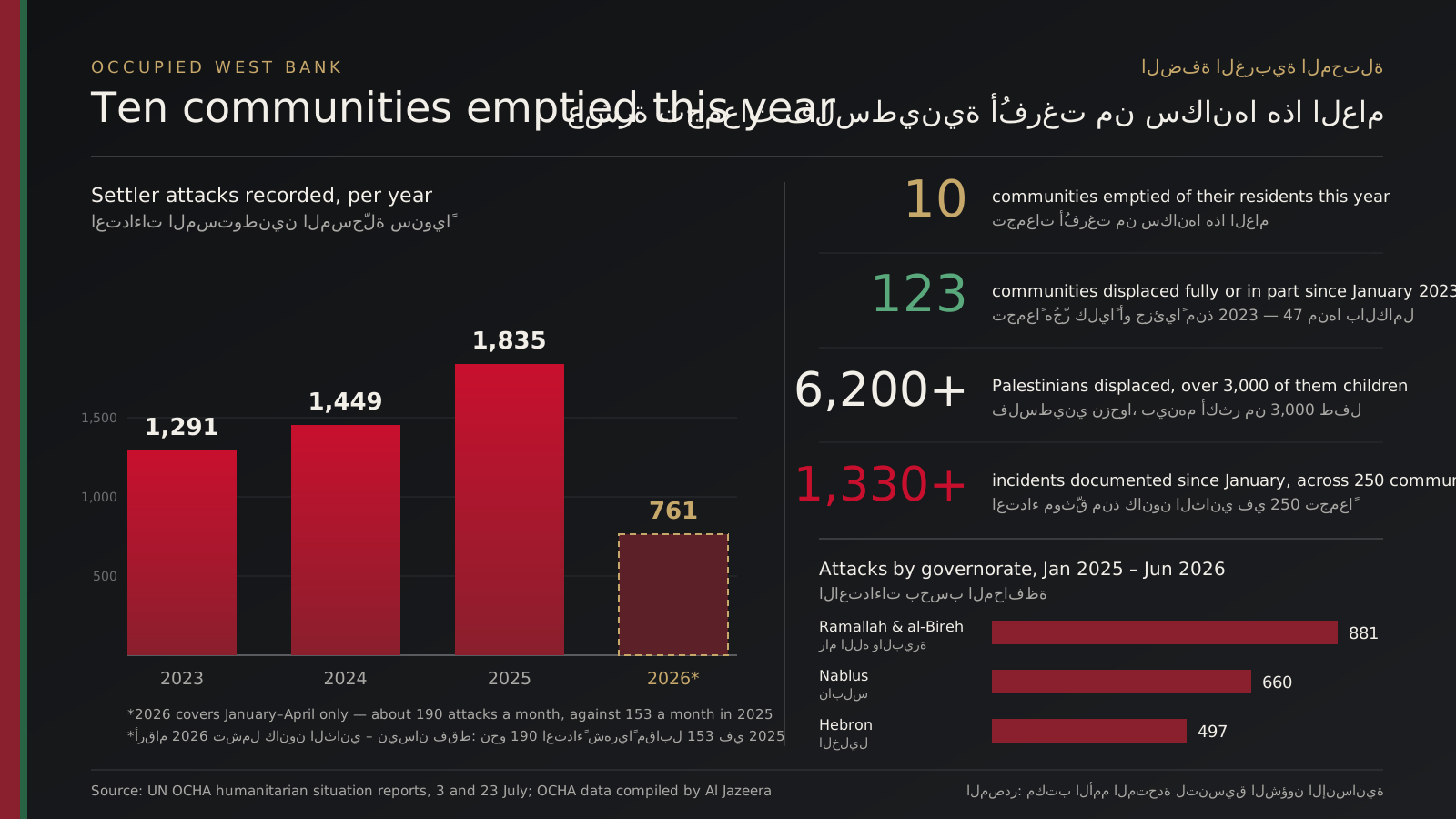
The denominator, meanwhile, is growing fast. OCHA data compiled by Al Jazeera records 1,291 settler attacks causing casualties or property damage in 2023, 1,449 in 2024, 1,835 in 2025 and 761 in the first four months of 2026 — about 190 a month, a 24 percent rise on last year's monthly rate.
October 2025 was the worst month OCHA has logged since it began counting in 2006, with more than 260 attacks, an average of eight a day.
On 11 June, OCHA said attacks this year had already passed 1,000, across more than 230 communities. The UN human rights office said on 29 July that, as of 24 July, 76 Palestinians and one Israeli had been killed in settler attacks in 2026, and that Israeli settlers and security forces had "often" acted together against Palestinian communities.
That overlap is now documented in the enforcement data itself. Yesh Din counted nearly 30 incidents of organised mass violence in the West Bank between 2023 and November 2025; in 16 of them, soldiers or police officers were reported to have been present during the attack and to have assisted it directly or indirectly.
B'Tselem, which titles its running log "Settler violence = state violence", documented a settler in military uniform shooting dead two Palestinian brothers during an attack on Qaryut, near Nablus. In Umm al-Kheir in the South Hebron Hills, the organisation reported that a settler shot and killed the activist Awdah al-Hathaleen and that soldiers then arrested the victim's relatives at his instruction.
Particular outposts recur across the record. B'Tselem attributes sustained attacks on Qusrah, Talfit and Jalud to a new outpost established between the three Nablus-district villages. The EU's July 2024 designations named the founder of the unauthorised Manne Farm outpost in the South Hebron Hills.
Britain sanctioned the Jordan Valley outpost known as Moshe's Farm in October 2024, and in May 2025 named a settler whom the Foreign Office said had been indicted the previous September over assaults at Mu'arrajat East, beside a farming outpost he established near Mevo'ot Yeriho.
B'Tselem's running list of West Bank communities and isolated families it counts as ethnically cleansed stood at 62 as of 22 April 2026. The Association for Civil Rights in Israel put the number of Area C communities forcibly displaced by settler harassment and violence at at least 19.
Foreign sanctions have moved in both directions. Middle East Monitor reported that the US measures introduced by executive order in February 2024 covered 17 settlers and 16 entities; President Donald Trump revoked the order on 20 January 2025, his first day in office, hours after a settler rampage in al-Funduq. Israeli ministers Bezalel Smotrich and Itamar Ben Gvir publicly welcomed the reversal.
The EU has since issued three packages. The Council designated five individuals and three entities in July 2024, and on 28 May 2026 listed four entities and three individuals, including the Nachala settlement movement.
The Times of Israel reported that the May package targeted groups pushing de facto annexation more than people accused of assaults, and that one chief executive relisted by Brussels had been removed from the US list under Trump.
Britain cited "Israeli failure to act" when it sanctioned two outposts and three settlers in May 2025. France barred Smotrich, four settler organisation leaders and 21 settlers from entry on 9 June 2026; Israel accused the governments involved of advancing antisemitism.
Inside Israel, the measures ran into the finance ministry. Reuters reported that Smotrich wrote to the banking supervisor in June 2025 condemning banks that withheld services from EU-listed settlers and warning they might owe them compensation. A settler and the group Hashomer Yosh have filed objections with the Foreign Office contesting their UK listings, the first such challenge.
No public Israeli law-enforcement figure contradicting the Yesh Din series has been published. OCHA reported in February that settlers killed Nasrallah Abu Siam near Mukhmas and that no steps were taken to detain suspects; the file's status has not been made public.