Culture & Arts
Tamim al-Barghouti gave Jerusalem the poem its people recite
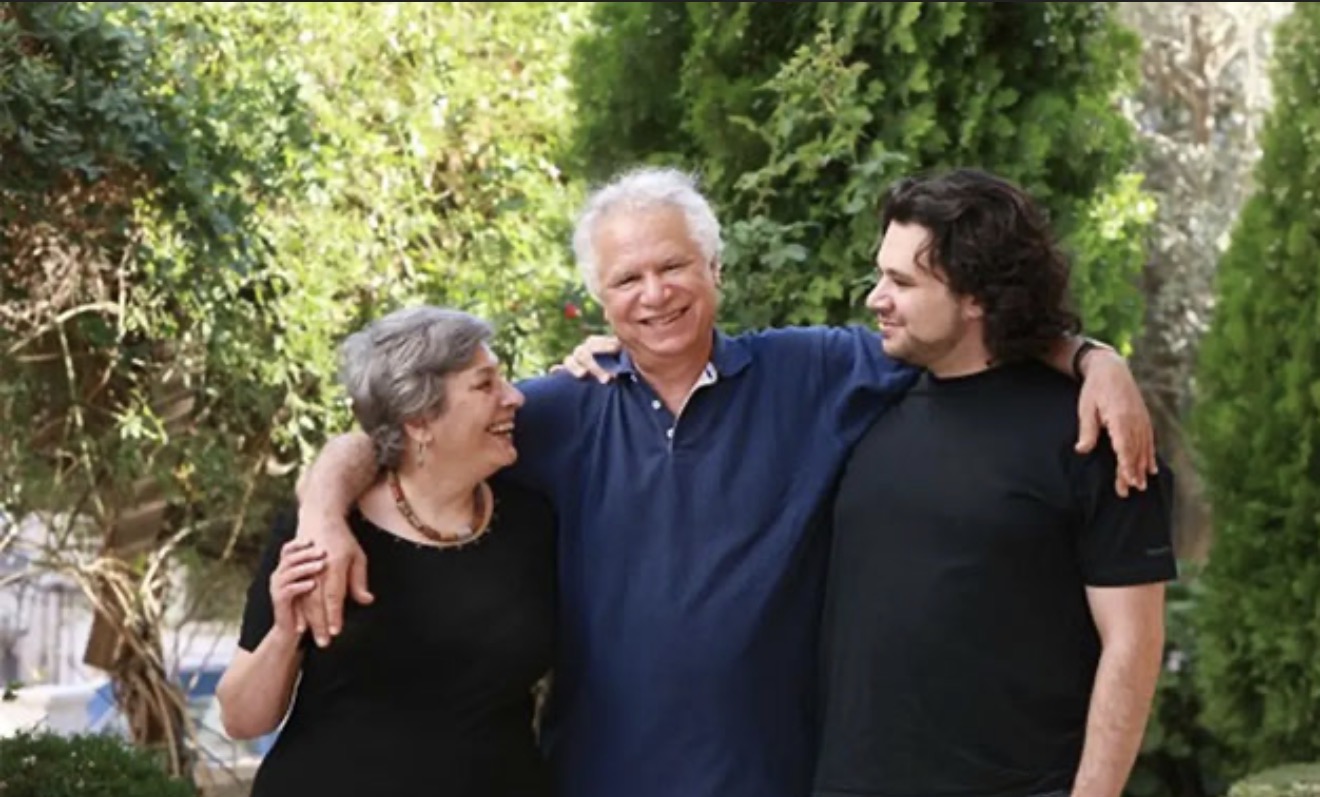
Image credit: Tamim al-Barghouti with his parents, Radwa Ashour and Mourid Barghouti — photo supplied by the publisher
Original Reporting
Somewhere in Jerusalem this morning a taxi driver can finish the verse if you start it.
"We passed the beloved's house, and the enemy's law and wall turned us from the door" — the opening of "In Jerusalem", the poem Tamim al-Barghouti recited on an Abu Dhabi stage in 2007 and Palestinians have been reciting back to him ever since.
His publisher, Interlink Books, records what happened next: the poem became a street poem, Palestinian newspapers crowned him "the Poet of Jerusalem", his posters went up in the city's streets, and key chains were sold carrying his picture.
Nearly two decades on, the man behind the poem remains one of the most widely read Arabic poets of his generation — a political scientist with a doctorate from Boston University who fills amphitheaters and stadiums for verse, as his publisher's biography puts it. This profile, part of our series on the artists who carry Palestine into the world, tells how a poet born to exile wrote his way home.
A house with two poets#
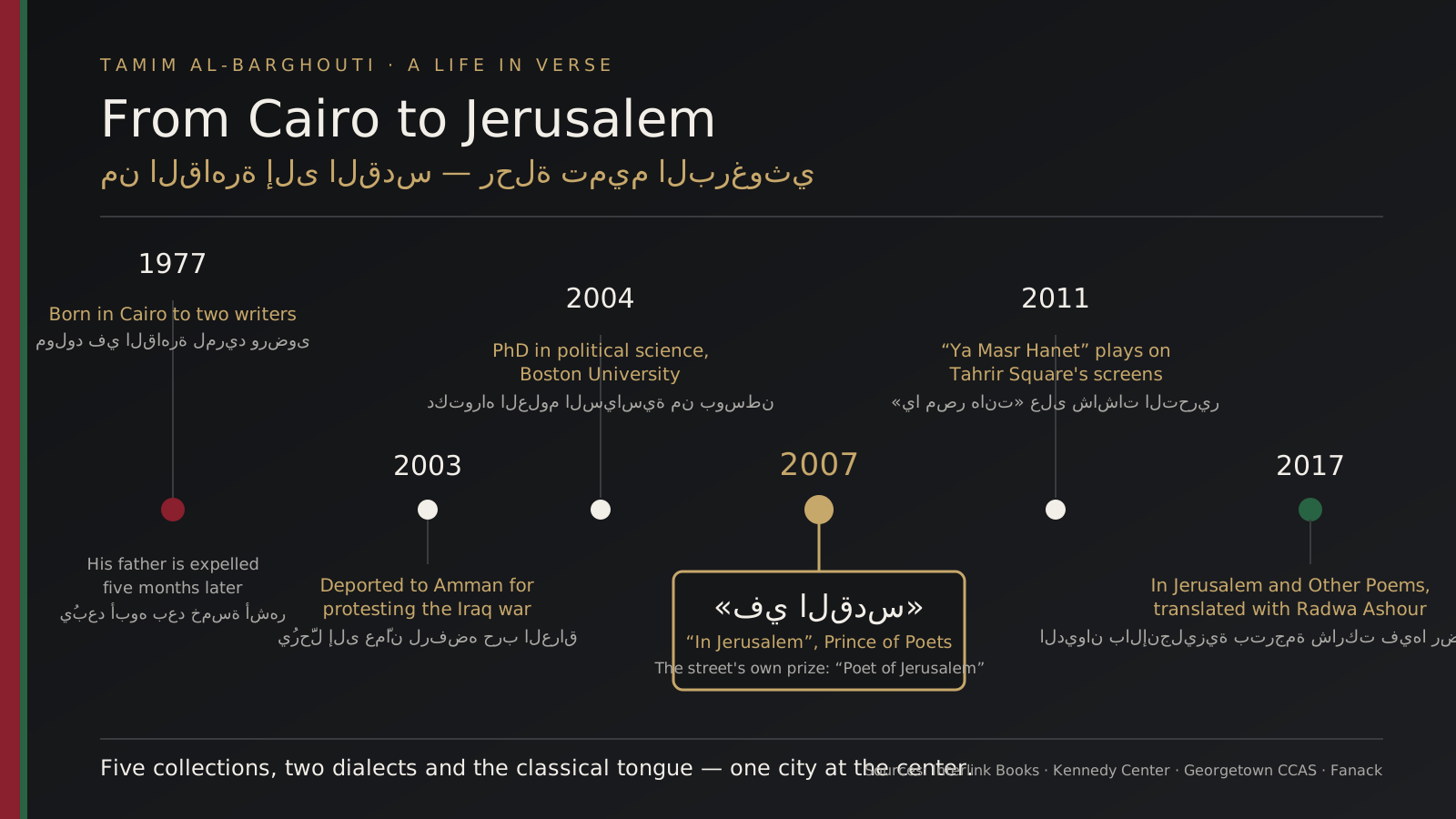
Tamim al-Barghouti was born in Cairo on 13 June 1977, into what may be modern Arabic letters' most beloved household: his father the Palestinian poet Mourid Barghouti, from Deir Ghassaneh near Ramallah, and his mother the Egyptian novelist Radwa Ashour.
When Tamim was five months old, Egypt's government expelled his father along with other prominent Palestinians, as the regional platform Fanack records — and the family learned to live across borders.
The separation his parents endured — Mourid representing the PLO in Budapest while Radwa raised Tamim in Cairo — became the material of his father's celebrated memoir "I Saw Ramallah".
Its sequel, "I Was Born There, I Was Born Here", tells of the father finally bringing his Egyptian-born son to the family's village, and toward the city that would define him. Exile was not a theme Tamim adopted; it was the house he grew up in.
The scholar who writes qasidas#
The poet is also a scholar of the state that failed him. He studied politics at Cairo University and the American University in Cairo, then took his doctorate in political science at Boston University in 2004, as his Kennedy Center artist biography records. His book "The Umma and the Dawla: The Nation State and the Arab Middle East" argues the case in prose; the poems argue it in meter.
In March 2003, on the eve of the US invasion of Iraq, Egyptian security arrested the young poet at an anti-war protest and deported him to Amman — an expulsion Fanack notes had no legal basis, and which he answered with two collections in Egyptian colloquial Arabic, "Qaluli Bethebb Masr" and "Maqam Iraq".
He was allowed back weeks later, a second-generation deportee who had now been expelled, like his father, from the country of his birth.
The career that followed crossed institutions as easily as dialects: the United Nations' Division of Palestinian Rights and its mission in Sudan in 2005 and 2006, a fellowship at Berlin's Institute for Advanced Study in 2007, and a visiting professorship at Georgetown University, whose Center for Contemporary Arab Studies welcomed him for the 2008-09 academic year.
Nineteen minutes in Abu Dhabi#
In 2007, Abu Dhabi TV's "Prince of Poets" gathered 35 poets from across the Arab world for a verse competition watched by millions. Al-Barghouti reached the final and placed fifth — and the ranking is now a piece of trivia, because what the audience remembers is the night he stood and recited "In Jerusalem".
The poem describes an aborted journey: a visitor reaches the city, walks its alleys among all the peoples history has deposited there, and is turned back. Jordan's Al-Rai newspaper counts him among the rare poets whose readings pack halls across the Arab map, and Palestinian cities answered the broadcast in their own way — the posters, the key chains, the new title. Fifth on the scoreboard, first in the street.
Everyone is in Jerusalem#
What makes the poem endure is its argument. It opens in the classical two-part line of the Arabic qasida, at the wall that turns the poet away, and then does something no checkpoint anticipates: it floods the city with everyone who ever passed through her.
In Jerusalem the graves align like lines in the city's history, and the soil is the book. Everyone has passed through here — for Jerusalem welcomes all who come to her, unbeliever or believer.
Tamim al-Barghouti, "In Jerusalem", 2007
The poem's famous rebuke — "Writer of history, hold your pen: the city has two times", one a confident foreign hour that walks as if asleep, and one buried and masked, walking soundlessly, wary of being seen — reads today like prophecy about every attempt to close the city's story by force.
And then the ending, the line Palestinians quote at weddings and funerals alike, when the poet glimpses the city he cannot enter and history consoles him:
In Jerusalem is everyone in Jerusalem — and I see no one in Jerusalem but you.
The poem's closing turn, addressed to the reader barred from the city
The consolation is the argument: the city's truest resident is the one her occupiers keep outside her walls.
From Tahrir to the world's halls#
When Egypt rose in January 2011, the internet was cut — so al-Barghouti faxed a new poem, "Ya Masr Hanet" ("Egypt, deliverance is near"), to a Cairo newspaper, as his Kennedy Center biography tells it. Al Jazeera broadcast his reading, and for two weeks a recording played every couple of hours on makeshift screens in Tahrir Square: verse doing the work of a bulletin.
The English-speaking world got its door in 2017, when Interlink published "In Jerusalem and Other Poems", two decades of work rendered into English by the poet himself, by his mother Radwa Ashour before her death in 2014, and — for the title poem — by the novelist Ahdaf Soueif.
His father died in 2021; the son now carries the family's two literatures alone, between five poetry collections that move from classical Arabic to Egyptian and Palestinian colloquial and back.
Jerusalem today lives a harder hour than the one the poem met — the war's fury, the raids on the Old City's quarters, the emptying pilgrim roads. Which is exactly why the poem keeps rising: it was built for the years when the city is hardest to reach.
As long as the wall stands between Palestinians and the beloved's house, they have a verse that ends, against all evidence, with the city seeing no one but them.