Economy & Aid
Tarek Aggad steers APIC's billion-dollar network of Palestinian household industries
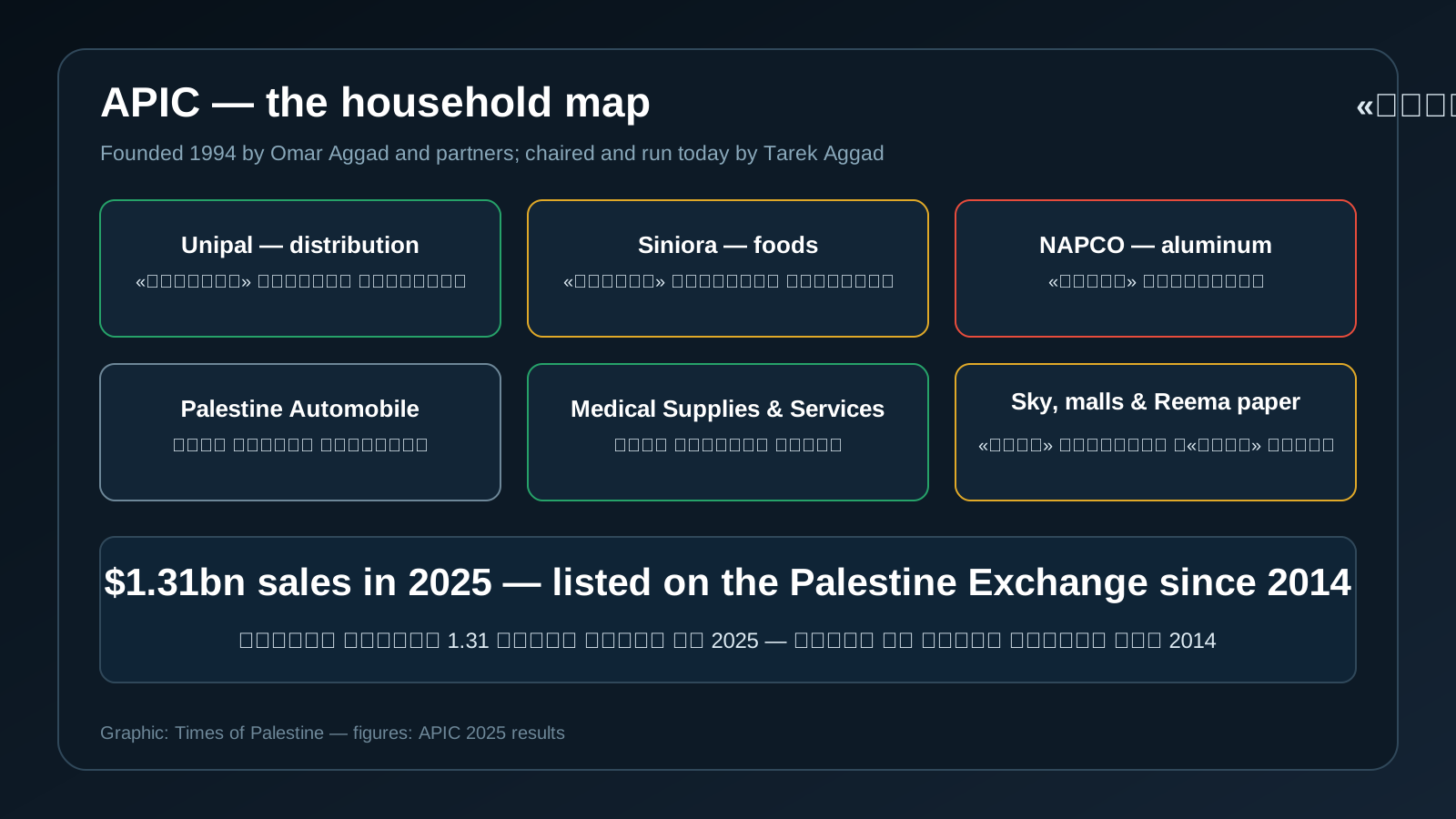
Graphic: Times of Palestine
Original Reporting
The Newsdesk gathers reporting from wire services and primary sources and rewrites every story in-house before publication. How our journalism is made →
Most Palestinians touch Tarek Aggad's companies before breakfast. The processed meats on the shelf, the household goods in the shop, the aluminum in the window frame, the car in the showroom, the medicines in the pharmacy — a striking share of them move through the Arab Palestinian Investment Company, the Ramallah conglomerate known as APIC that Aggad chairs and runs as chief executive.
The company is a family project with a diaspora arc.
Aggad's father, Omar Aggad, was born in Jaffa in 1927, driven into exile in 1948, and built one of Saudi Arabia's notable industrial fortunes — then turned it back toward home, co-founding APIC in 1994 with fellow Arab businessmen to channel investment into Palestine in the first Oslo spring.
Tarek, born in 1971, trained in the family's group and took over the Palestinian flagship, carrying it from a holding vehicle into an operating giant.
What the group holds#
APIC's subsidiaries read like a map of the Palestinian household economy: Unipal, the general-trading distributor that moves global consumer brands into Palestinian shops; Siniora Food Industries, the Jerusalem-born processed-meats house now listed in Amman; the National Aluminum and Profiles Company; the Palestine Automobile Company; the Medical Supplies and Services Company; Sky Advertising; and the Arab Palestinian Shopping Centers.
In 2024 the group took a majority stake in Reema Hygienic Paper, adding tissue manufacturing to the stable.
The scale is now measured in billions. APIC reported record sales of $1.31 billion for 2025, up almost 17 percent on the year, with $8.13 million in net income attributable to shareholders — growth posted through a war economy that has crushed smaller operators. The group has been listed on the Palestine Exchange since 2014 and employs thousands across Palestine, Jordan and the region.
Keeping shelves stocked through the war years is the group's quiet public service. Distribution is unglamorous until it fails; APIC's trucks reaching shops through closures and checkpoints are part of why Palestinian daily life still functions. The margins tell the same story — a billion dollars of sales yielding single-digit millions of profit is the arithmetic of a company that kept operating when operating was hardest.
The chairman's wager#
Aggad's bet is his father's bet carried forward: that Palestinian purchasing power, organized at scale, can sustain industries worth owning — and that a diaspora fortune returns home best as payrolls, factories and distribution fleets rather than remittances. The group's Amman and Ramallah listings knit Palestinian capital into Arab markets; its brands make the case daily that "made or moved by Palestinians" can hold its own shelf space.
He is the second-generation test of the Oslo-era investment thesis, and so far the numbers side with him. The war has narrowed profits and battered logistics, but the network held.
In an economy where so much is contingent on permits and politics, APIC's ordinary abundance — full shelves, running showrooms, paid wages — is Tarek Aggad's answer to the question his father's generation asked in 1994: whether Palestine could be invested in at all.