Real Lives
Gaza's water engineers rebuild wells from scavenged parts
 Real Lives
Graphic: Times of Palestine
Original Reporting
The Newsdesk gathers reporting from wire services and primary sources and rewrites every story in-house before publication. How our journalism is made →
Tareq Shuhaibar fixes water networks in a city with almost nothing left to fix them with. A maintenance engineer working Gaza's damaged pipes, he told reporters he spends as much time searching the city's outskirts for scrap pipe, connectors and fittings as he does on the repair itself — recycling whatever the war left behind because almost nothing new gets in.
A trade rebuilt from what survives#
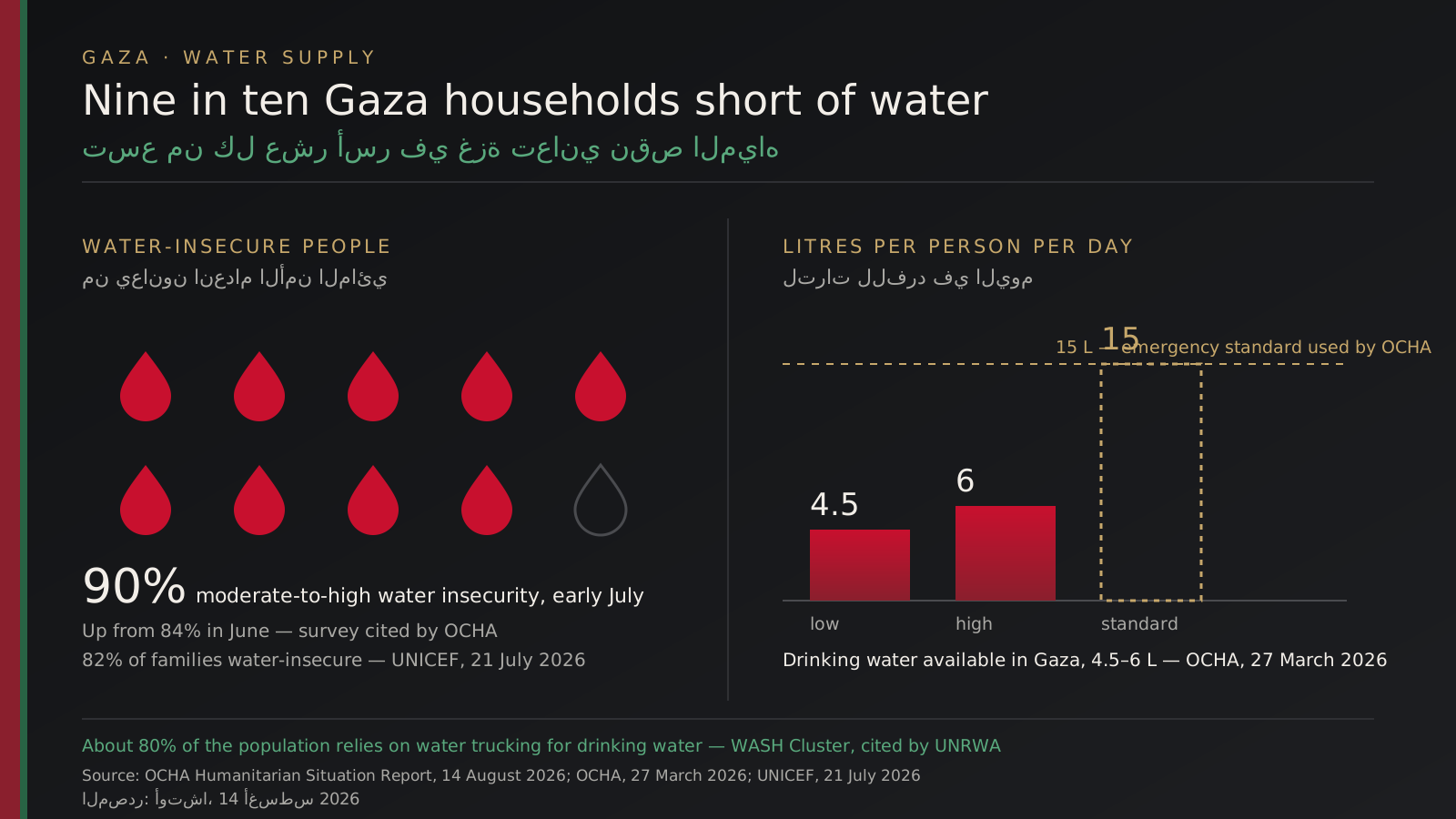
The scale of what he and colleagues across Gaza are working against is documented by Médecins Sans Frontières, which found in an April 2026 report that about 90 percent of the Strip's water, sanitation and hygiene infrastructure has been damaged or destroyed. Israeli restrictions on the entry of spare parts and construction materials have slowed even basic rehabilitation of the networks that remain, aid groups working in the sector say.
Wassem Mushtaha, who leads Oxfam's Gaza response, described the job as "solving a moving puzzle under the siege and restrictions to make the wells operational — salvaging parts, repurposing equipment, and paying inflated prices to get critical components." It is a trade of substitutions: a fitting meant for one pipe diameter reshaped to fit another, a desalination unit's part cannibalized from a machine no longer worth repairing.
What the improvisation has bought back#
The work has not been symbolic. Oxfam and its partners say the wells they and Gaza's own engineers have restored in Gaza City and Khan Younis now supply water to at least 156,000 people, alongside the reactivation of small-scale desalination plants across the Strip.
It is a fraction of what a functioning network once carried, delivered by engineers who learned to treat a junkyard as a parts warehouse because the alternative was no water at all.