Real Lives
Palestinian journalists won the world's major press prizes in two years

Image credit: Shireen Abu Akleh — Al Jazeera Media Network / Wikimedia Commons, CC BY-SA 4.0 · License
Original Reporting
The Newsdesk gathers reporting from wire services and primary sources and rewrites every story in-house before publication. How our journalism is made →
Between 2024 and 2025 the biggest names in international journalism — UNESCO, the Emmys, the Peabodys, Amnesty International, the International Women's Media Foundation — handed their highest honours to Palestinians.
Some of the winners were filing from tents. One was an anchor in Rome. One is a poet in Jerusalem who became a magazine's first Palestine correspondent.
They are worth knowing by name.
The year the prizes arrived together#
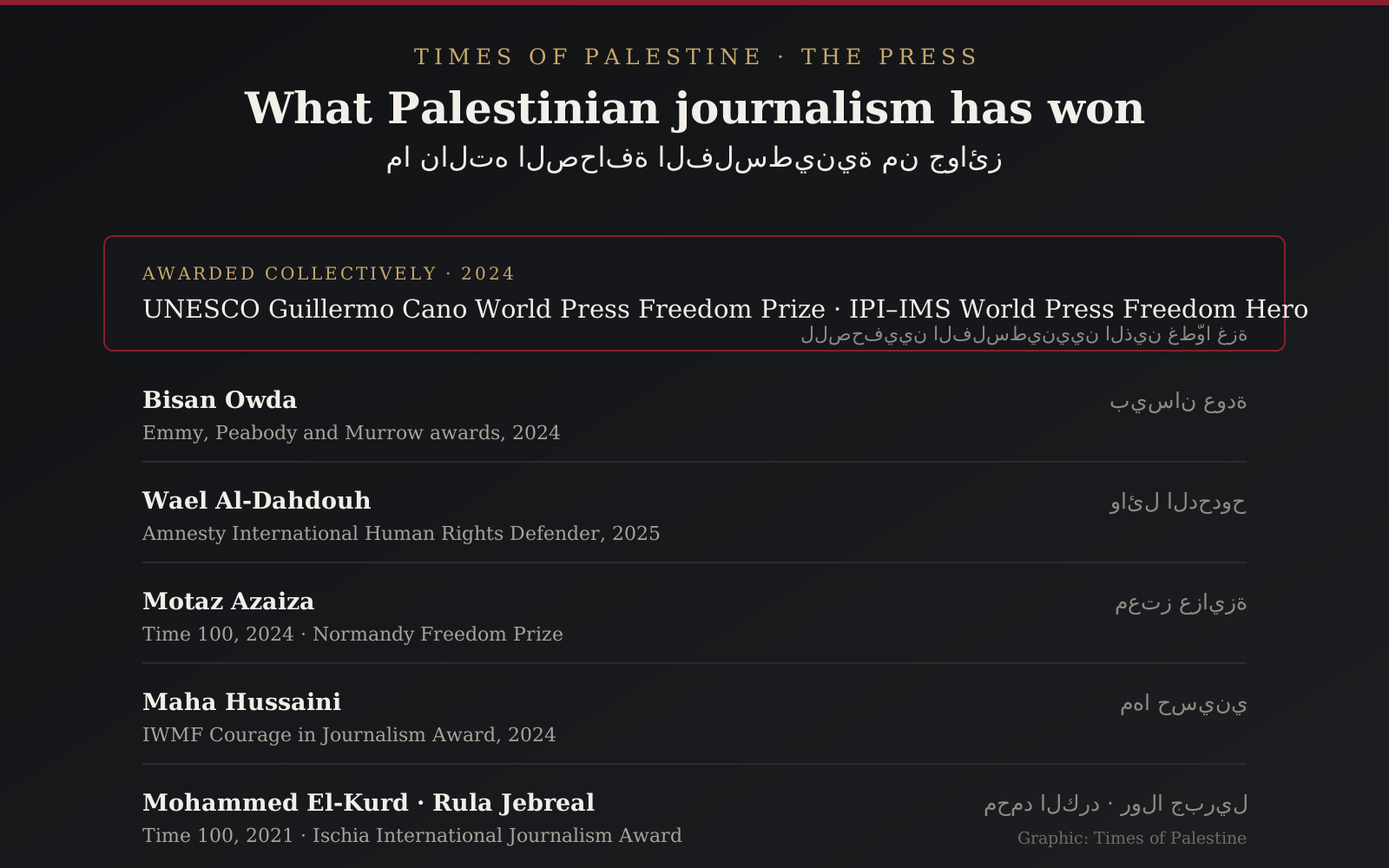
UNESCO gave its 2024 Guillermo Cano World Press Freedom Prize to Palestinian journalists covering Gaza, on the recommendation of an international jury of media professionals.
The International Press Institute and International Media Support named the same group their 2024 World Press Freedom Hero. It was the first time in the award's history that it went to a body of journalists rather than an individual.
RAW in WAR gave its 2024 Anna Politkovskaya Award to Palestinian women journalists in Gaza. Italy's DIG festival gave its 2024 Watchdog Award to Press House–Palestine and to Palestinian reporters as a whole.
Four juries, four countries, one conclusion.
The correspondents who stayed#
Wael Al-Dahdouh has covered Gaza for Al Jazeera for more than twenty-eight years and runs its bureau there. Amnesty International Australia named him its 2025 Human Rights Defender; he spoke at the Amnesty Media Awards in London that June. The National Press Club gave him its top award, and India's Kerala Media Academy named him Mediaperson of the Year. He kept broadcasting after his own family was killed.
Bisan Owda made It's Bisan from Gaza and I'm Still Alive for AJ+. It won the 2024 News and Documentary Emmy for outstanding hard news feature, short form, a 2024 Peabody in the news category, and an Edward R. Murrow Award for news series. She won the Emmy after a campaign to have her nomination withdrawn.
Maha Hussaini documented Israeli field executions in reporting that South Africa entered into evidence at the International Court of Justice, and holds the Rory Peck Trust's 2020 Martin Adler Prize. The International Women's Media Foundation named her a 2024 Courage in Journalism laureate, then rescinded it eleven days later over her old social media posts — while calling her courage undeniable.
Motaz Azaiza photographed Gaza until the world was looking at his feed. Time put him on its 100 most influential people of 2024; GQ Middle East made him its man of the year; the Normandy regional council gave him its Freedom Prize that June; Trinity College Dublin's Law Society awarded him its Praeses Elit medal in February 2026.
Plestia Alaqad kept a diary through forty-five days of reporting. Little, Brown published it in the United States and Pan Macmillan in Britain in 2025 as The Eyes of Gaza: A Diary of Resilience.
Fatma Hassona was born in Gaza City in 1999 and photographed the city until 16 April 2025. The day before she was killed, she learned that Put Your Soul on Your Hand and Walk, Sepideh Farsi's documentary built around her, had been selected for ACID Cannes. The festival held a tribute to her in May.
The newsroom in Bethlehem#
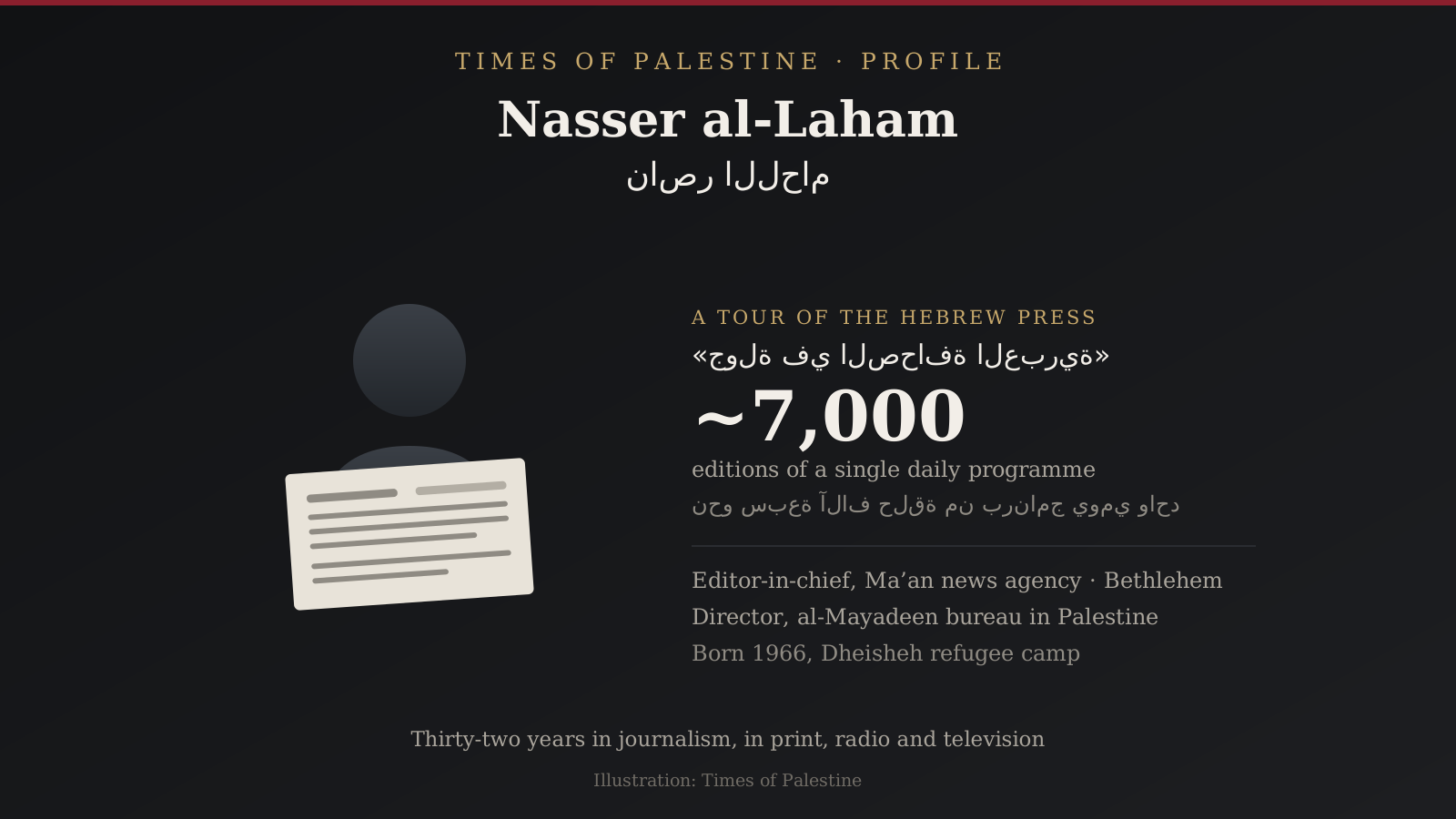
Nasser al-Laham has been editor-in-chief of the Ma'an news agency and directs al-Mayadeen's Palestine bureau. His daily programme reading the Israeli press to Palestinian audiences has run past seven thousand editions and topped Palestinian audience surveys for two decades.
He was born in Dheisheh refugee camp in 1966, served six years in an Israeli prison as a student, and holds a doctorate in psychology on body language. The Arab League gave him its Arab Culture Award in Doha in 2010.
Palestinians on other countries' front pages#
Rula Jebreal became, in 2000, the first foreign woman to anchor a national evening newscast in Italy. She took the Ischia International Journalism Award as journalist of the year at thirty-three, wrote the novel Miral out of her childhood at the Dar al-Tifl orphanage in Jerusalem, adapted it for Julian Schnabel's film, and analyses foreign policy for MSNBC.
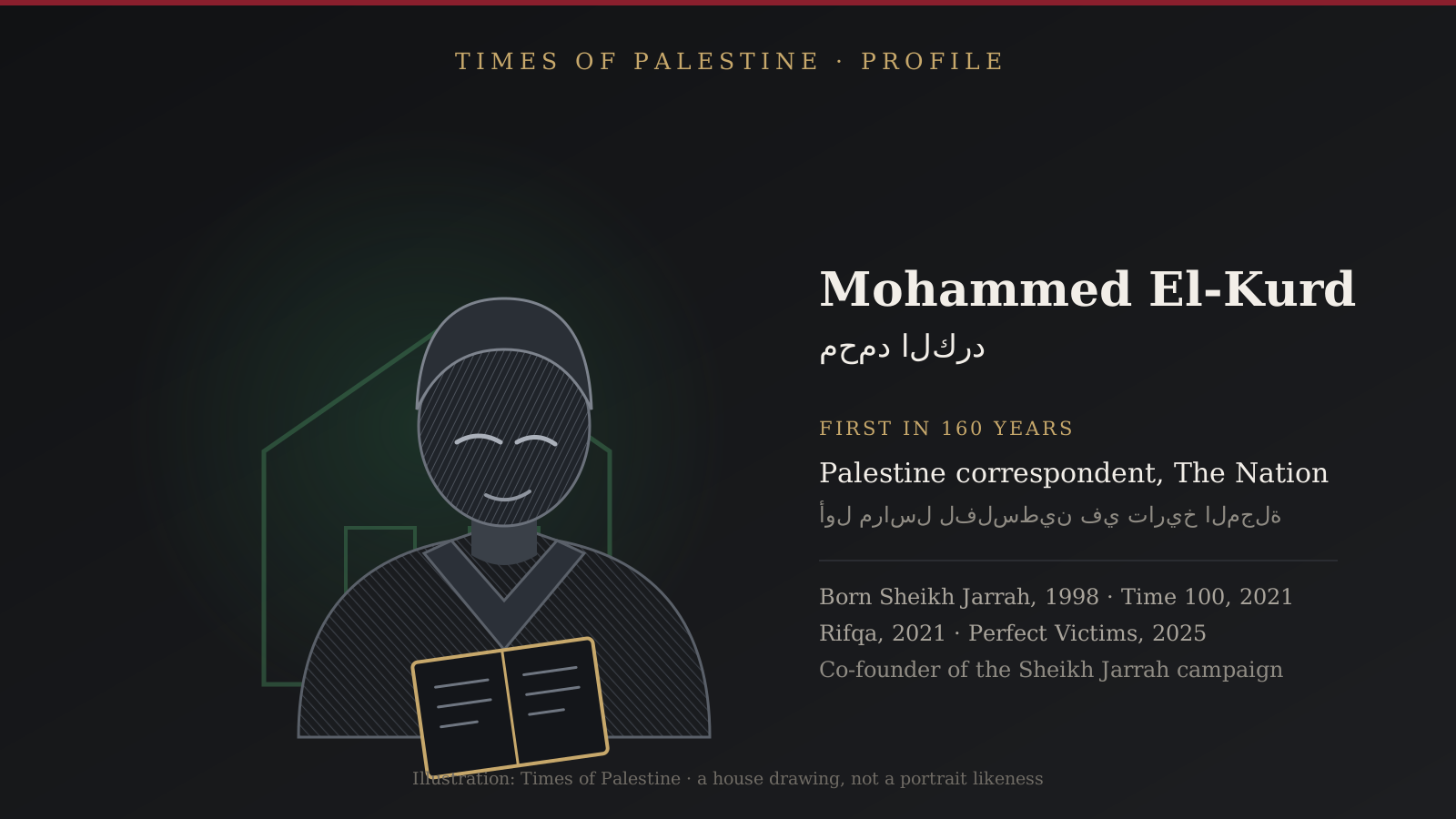
Mohammed El-Kurd was named to the Time 100 in 2021, at twenty-three, after co-founding the campaign against the evictions in his own Jerusalem neighbourhood of Sheikh Jarrah. The Nation then made him the first Palestine correspondent in its 160-year history. His first essay in the job was shortlisted for a One World Media award; his poetry collection Rifqa came out the same year.
The name on the street sign#
Shireen Abu Akleh joined Al Jazeera at twenty-six and reported for twenty-five years. She had studied journalism at Yarmouk University in Jordan during the first Intifada, when the universities at home were closed by military order, and helped start the Voice of Palestine radio station in 1994.
She became the face of the news in millions of Arab households and was known as the daughter of Palestine. She opened the profession to a generation of Arab women who watched her work.
She was killed in Jenin in May 2022. The street in Ramallah where Al Jazeera's bureau stands now carries her name.
Every journalist above is working in a profession she made ordinary for Palestinians to enter — and the juries in Paris, New York, London and Rome have spent two years saying so.
.jpg?width=640)
