Real Lives
Mohammed El-Kurd defended his own house and became a correspondent
Graphic: Times of Palestine
Original Reporting
The Newsdesk gathers reporting from wire services and primary sources and rewrites every story in-house before publication. How our journalism is made →
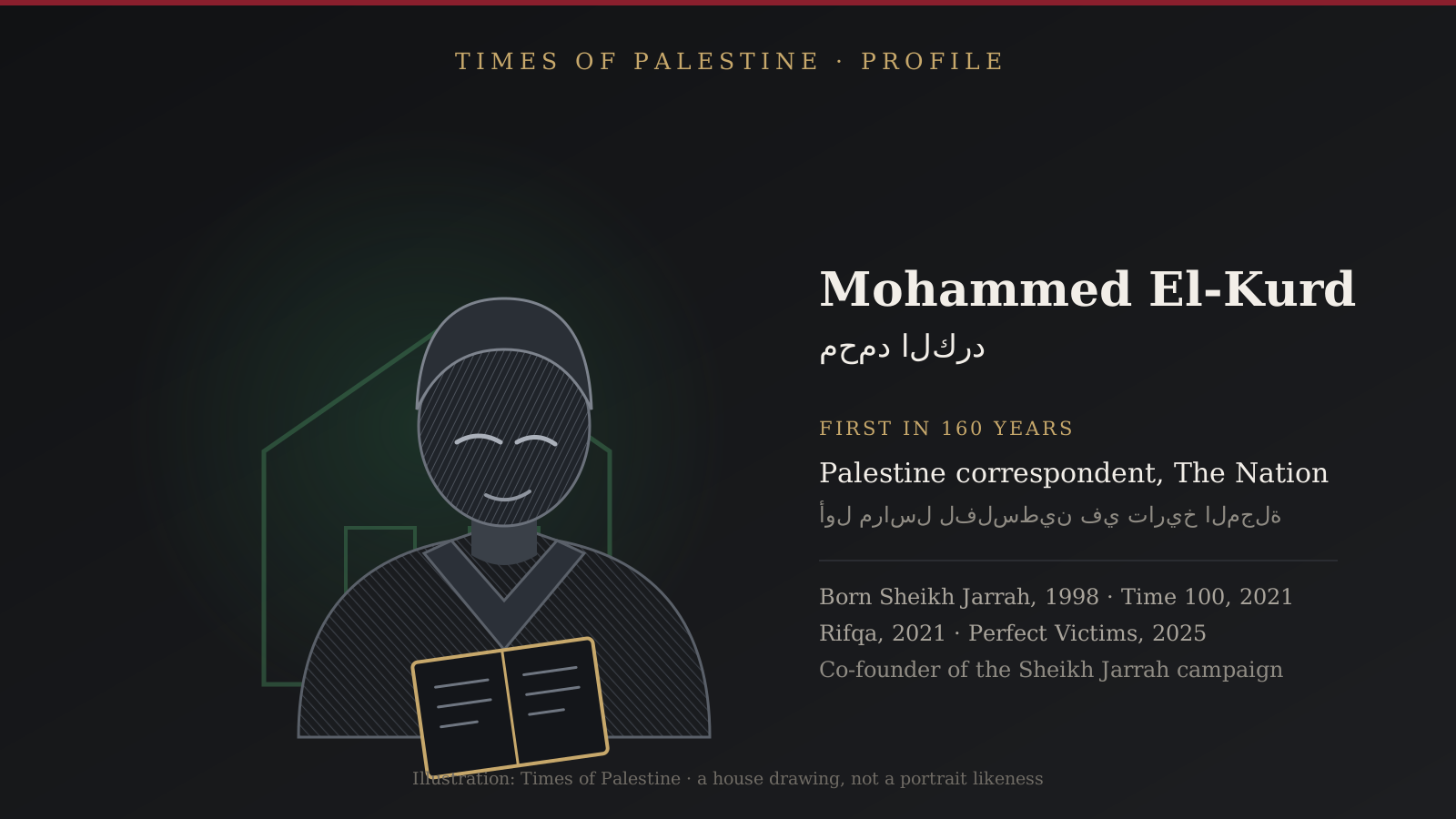
Mohammed El-Kurd did not set out to be a journalist. He set out to keep his family in their house.
By the end of that year he was on the Time 100, and The Nation had made him the first Palestine correspondent in its 160-year history.
Sheikh Jarrah#
He was born on 15 May 1998 in Sheikh Jarrah, East Jerusalem, twenty minutes after his twin sister Muna.
The El-Kurd family's house has been the subject of a dispossession case for most of his life. Settler organisations have pursued the eviction of Palestinian families from the neighbourhood for decades, and he grew up with the legal process as a permanent household fact.
He studied at the Savannah College of Art and Design and later at Brooklyn College. He was in the United States doing a master's when the case escalated, and he came home.
The spring of 2021#
In 2021 the evictions in Sheikh Jarrah became a global story, and they became one largely because Mohammed and Muna El-Kurd filmed them.
They posted what was happening on their own street — the settlers occupying part of their home, the police, the arrests, the arguments in Hebrew and Arabic and English on their doorstep. They co-founded the campaign that became #SaveSheikhJarrah.
Both twins were detained that June and released. In September, Time named them among the hundred most influential people in the world. Mohammed was twenty-three.
From subject to correspondent#
The transition that followed is rarer than it sounds.
Most people who become famous for a personal crisis remain, in the media's handling, the subject of a story. El-Kurd went the other way and became the person writing them.
The Nation, founded in 1865, had never had a Palestine correspondent. It appointed him to the post. His first essay in the job, A Night with Palestine's Defenders of the Mountain, was shortlisted for the 2022 One World Media Print Award.
The poet#
He was a poet first, and it shows in the prose.
Rifqa, published by Haymarket Books in 2021, is named for his grandmother, who was displaced from Haifa in 1948 and lived to see her grandchildren fighting for the house she ended up in. The book moves between her life and his, which is the same argument his journalism makes: that these are not two stories.
In 2025 he published Perfect Victims and the Politics of Appeal, a book-length case against the demand that Palestinians prove their innocence before their rights are considered. It is his most argumentative work and the clearest statement of what he is actually doing.
Why the writing matters#
El-Kurd's central contention is a question of craft as much as politics: that the conventional register of Palestine coverage — the careful hedging, the plea for sympathy — is itself a form of concession.
He writes in the opposite register, which is why he draws fire and why editors keep commissioning him. He is a stylist, and the argument is carried in the sentences rather than declared alongside them.
He is twenty-eight. The eviction case is unresolved, and he is still writing from inside it.

.jpg?width=640)
