Culture & Arts
Palestinian cinema took thirty-eight years to win its first Oscar
Graphic: Times of Palestine
Original Reporting
The Newsdesk gathers reporting from wire services and primary sources and rewrites every story in-house before publication. How our journalism is made →
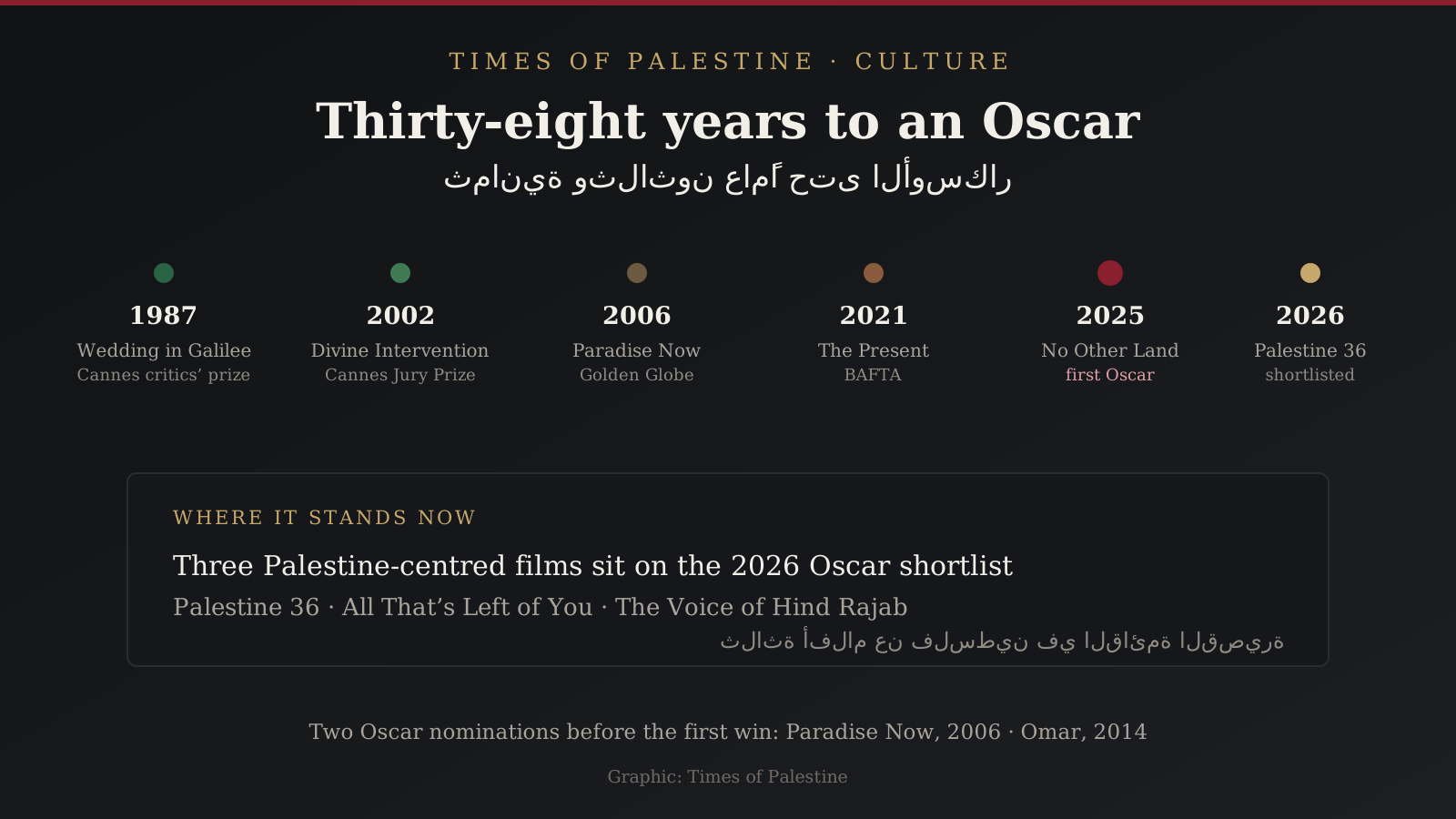
Palestinian films have been winning prizes at the world's major festivals since 1987. It took until March 2025 for one of them to win an Academy Award.
That gap — thirty-eight years between the first international prize and the first Oscar — is the shape of the whole story. Palestinian cinema has never lacked recognition from critics and juries. What it lacked was the industry's biggest institution, and this year it has three films competing at once.
1987: the film that started it#
Wedding in Galilee, written, directed and produced by Michel Khleifi, was the first feature film made in Palestine by a Palestinian director. It premiered in the Directors' Fortnight at Cannes and won the International Critics' Prize, the FIPRESCI. It then took the Golden Seashell, the top award, at San Sebastián.
The film follows a village wedding in the Galilee that a military governor will permit only if he and his officers attend. Everything Palestinian cinema would later be praised for is already there: the occupation present in a domestic room rather than on a battlefield, and a community negotiating its dignity in the space it has left.
The Cannes decades#
Divine Intervention, Elia Suleiman's 2002 feature, won the Jury Prize at Cannes and then the European Film Award — the first for a Palestinian filmmaker. Suleiman's deadpan, near-silent style put checkpoints and ID cards into a register closer to Jacques Tati than to reportage, and juries recognised it as cinema rather than testimony.
Salt of This Sea, Annemarie Jacir's 2008 debut about a Brooklyn-born Palestinian returning to a country she has never seen, won the FIPRESCI prize at Cannes.
Suleiman returned in 2019 with It Must Be Heaven, which took the FIPRESCI prize for best film in competition and a special mention from the jury.
Two nominations before a win#
Paradise Now, Hany Abu-Assad's 2005 film about two friends from Nablus recruited for an operation in Tel Aviv, won the Golden Globe for best foreign language film and became the first Palestinian film nominated for an Academy Award. It did not win.
Abu-Assad returned with Omar in 2013, and was nominated again at the 86th Academy Awards. It did not win either.
In 2021, The Present, a short film by the British-Palestinian director Farah Nabulsi starring Saleh Bakri, won the BAFTA for best British short film and was nominated for the live-action short Oscar. A father and daughter try to buy an anniversary gift and cross a checkpoint to do it. That, and a fridge, is the entire plot.
2025: the first Oscar#
No Other Land won best documentary feature at the Academy Awards in March 2025 — the first Oscar in Palestinian cinema's history. It had already taken the documentary award at the Berlinale in February 2024 and the European Film Academy's documentary prize.
It follows Basel Adra, a Palestinian journalist and activist from Masafer Yatta in the southern West Bank, recording the demolition of his community over years. It was co-directed by Adra with the Israeli journalist Yuval Abraham, alongside Hamdan Ballal and Rachel Szor.
That collaborative structure made the win contested at home as well as celebrated: the Palestinian Campaign for the Academic and Cultural Boycott of Israel judged the film to fall outside its guidelines. The prize and the objection are both part of the record.
Three at once#
The 2026 Academy Awards mark something that has not happened before. Three films centred on Palestinian subjects reached the international feature shortlist in the same year.
- Palestine 36, Annemarie Jacir's epic of the 1936–39 revolt against British rule, submitted by Palestine. It drew a twenty-minute standing ovation at its Toronto premiere and won the top prize at the Tokyo International Film Festival.
- All That's Left of You, Cherien Dabis's family drama running from 1948 to the late 1980s, submitted by Jordan.
- The Voice of Hind Rajab, Kaouther Ben Hania's account of the last hours of a five-year-old girl in Gaza in 2024, built around the real recordings of her calls for help. It won the Grand Jury Prize at Venice.
Nominations are announced in January.
What the record shows#
Read in order, the list describes an industry that critics accepted long before institutions did. Cannes gave a Palestinian film its critics' prize in 1987 and its Jury Prize in 2002. The Academy took until 2025, and did so in the documentary category rather than for a feature.
The pattern is familiar to anyone who has watched how Palestinian work travels: praise from juries of film people, hesitation from the bodies that hand out the industry's central honours. Whether three shortlisted films in one season changes that is a question January will answer.
What is already settled is that the films exist, that they have been made continuously for four decades under conditions that make filmmaking barely possible, and that the record of what they have won is longer than most people, including most Palestinians, would guess.