Culture & Arts
Mona Miari rewrites 'Comfortably Numb' as Palestine's refusal to go numb
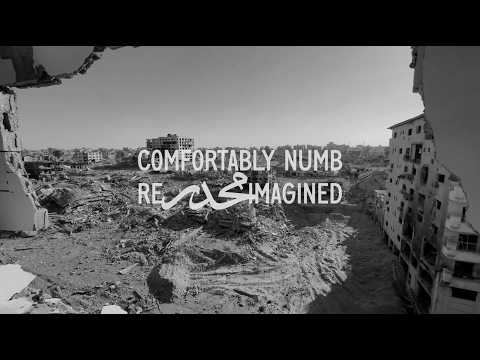
Photo: Roger Waters & Mona Miari — Comfortably Numb Re-Imagined (official video thumbnail)
Original Reporting
The Newsdesk gathers reporting from wire services and primary sources and rewrites every story in-house before publication. How our journalism is made →
For nine minutes, one of the most famous songs in rock history belongs to a Palestinian voice. On "Comfortably Numb Re-Imagined," released at the end of July, Roger Waters hands the heart of Pink Floyd's 1979 classic to the Palestinian-American singer-songwriter Mona Miari.
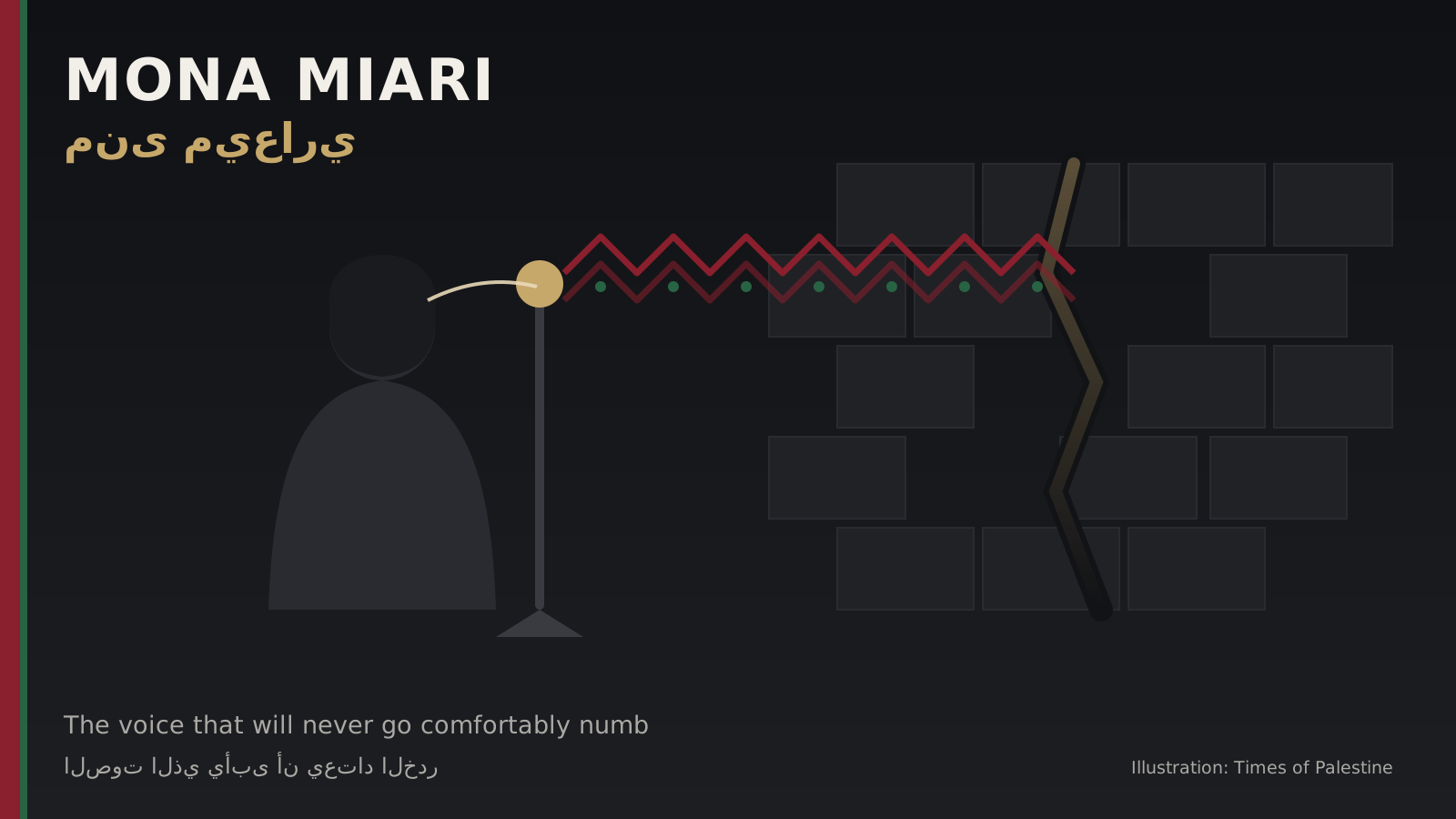
She turns its famous surrender inside out. Where the original drifts into "I have become comfortably numb," her verses, sung in Arabic and English, answer: I will never become comfortably numb.
It is the largest stage yet in a career that has been building toward exactly this: a singer, composer and lawyer who has spent years carrying Palestinian and Levantine song into New York's grandest halls, and who now carries Gaza into the world's headphones.
A childhood with the song already in it#
Miari was born in Chicago and grew up between America and the Galilee. The Haifa-based outlet Arab 48 introduced her to readers as a daughter of al-Birwa — the village erased in 1948 that the world knows as Mahmoud Darwish's birthplace — born in the United States and returned to live in Acre.
Her official biography starts the story at age four, singing a classical Arabic poem a cappella at a World Children's Day festival. By fifteen she was headlining a concert in the "Jerusalem, Capital of Arab Culture" festival year.
The path since has run through two professions at once — law and music — and the discipline of the first shows in the architecture of the second: repertoire built deliberately, projects that outlast a single night on stage.
Building Arab music a home in New York#
In New York, Miari has become as much an institution-builder as a performer. She founded and directs the New York Arab Chorus, the first Arab chorus in the city's history, and her own concerts have filled rooms that anchor American music — Lincoln Center, the Brooklyn Academy of Music, Joe's Pub at The Public Theater, National Sawdust.
In April 2024 she fronted the New York Arabic Orchestra's takht for the National Arab American Heritage Month commemoration, Arab America reported.
On record, she appears on "Rumi Suite," the Turkish composer Zülfü Livaneli's album weaving Sufi poetry with jazz and orchestral writing alongside trumpeter Ibrahim Maalouf — a project its New York presenter, the venue Drom, says was submitted for Grammy consideration.
Her debut album of her own songs, written with collaborators across the Middle East, Europe and the United States, is in the works and has already had a preview concert on a New York stage.
The Wall opens for a lullaby#
The Waters collaboration began, Miari told The New Arab, with the questions the original song asks — is there anybody in there? — and what they sound like beside Gaza.
"I took the questions that Roger asked in the original," she said, "and came up with the idea of responding — we have the questions, so why don't I lay out a stark, devastating truth and refuse to let the world become comfortably numb to it?"
Her answer includes an entirely new movement she wrote, "Hind's Lullaby," for Hind Rajab, the six-year-old girl killed with her family in Gaza in January 2024 — a conversation between mother and daughter imagined, in Miari's words, somewhere in the sky where nothing can interrupt it.
The film pairs the studio in black and white with Gaza filmed by Gaza's own photographers as bombs fell around them, and proceeds go to the Palestine Children's Relief Fund.
I am my people. I am telling my story.
Mona Miari, to The New Arab
The release has renewed the long-running argument around Waters, whose critics call his campaigning against Israel antisemitic; he told MusicRadar he does not "have an anti-semitic bone in my body." The Palestinian writer Mohammed El-Kurd, interviewing the pair for Dazed MENA, framed the song instead as an act of artistic witness — a rock monument reopened so a Palestinian voice could sing from inside it.
The story she is telling next#
What comes next is the debut album, the chorus's seasons, and a stage that keeps widening.
The through-line has not moved since a four-year-old sang a poem to a festival crowd: Palestinian music presented not as a cause's soundtrack but as a great tradition performed at full height — and a singer who, handed one of rock's most famous laments, rewrote it as a promise to stay awake.