Real Lives
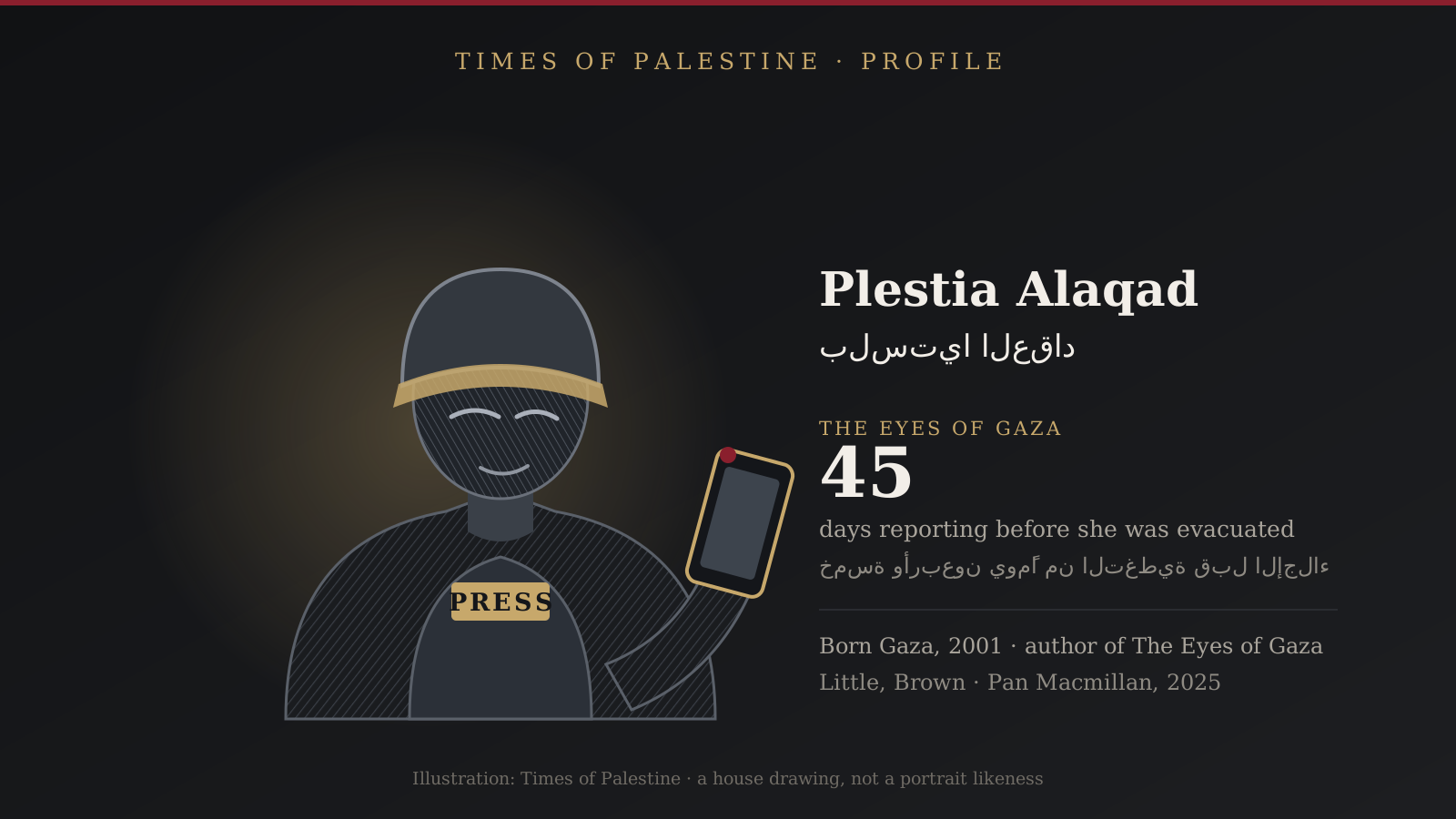
Plestia Alaqad reported forty-five days in Gaza and wrote the book
Graphic: Times of Palestine
Original Reporting
The Newsdesk gathers reporting from wire services and primary sources and rewrites every story in-house before publication. How our journalism is made →
In early October 2023 Plestia Alaqad was a recent graduate who wanted to be a journalist. She was twenty-one, and she had not yet been one.
Six weeks later several million people were following her, and the phrase that stuck to her was the eyes of Gaza.
Twenty-one#
She was born in Gaza on 10 December 2001 and studied at Eastern Mediterranean University.
When the bombardment began she did what a trained instinct told her to do before anyone had hired her to do it: she started filming, in a helmet and a vest, narrating in English what was happening on the street she lived on.
There was no bureau, no editor, no commissioning desk. There was a phone and a decision.
Forty-five days#
She reported for forty-five days before being evacuated.
Her account of that period has been consistent and unromantic — that it felt like forty-five years, and that she was not being brave so much as doing the only useful thing available to someone who happened to be there with a working phone.
What made the coverage travel was tone. She was not performing gravitas. She spoke the way a twenty-one-year-old speaks, which is precisely why audiences who had tuned out of bulletins could not tune out of her. Her followers passed four million.
Australia, and finishing the degree#
She was evacuated to Australia and resumed her studies there.
That detail is easy to skip past and worth sitting with. She had become one of the most-watched reporters on earth, and she went back to being a student — a decision that says something about how she understands the work.
She writes poetry as well, and has kept publishing.
The diaries#
Alaqad had been keeping a diary throughout the forty-five days. In 2025 it became a book: The Eyes of Gaza: A Diary of Resilience, published by Little, Brown in the United States and Pan Macmillan in Britain.
The diary form is the point. A news report is written for people who were not there; a diary is written for nobody, which is why it keeps the details that reporting strips out — the food, the boredom, the jokes, the specific sound of a specific night.
The book is therefore not a war memoir in the usual shape. It is a record of a young woman's ordinary life interrupted, written while it was being interrupted.
What her case demonstrates#
Alaqad is the clearest example of a change in who gets to report.
She had no institution behind her, no accreditation, no press card issued by anyone. She had proximity, a language, a phone and a willingness to keep the camera up. Within weeks she was the primary source for readers in dozens of countries, and within two years she was published by two of the largest houses in the English-speaking world.
She is twenty-four. Most journalists are still filing copy nobody reads at that age.