Politics & Diplomacy
US, Iran and Oman close in on reopening the Strait of Hormuz

Image credit: NASA Terra/MODIS — Wikimedia Commons · License
Original Reporting
The United States, Iran and Oman are closing in on an interim agreement to reopen the Strait of Hormuz, with Washington aiming to announce it as soon as Wednesday, the journalist Barak Ravid reported for Axios, citing two regional sources and a US official. The deal would unlock the waterway that carries a fifth of the world's oil — and, downstream, the Gulf money pledged to Gaza's reconstruction.
The agreement has been under negotiation for several weeks, according to the report, and is aimed at resuming the ceasefire between the United States and Iran and restarting negotiations over a nuclear deal.
The shape of the arrangement#
The emerging deal calls for ships to enter the Persian Gulf through a route controlled by Iran and to exit through a route controlled by Oman, the report says. Any agreement appears contingent on the United States lifting its blockade on Iran's ports.
The report adds that President Donald Trump decided on Saturday not to follow through on threats to unleash a massive bombing campaign, in order to allow more time for diplomacy. In the Oval Office on Monday he put the same choice in his own words: he wanted to give Iran "every last chance before decapitation."
The public signals had been pointing the same way. Secretary of State Marco Rubio said at the State Department on Tuesday that "there's been progress made in those talks, but not finality yet," stressing that any deal covers the strait alone and that Iran's nuclear program needs a separate agreement.
There's been progress made in those talks, but not finality yet. We're hoping that will happen very shortly.
Marco Rubio, US Secretary of State, 4 August 2026
Treasury Secretary Scott Bessent told CNBC there was a chance of an agreement "today or tomorrow," and Brent crude fell more than four per cent, below $80 a barrel. Tehran, for its part, maintains it is negotiating with Oman rather than Washington, and its foreign ministry spokesman Esmail Baghaei said no Iranian delegations would travel in the coming days.
The war behind the waterway#
Iran closed the strait when the war began at the end of February, after American and Israeli strikes on Iranian targets. A US bombing campaign, an April ceasefire that frayed, a naval blockade of Iranian ports and a June memorandum followed — and the waterway has remained contested through renewed confrontation since July.
An interim deal is thus a truce over one chokepoint, not a peace. It says nothing about the nuclear file, the sanctions architecture or the wider confrontation; Rubio's strait-only caveat draws that boundary explicitly.
Why Palestinians are watching an oil lane#
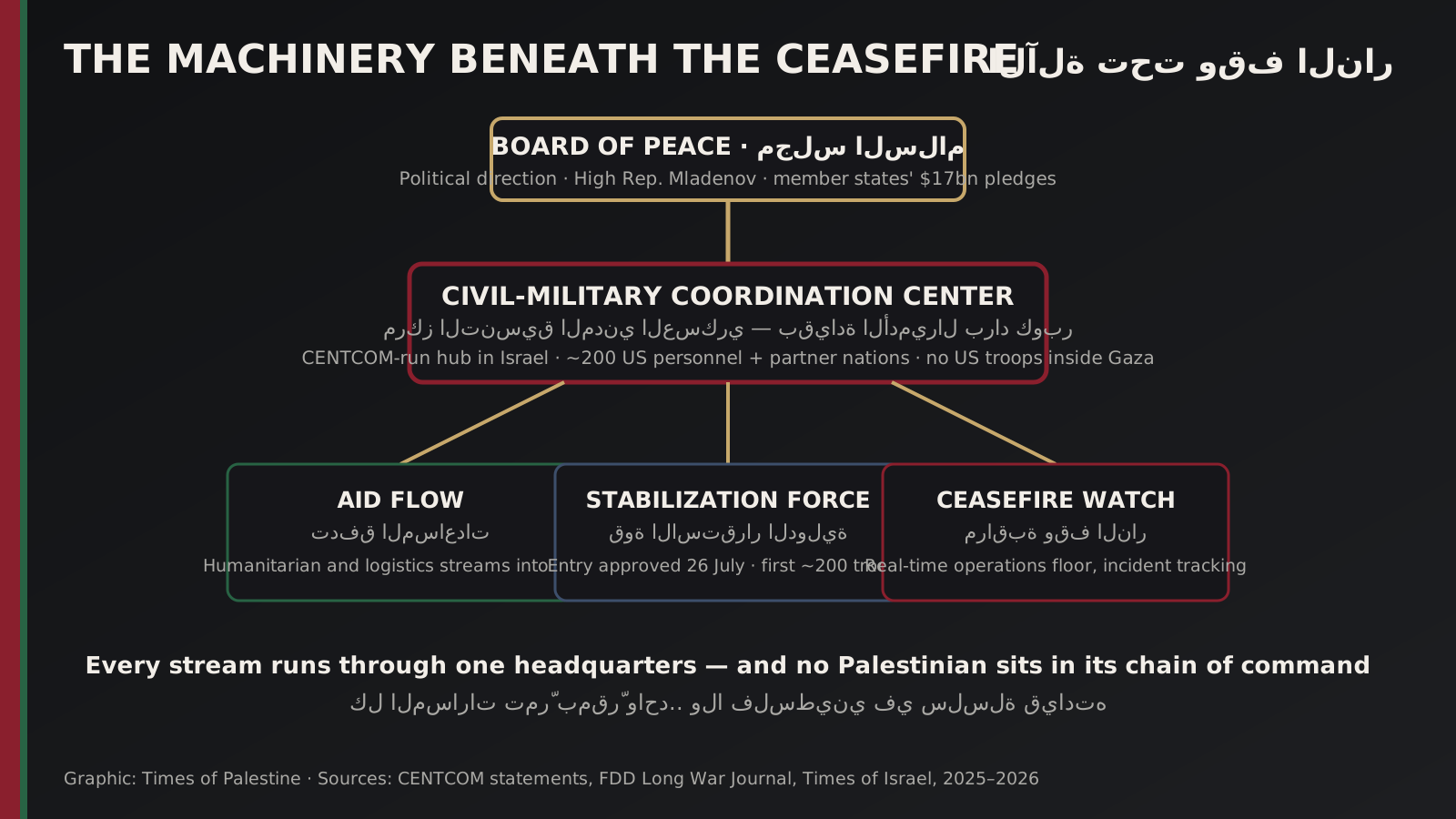
For Gaza, the strait is a budget line. As this newspaper reported in Tuesday's Washington Brief, the Gulf treasuries that pledged reconstruction money to the Board of Peace in February earn it from oil that a closed waterway has priced for months — and reopening it is the change most likely to turn pledges into transfers.
No announcement has come as of publication, and Iran has not publicly confirmed the terms Axios describes. The report is the fullest account yet of where the talks stand, and this newspaper will follow the announcement, and whether the money moves, as they happen.