Real Lives
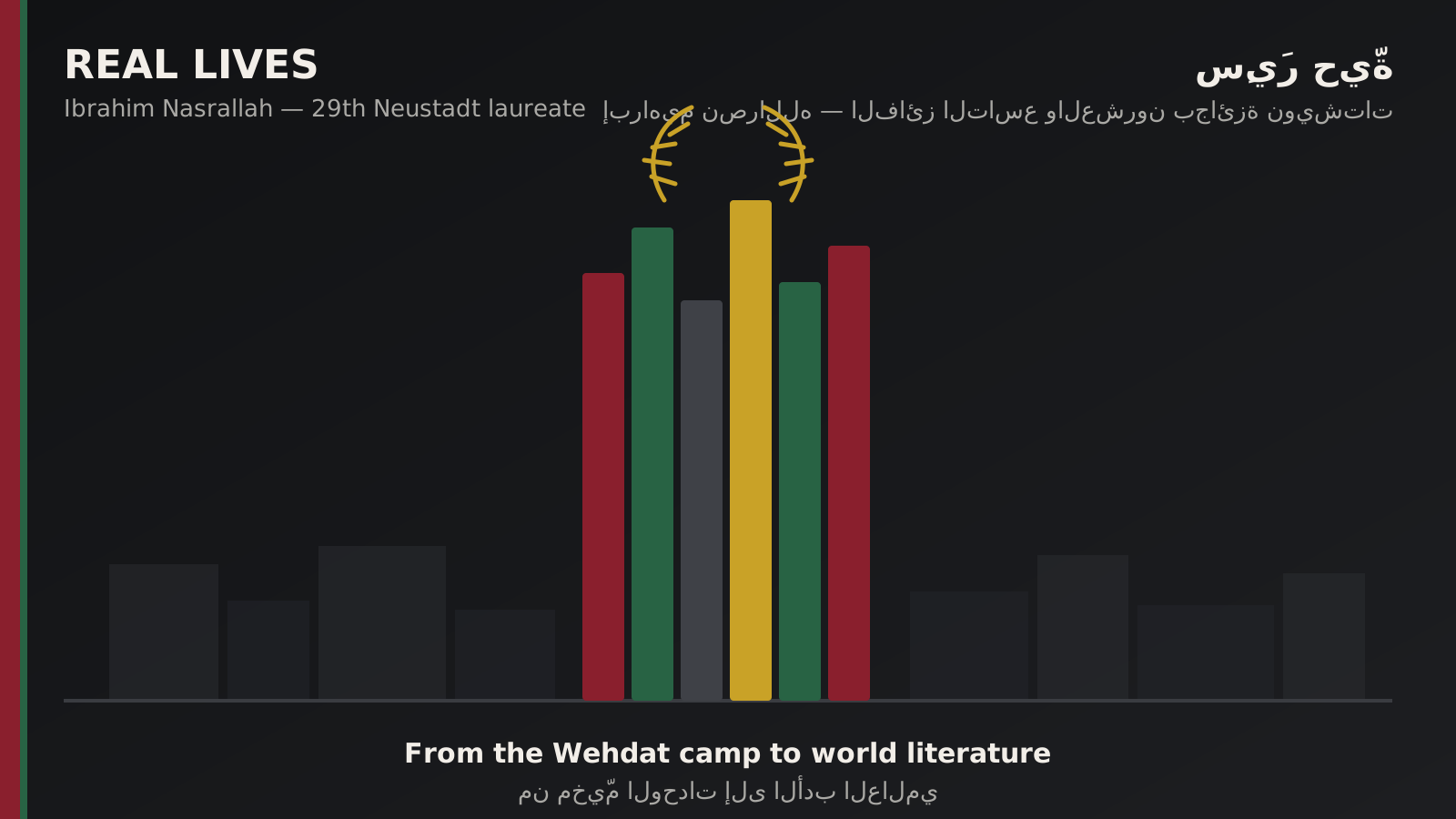
Ibrahim Nasrallah carries a refugee camp childhood to the Neustadt Prize
Graphic: Times of Palestine
Original Reporting
The boy who grew up in the Wehdat refugee camp on the edge of Amman is the twenty-ninth laureate of the Neustadt International Prize for Literature, an honour the literary world has spent decades calling the American Nobel.
Ibrahim Nasrallah was born in 1954 to parents driven from Palestine in 1948, in one of the camps that received them. His first schooling was in the camp; his teaching certificate came from the college UNRWA ran to turn refugee students into refugee teachers.
Forty books later he is a poet, a novelist, a painter and a photographer, and the Neustadt jury — working writers who each nominate one candidate and then argue it out — chose him.
His nominator was the novelist Shereen Malherbe, who put the case in a sentence worth keeping. Nasrallah's work, she wrote, spans "universal issues and themes woven into the Palestinian struggle that allow readers to connect deeply with Palestine outside of a colonial framework."
The representative text she set before the jury was Time of White Horses, the novel that follows three generations of one village from the last Ottoman decades into the catastrophe of 1948 — a book that gives a Palestinian village a century of ordinary life before it gives it a fall.
The long project#
Nasrallah's great labour is the cycle he calls the Palestinian Comedies: separate novels, written across decades, each taking one slice of 250 years of Palestinian time. He has never written it in order and never allowed it to close.
He is also, by any measure, one of the most translated Arab novelists of his generation. Four of his novels are in English through the American University in Cairo Press; Prairies of Fever came out with Interlink in a translation by May Jayyusi and Jeremy Reed; Huda Fakhreddine's translation of his poetry collection Palestinian appeared in 2024.
He won the International Prize for Arabic Fiction — the Arabic Booker — in 2018. The Neustadt carries a purse of $50,000 and a place in a list that has run ahead of the Swedish Academy more than once.
What the prize acknowledges#
The executive director of the prize's sponsor called the choice a significant moment in the Western reapproach to Palestinian culture, and the phrase is precise. The jury did not reward reportage from a catastrophe. It rewarded a body of work that has been building a Palestinian literary universe — villages, horses, lovers, teachers, quarrels, weddings — for forty years.
That is the achievement Palestinians can hold this month. A camp near Amman produced a writer whose imagined country is now read in a dozen languages, and the world's writers, reading him, said so out loud.