Research & Investigations
Abbas's drafting committee rewrites the system, leaves PLO status unsettled
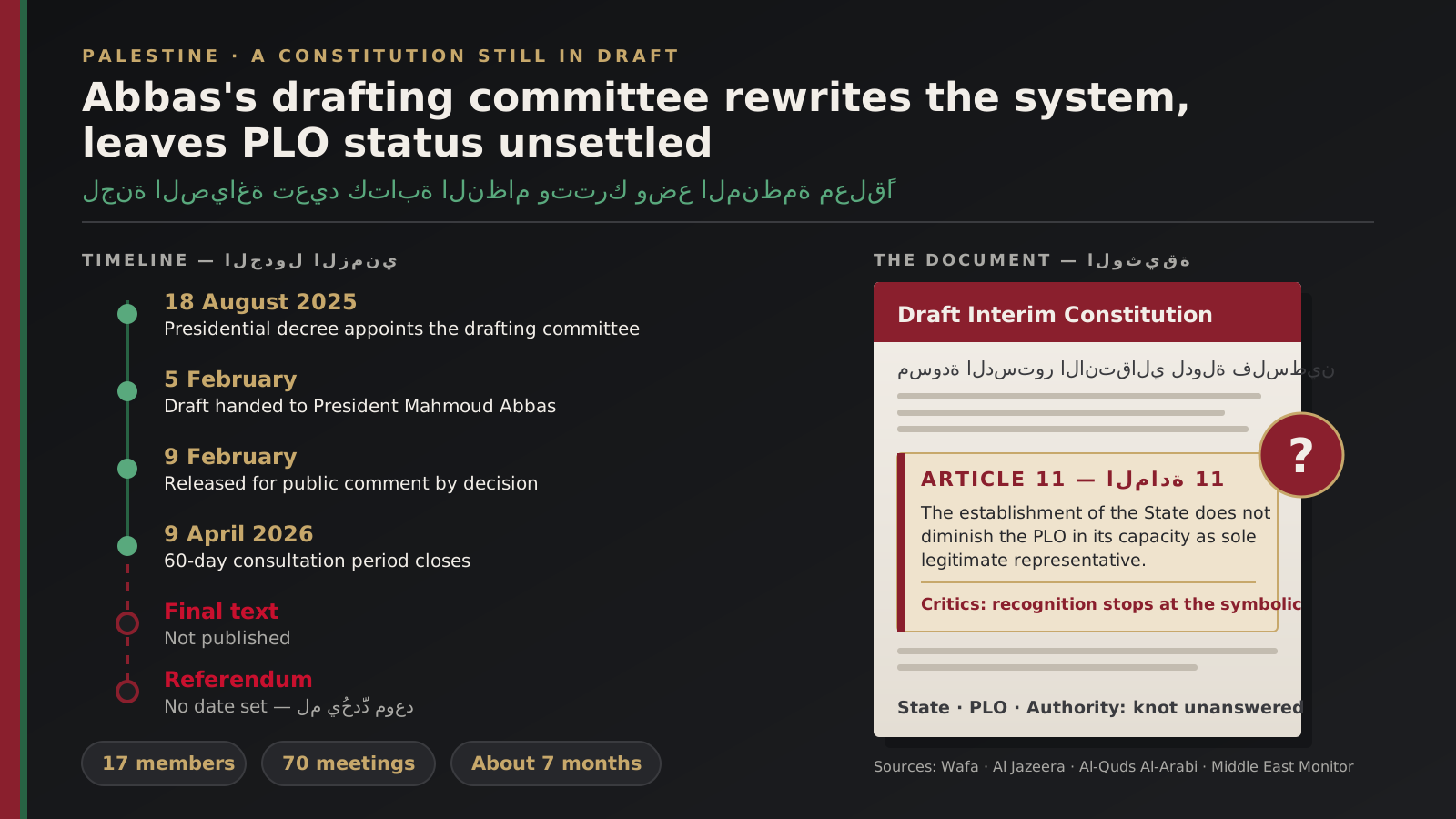
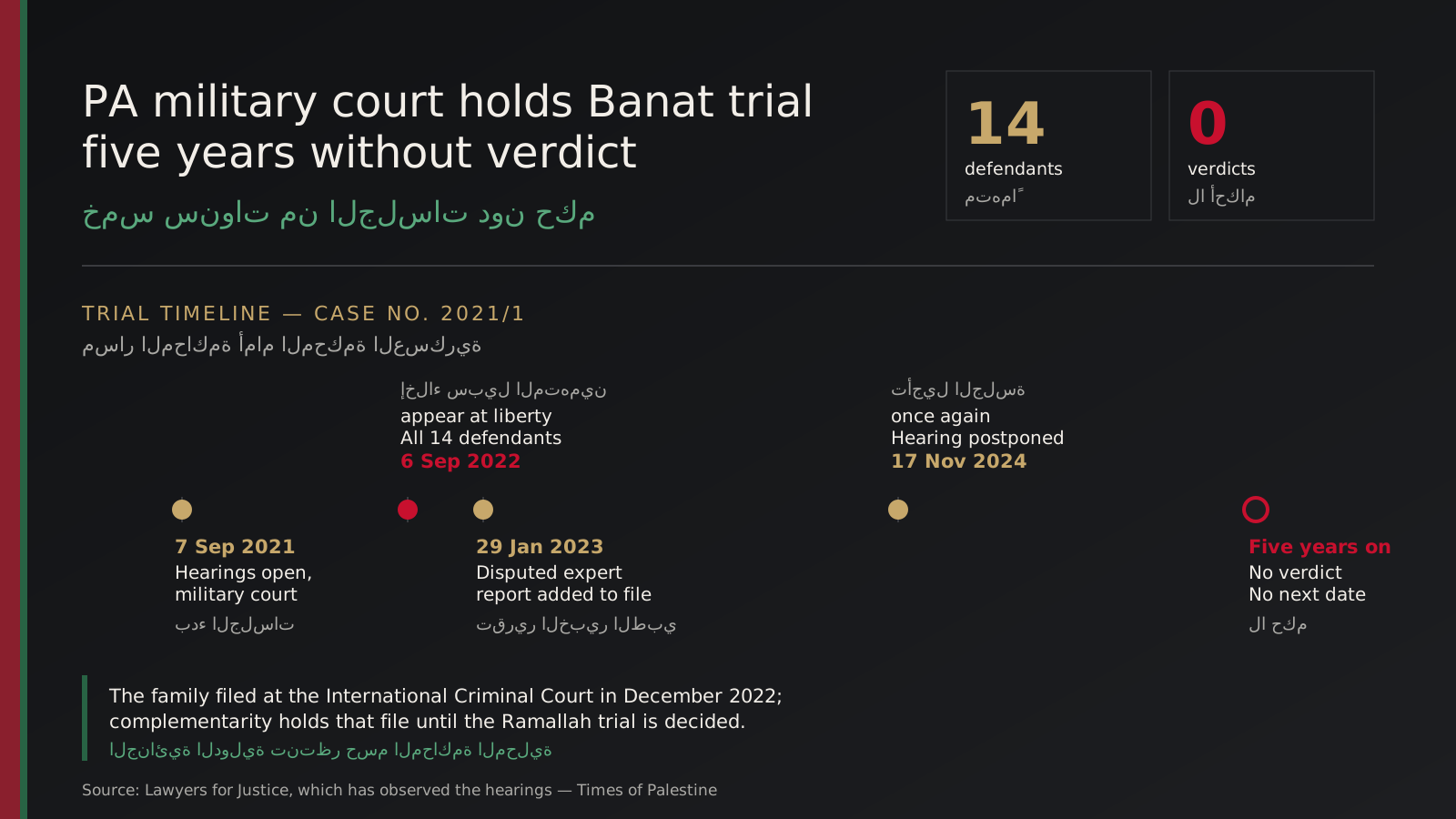
Graphic: Times of Palestine
Original Reporting
The Newsdesk gathers reporting from wire services and primary sources and rewrites every story in-house before publication. How our journalism is made →
Four months after the comment period on the draft Interim Constitution of the State of Palestine closed, the document that would replace the Basic Law as the country's governing charter remains a draft. No final text has been published, and no date has been set for the referendum the drafters said would decide it.
The draft was handed to President Mahmoud Abbas on 5 February by the committee he appointed, and released for public comment by presidential decision on 9 February.
The Global Campus of Human Rights, publishing an analysis by Diya Shaqqura of the Danish Institute for Human Rights, dated the end of the 60-day consultation to 9 April 2026.
Middle East Monitor reported that the committee was then to compile submissions and produce an initial report within two months, followed by a final version and a popular referendum.
The mandate came from a presidential decree of 18 August 2025. According to the Palestine Broadcasting Corporation, the decree made the committee the legal reference for drafting an interim constitution consistent with the 1988 Declaration of Independence, international law, UN resolutions and international human rights conventions.
Arab48, citing the official Wafa agency, reported the committee had 17 members under the chairmanship of legal counsellor Mohammad al-Hajj Qasim, with Ziad Abu Amr, Ahmad Majdalani and Bassam al-Salhi among them. Wafa's English service said the committee worked about seven months and held 70 meetings.
What it would replace is a patchwork.
The writer Sania al-Husseini, in a commentary carried by PNN, noted that the Legislative Council adopted the Basic Law in 1997 as an interim constitution for the Palestinian Authority, that Yasser Arafat did not ratify it at the time, and that he formed a separate state-constitution committee in 1999 chaired by Nabil Shaath.
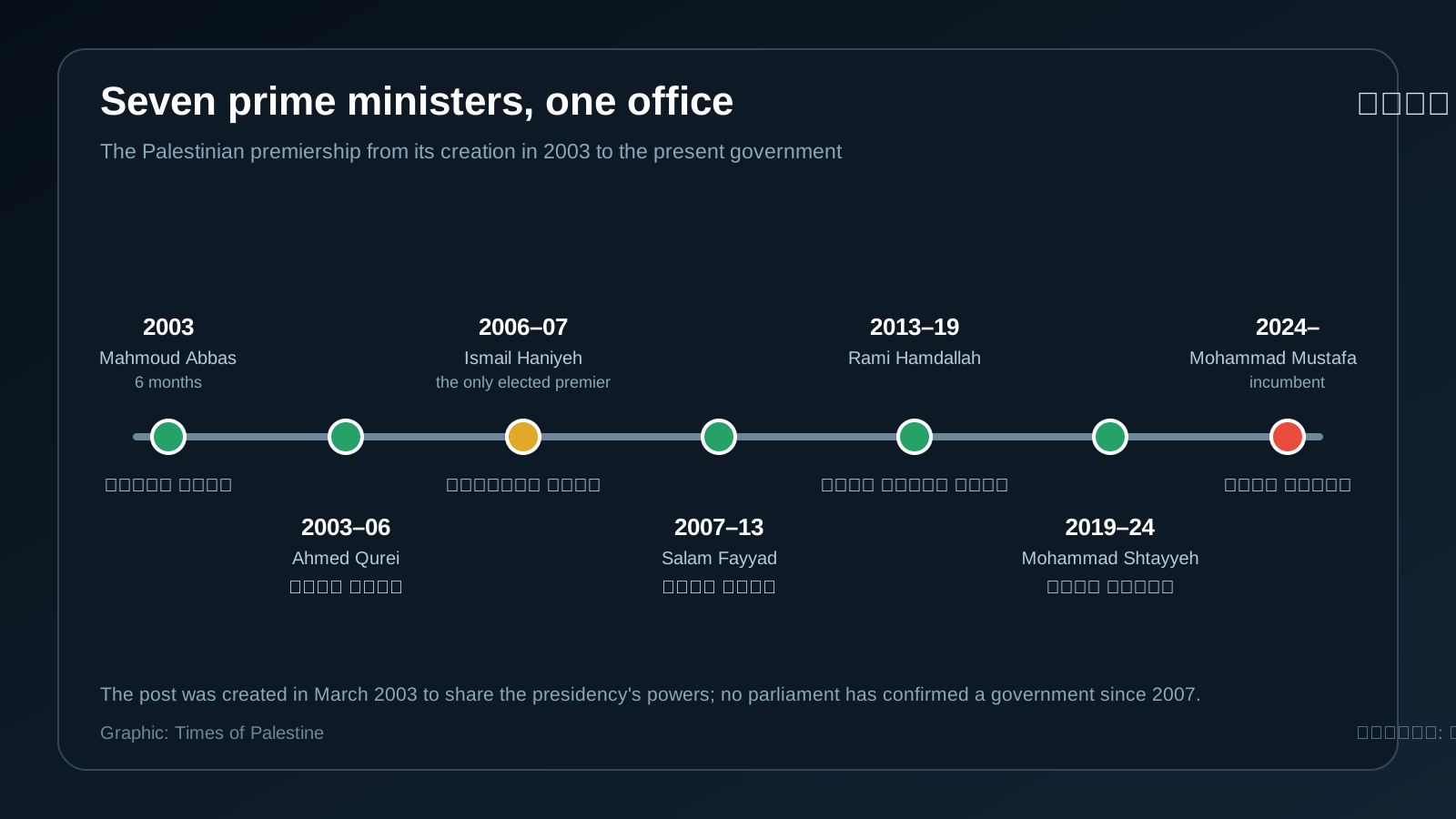
Al Jazeera reported that committee produced a first draft at the end of 2000, published in February 2001. Al-Husseini added that the 2003 amendment created the post of prime minister and gave the president the power to choose him under Article 45.
Middle East Monitor traced the constitutional deadlock to the 2007 crisis: an emergency declaration, an emergency government, the dissolution of the Legislative Council and rule by presidential decrees carrying the force of law, with no legislative or presidential elections since. The absence of a functioning parliament, the outlet said, pushed the Authority to reactivate PLO structures as a substitute source of legitimacy.
On the balance between president and parliament, the record is contested. Al-Hajj Qasim said at the handover, in remarks carried by Wafa and Arab News, that the draft preserves political pluralism and the separation of powers and empowers parliament to exercise its oversight and legislative functions.
Al-Quds newspaper reported that legal sources reading the same text concluded presidential powers had been noticeably widened compared with earlier legislation, in a way that could unbalance the branches.
Specific clauses point both ways.
Al-Quds Al-Arabi, quoting the published text, reported that the head of state swears the constitutional oath before the House of Representatives; that trade treaties, treaties imposing financial obligations, requiring legislative measures or touching fundamental rights and freedoms go to the House for ratification; that treaties of peace, union, borders or sovereignty must go to a general referendum and cannot be ratified until it approves; and that no treaty may contravene the constitution.
On amendment, Ghassan Jaber of the Palestinian National Initiative has argued that allowing the president or one third of parliament to open Article 155 hands the executive too much control over the process.
On the judiciary, Al Jazeera reported that the chapter contains no explicit guarantees of a fair trial, and that no article anywhere in the draft abolishes the death penalty. Al-Quds reported criticism of drafting choices that critics said diminish the standing of the bench, including replacing "the judicial profession" with "the judicial function".
On rights, Al Jazeera reported the preamble grounds the text in the 1988 Declaration of Independence, adopted by the PLO at the 19th session of the Palestine National Council, and in UN resolutions and human rights principles, and that Article 1 defines Palestine as part of the Arab homeland.
Al-Quds Al-Arabi quoted a clause making human dignity, freedom and justice supreme values that may not be infringed.
A summary published by Fatah's Egypt branch listed equality before the law, a ban on torture and guarantees of opinion, expression and press freedom, alongside Islam as the official religion and the principles of Islamic sharia as the main source of legislation.
Al-Hajj Qasim said the rights chapters also secure effective representation for women and youth.
The unresolved question is the PLO. The New Arab quoted Article 11 as stating that the establishment of the State of Palestine does not diminish the PLO in its capacity as sole legitimate representative.
A legal analyst told Al-Quds Al-Arabi the recognition stops at the symbolic and leaves the relationship between state, organisation and Authority — what he called the structural knot since Oslo — unanswered.
Al Jazeera listed the absence of an affirmation of the PLO's standing in the operative articles, and of the right of return, among critics' objections.
A commentary published by Amad argued that UN General Assembly resolution 67/19 of 2012 already treats PLO institutions as the leadership and legislative institutions of the State, and that a constitution creating parallel institutions risks weakening that recognition. Amad put recognitions at 159 states; Abbas, at the handover, said more than 160.
Al-Haq said its own workshop found the constitution was not a priority at this stage and criticised how the committee was formed and its lack of representation of all social groups. ICNL's civic freedom monitor recorded concerns about the committee's representativeness amid deep political divisions and the absence of a parliament.
Shaqqura wrote that Gaza appeared insufficiently represented, and questioned whether a referendum could be held there at all in present conditions.
Hamas official Bassem Naim called the draft a violation of the rights of the Palestinian people, in remarks to Israel's KAN reported by The Jerusalem Post. The presidency, Al-Quds reported, defends the exercise as part of comprehensive reform and preparation for general elections.
The legal scholar Ahmad al-Ashqar has called the draft excellent, urging swift feedback and then the referendum among Palestinians at home and abroad provided for in Article 162.
The Times of Israel reported in February that no referendum date had been set and that Israel is withholding several billion dollars in Palestinian tax revenues. Abbas's decree of 2 February called Palestinians to elect the Palestine National Council on 1 November 2026.