Economy & Aid
Gaza cash brokers take up to half of each remittance
Graphic: Times of Palestine
Original Reporting
The Newsdesk gathers reporting from wire services and primary sources and rewrites every story in-house before publication. How our journalism is made →
For anyone sending money from abroad, the decisive cost is not the transfer fee. It is what happens at the other end, when a digital balance has to become banknotes.
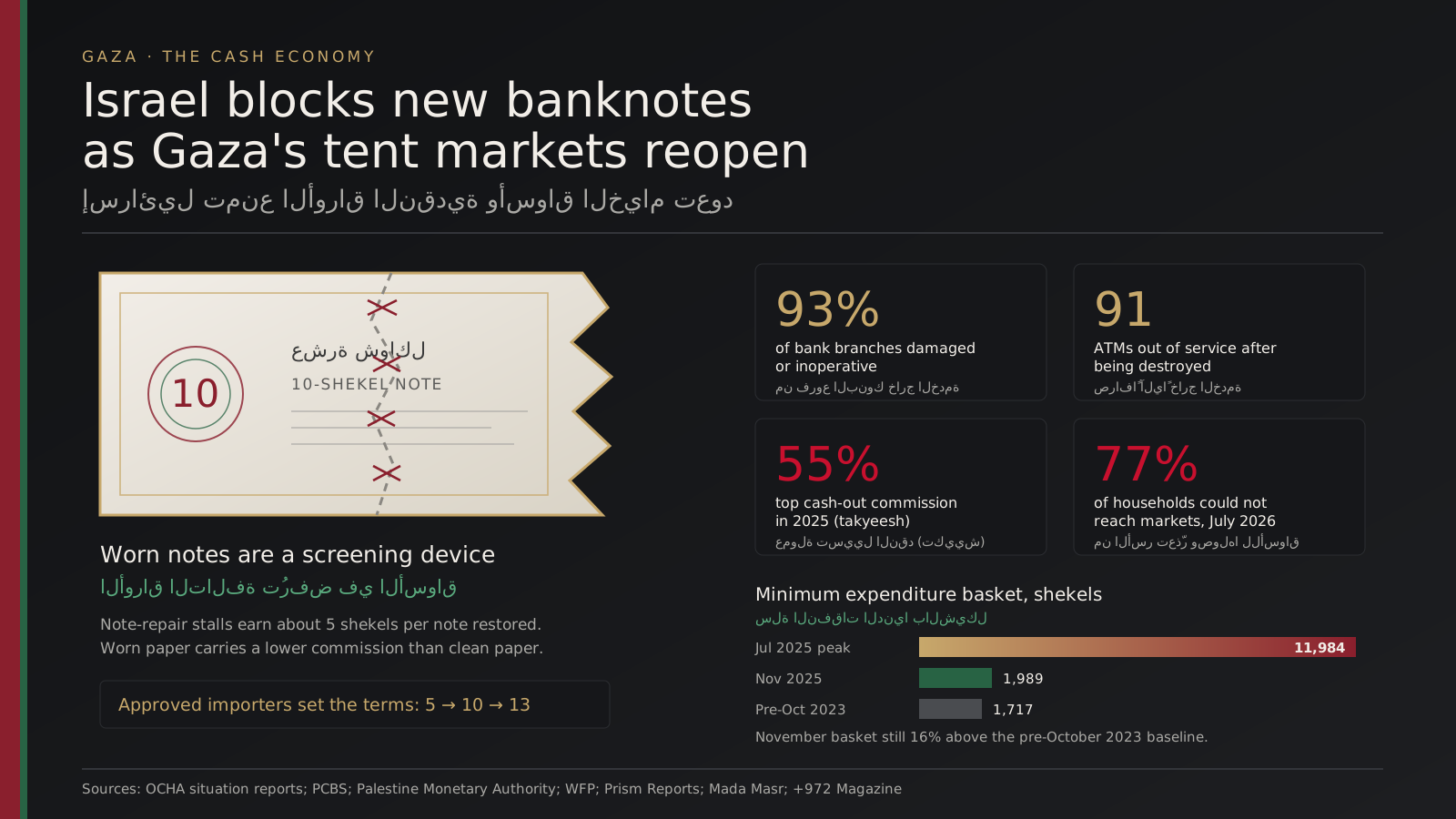
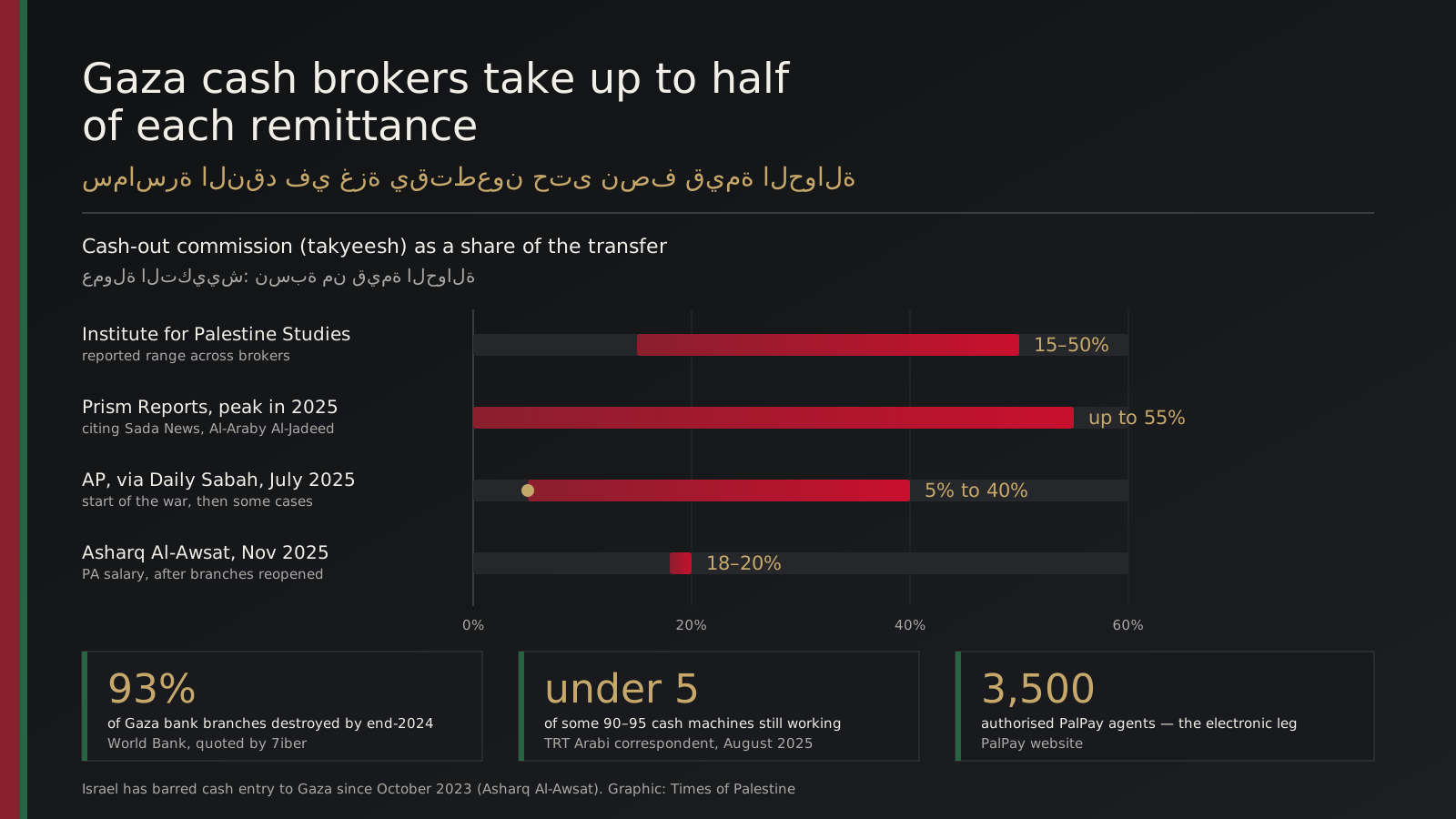
Commissions charged by Gaza's cash brokers ranged from 15 to as much as 50 percent of the sum transferred, according to the Institute for Palestine Studies. Prism Reports, citing Sada News and Al-Araby Al-Jadeed, put the peak of these cash-out charges — known locally as takyeesh — at up to 55 percent during 2025.
The Associated Press, in reporting carried by Daily Sabah in July 2025, said broker commissions stood at around 5 percent at the start of the war before climbing in some cases to 40 percent.
Those rates did not end with the ceasefire. Asharq Al-Awsat reported in November 2025 that a Palestinian Authority employee in Gaza was still paying between 18 and 20 percent to traders and exchange shops to convert his salary into cash, weeks after bank branches began reopening.
The reason is a banknote shortage, not a shortage of transfers. Asharq Al-Awsat reported that Israel has barred the entry of cash into Gaza since October 2023.
Truthout reported in April 2026 that Bank of Palestine partially reopened on 19 October 2025 but handled administrative transactions only, with no cash movement into the Strip, and that Israel continued to prevent the Palestinian Monetary Authority from bringing in liquidity.
The World Bank, quoted by the Jordanian outlet 7iber, found that by the end of 2024 about 93 percent of bank branches in Gaza had been destroyed, along with 88 percent of microfinance institutions and most exchange offices.
TRT Arabi's correspondent reported in August 2025 that fewer than five of roughly 90 to 95 cash machines were still working.
What functions, then, is the electronic leg. Digital wallet use has expanded sharply, with PalPay and JawwalPay now core transaction methods in Gaza, the Atlantic Council reported in March 2026.
The Palestinian Monetary Authority launched an instant payments and transfers system linking banks and payment companies, bringing the Gaza rollout forward because branch banking had collapsed, the official Wafa agency reported in May 2024; an International Labour Organization assessment describes it as allowing instant transfers between wallets at different institutions and between wallets and bank accounts.
PalPay says on its website that it has 3,500 authorised agents.
Senders should treat the wallet as the destination and ask the recipient, before transferring, which wallet and which agent they can actually reach. The Atlantic Council noted that PMA data show cash withdrawals still dominate wallet transactions — meaning the broker's cut reappears unless the recipient can spend the balance directly.
Whether they can depends on merchants. Mada Masr reported in July 2026 that 13 traders bringing goods into Gaza effectively set which payment forms the market accepts, and that many refuse worn or damaged notes; the Institute for Palestine Studies described people earning about five shekels a note repairing currency so it can circulate again.
Enforcement against the brokers has been attempted and has not closed the gap. Asharq Al-Awsat reported that the Monetary Authority froze hundreds of accounts trading in commissions. Al Jazeera's Arabic service reported in September 2025 that security bodies in Gaza had raided a number of operators weeks earlier without ending the practice.
The aid-platform route carries a different set of restrictions.
Forbes reported in July 2026 that GoFundMe does not support payouts into Gaza, and described one campaign that raised more than £55,000 where the platform deducted 3.9 percent in fees, or £2,176.02, and the balance had to go to a nominated beneficiary in a supported country; the organiser said that arrangement later broke down.
GoFundMe's published terms state that where a beneficiary does not complete withdrawal within 120 days of the first donation, the company may at its discretion refund donors or redirect funds to a verified non-profit.
Al Jazeera reported in June 2025 that campaigners accused the platform of blocking Palestine-related withdrawals; GoFundMe said more than $300 million had been raised for Palestinians and Israelis since October 2023 and did not disclose how much was frozen.
PayPal remains closed to Palestinians. Middle East Eye reported that members of the US Congress wrote to the company in 2023 over its availability in West Bank settlements but not to Palestinians; the Washington Report on Middle East Affairs reported the company classifies Palestine as high risk.
ImpactAlpha reported in May 2026 that the Jewish Investor Network issued a public letter to PayPal's board on the same point. Reuters reported in 2021 that the company did not respond to repeated requests for comment.
The West Bank leg is the one to watch this autumn.
J Street reported that in July 2026 Israel Discount Bank told Palestinian banks it would terminate correspondent services on 1 September and that Bank Hapoalim plans the same on 1 October, both citing the absence of a long-term indemnity waiver; if carried out, Palestinian banks would be severed from the Israeli and international systems.
The Times of Israel reported that Finance Minister Bezalel Smotrich signed a waiver running to the end of 2026. Anyone planning an international wire into a Palestinian bank account after those dates should confirm with the receiving bank first that the corridor is open.
Verify at source. The Palestine Capital Market Authority publishes an updated list of unauthorised platforms and, as reported by Sada News in April 2026, warns that only four licensed firms may operate in foreign exchange trading. The Monetary Authority maintains a local freezing list, republished by OpenSanctions. Crypto and e-cash channels are covered separately by this newsroom's Financial Freedom desk.
Unresolved: whether the two Israeli banks proceed on 1 September and 1 October, and whether banknotes will be allowed into Gaza at all. Mada Masr reported that the Monetary Authority has not told the public whether worn notes will remain exchangeable after the war. No timetable for a cash injection is on the public record.