Economy & Aid
Israel blocks new banknotes as Gaza's tent markets reopen
Graphic: Times of Palestine
Original Reporting
The Newsdesk gathers reporting from wire services and primary sources and rewrites every story in-house before publication. How our journalism is made →
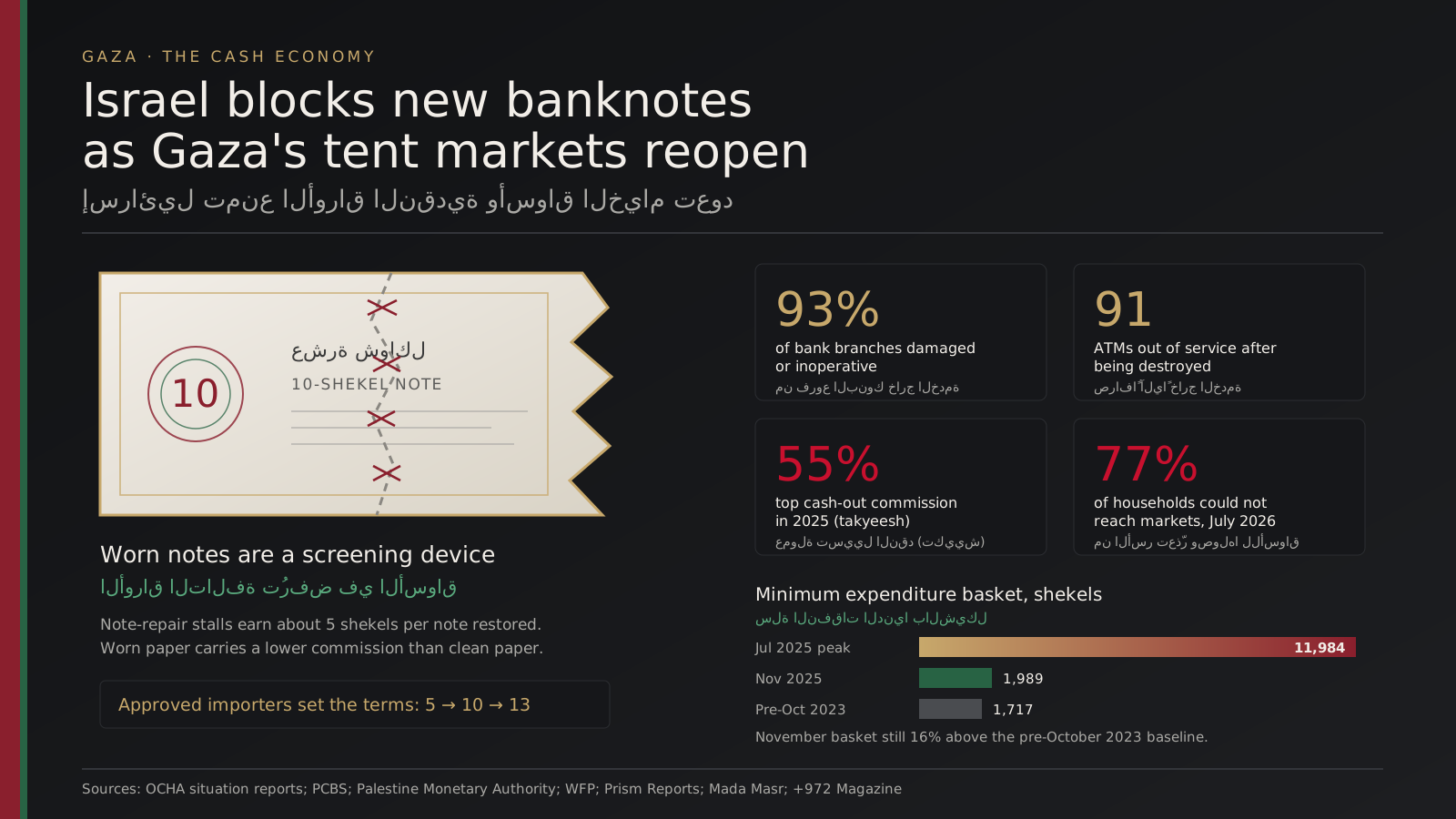
Seventy-seven per cent of households surveyed in Gaza in July reported difficulty reaching markets, mainly because they lacked cash and could not afford basic food, up from 67 per cent the previous month, according to the OCHA humanitarian situation report of 31 July 2026, which cited World Food Programme monitoring.
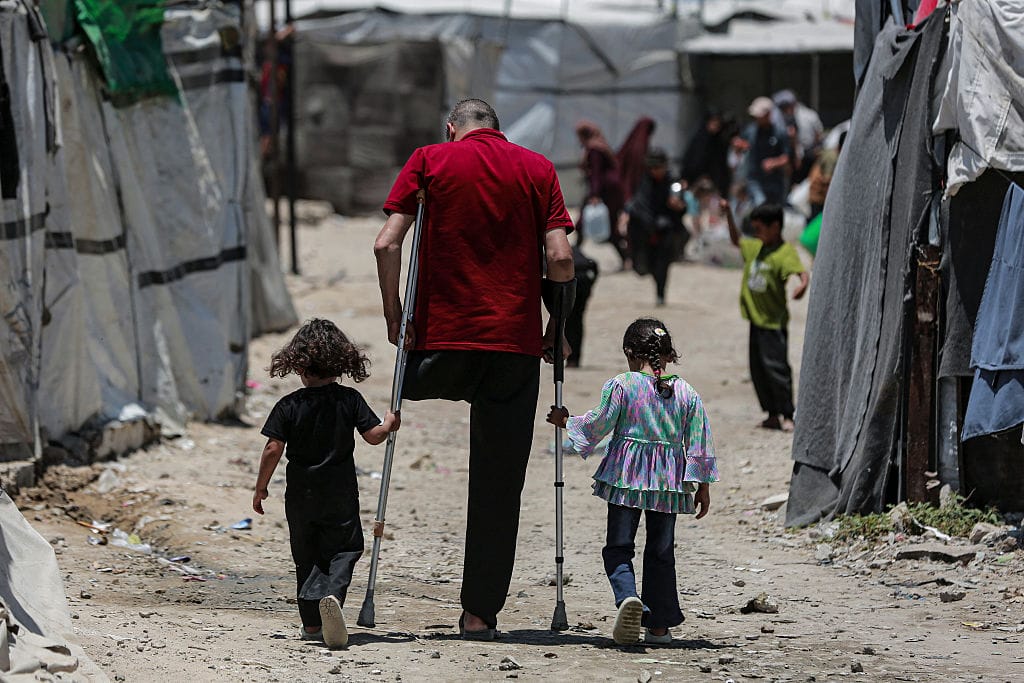
The stalls themselves are back. In Khan Younis, 82 per cent of vending is informal and tent-based, and in North Gaza moving street vendors account for 40 per cent of vendor activity, according to market monitoring reported by OCHA in its Gaza situation update No. 355.
What has not returned is functioning money. About 93 per cent of bank branches in Gaza have been damaged or rendered inoperative, Prism Reports said in March, citing Al Jazeera. Nearly 91 ATMs went out of service after being partially or completely destroyed, according to the Palestine Monetary Authority, cited by Mada Masr in July. The Bank of Palestine partially reopened on 19 October 2025 under the ceasefire, Truthout reported.
Prices fell steeply once the fighting stopped and then settled above where they began. The Palestinian Central Bureau of Statistics recorded a 40.42 per cent fall in the Gaza consumer price index in October 2025 against September, followed by a further 34.70 per cent fall in November.
For 2025 as a whole, PCBS reported that Palestine's consumer price index rose 21.93 per cent against 2024, which it attributed to unprecedented price volatility and hyperinflationary levels in Gaza's markets.
The World Food Programme's minimum expenditure basket, cited by OCHA, peaked at 11,984 shekels in July 2025, then stabilised at 1,989 shekels in November — still 16 per cent above the pre-October 2023 baseline of 1,717 shekels.
In its 15 May 2026 report, OCHA said assessments by the Chamber of Commerce and humanitarian partners found prices stabilising after the peak recorded during the regional escalation, with some items down 10 to 20 per cent.
Between the price tag and the purchase sits the commission. Cash-out intermediaries, known in Gaza as takyeesh, charged up to 55 per cent in 2025, Prism Reports said, citing Sada News and Al-Araby Al-Jadeed.
Ahmed al-Daour, an education ministry employee, told Xinhua in August 2025 that the withdrawal commission on his salary had reached 55 per cent. Mada Masr reported that rates fell to 15–30 per cent during the short-lived ceasefire in early 2025 and rose again after March.
Truthout described withdrawals in which 3,000 shekels drawn from a bank left the holder with 1,800.
The banknotes themselves have become a screening device. Before 2023, Palestinian and Israeli authorities coordinated to replace worn notes; that coordination has ceased, Mada Masr reported, and stalls repairing notes for a fee have appeared across Gaza's markets.
Those who repair notes earn about five shekels per note restored, according to the Institute for Palestine Studies, which also found that the condition of a note affects the commission charged on it — worn paper carries a lower rate than clean paper.
Traders police the difference. "These damaged notes are practically useless," a vendor identified as Abd Alnabi told +972 Magazine in December, saying he stopped taking lightly torn notes once his own suppliers refused them. He had reopened his stall after the October ceasefire, clearing rubble first.
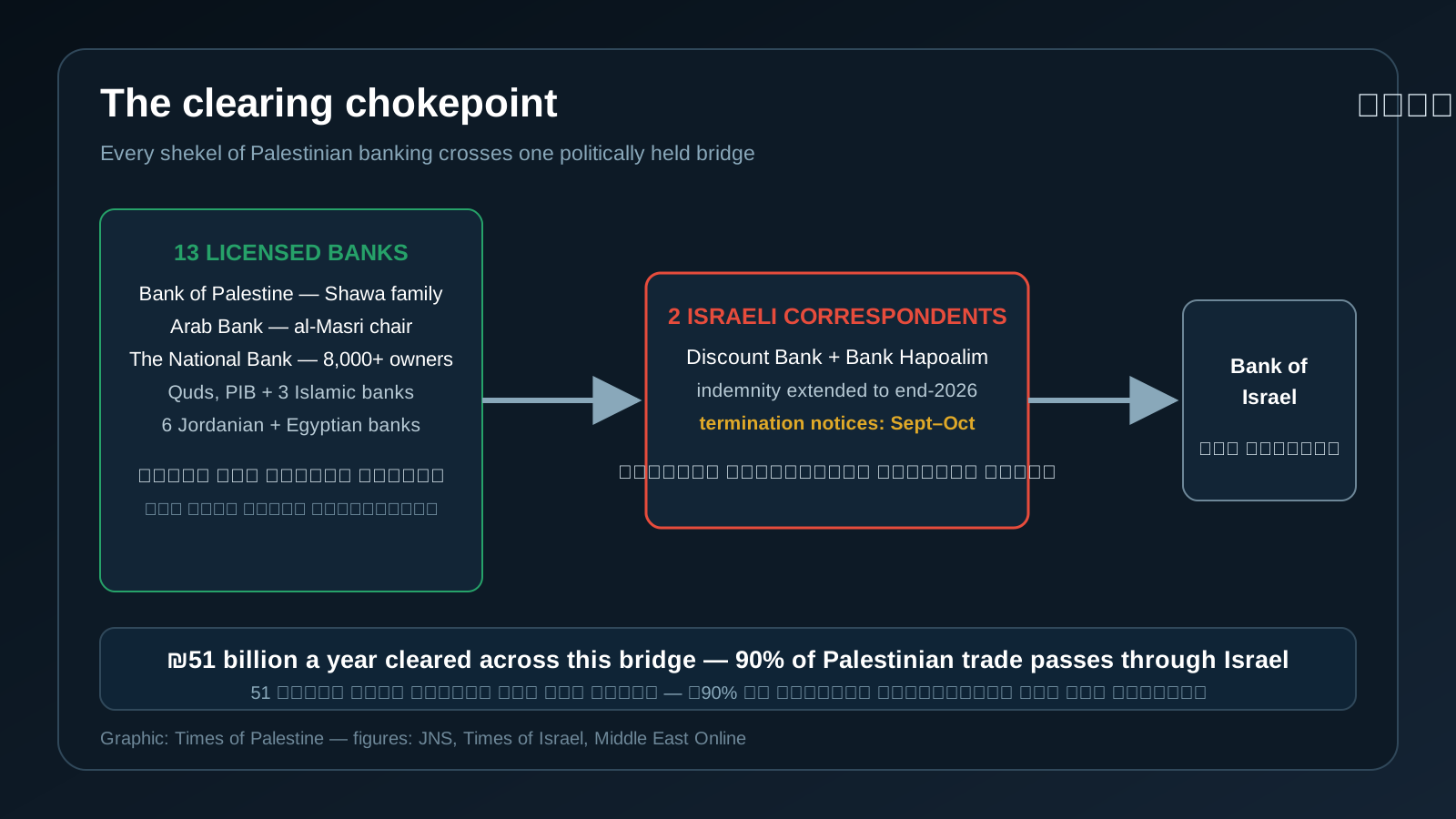
Payment terms are set upstream. Israel has restricted imports to a group of approved traders, first five, then 10, now 13, Gaza-based economist Ahmed Abu Qamar told Mada Masr in July. If those traders decline worn notes or 10-shekel notes on a given day, he said, the whole market follows.
Two vendors told the same outlet they had no choice but to demand electronic payment from customers because larger traders required it of them.
Institutions have pushed the same way. On 16 January 2026 the Palestinian chambers of commerce, the Palestine Monetary Authority, UNDP and UNICEF launched a campaign promoting electronic payments in Gaza, Truthout reported.
The monetary authority issued a circular allowing merchants to register with a national identity card alone, and nearly 1,000 merchants were newly onboarded, more than 100 of them equipped with phone-based card readers, according to the UN Capital Development Fund in June.
Whether that works on a given day depends on the network: bank applications frequently fail because there is no internet, the writer and translator Ghaidaa Al-Abadsa told the Institute for Palestine Studies.
Money sent from outside shrinks twice. Al-Abadsa said she loses about 20 per cent of transfers from abroad before the withdrawal commission; of $500 sent, roughly $350 reaches her account.
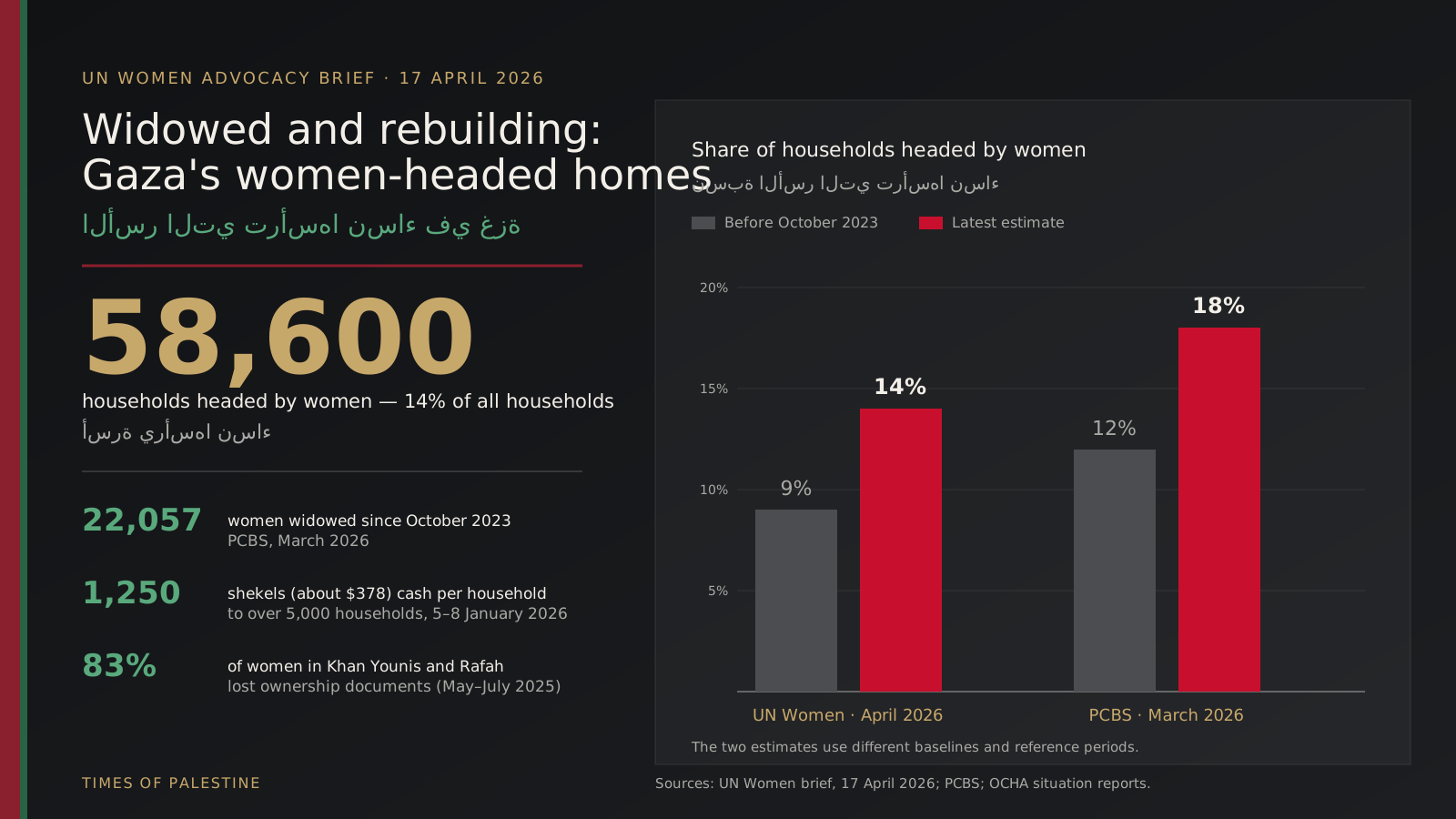
Aid cash is now a significant share of household income. The Cash Working Group delivered 330,000 multi-purpose cash payments between 10 October 2025 and 25 January 2026, OCHA reported, and by late February more than 165,000 households had received at least one transfer in 2026, each worth 1,250 shekels.
Earnings on the other side are thin and largely undocumented. PCBS put Gaza unemployment at about 68 per cent in the fourth quarter of 2024, against roughly 45 per cent before the war, with labour force participation near 25 per cent.
No published assessment retrieved for this report quantifies how much credit Gaza shopkeepers now extend to customers, or on what terms — the practice is described in reporting but not measured.
Supply remains the other half of the squeeze. Commercial flour was absent from markets in late March, with availability tied almost entirely to WFP parcel distributions, the agency's Gaza market monitor found, warning of growing market monopolies. Eggs had largely disappeared.
The record on what enters is contested. The Gaza government media office says supplies fall far short of need, while COGAT, the Israeli military body responsible for civilian affairs, says food shipments since the ceasefire have exceeded the needs identified by WFP, Al-Khaleej reported in July.
WFP's Gaza head Willy Nyeko told UN News in April that the food situation was dangerously fragile, and that since the regional escalation began on 28 February 2026 crossings had closed or been scaled back. OCHA reported on 31 July that declining aid coverage since February risks reversing the gains recorded by the IPC. No date has been published for when new banknotes will be allowed into Gaza.