Economy & Aid
The Al-Quds index climbs back past pre-war levels on thinning trade
Graphic: Times of Palestine
Original Reporting
The Newsdesk gathers reporting from wire services and primary sources and rewrites every story in-house before publication. How our journalism is made →
The Palestine Exchange in Nablus is having its best year since the war began, and almost nobody is trading on it.
The Al-Quds index closed at 670.56 points on 10 August, up 0.98 per cent on the session, according to the daily exchange reports carried by the Raya Media Network. The week before it had closed at 648.69, and on 9 August it added 8.59 points to reach 664.06. The Islamic index tracked the same direction, closing at 105.71.
Set against where the index sat through 2024 and 2025, that is a recovery. In the first half of 2026 the Al-Quds index rose close to 6 per cent against the end of 2025, finishing the half around 655 points, and the market value of the listed companies closed the half near $5 billion, about 3 per cent higher.
The number underneath the number#
The volumes tell a second story. Trading value across the first half of 2026 came to about $135 million, against roughly $181 million in the first half of 2025 — a fall of about a quarter.
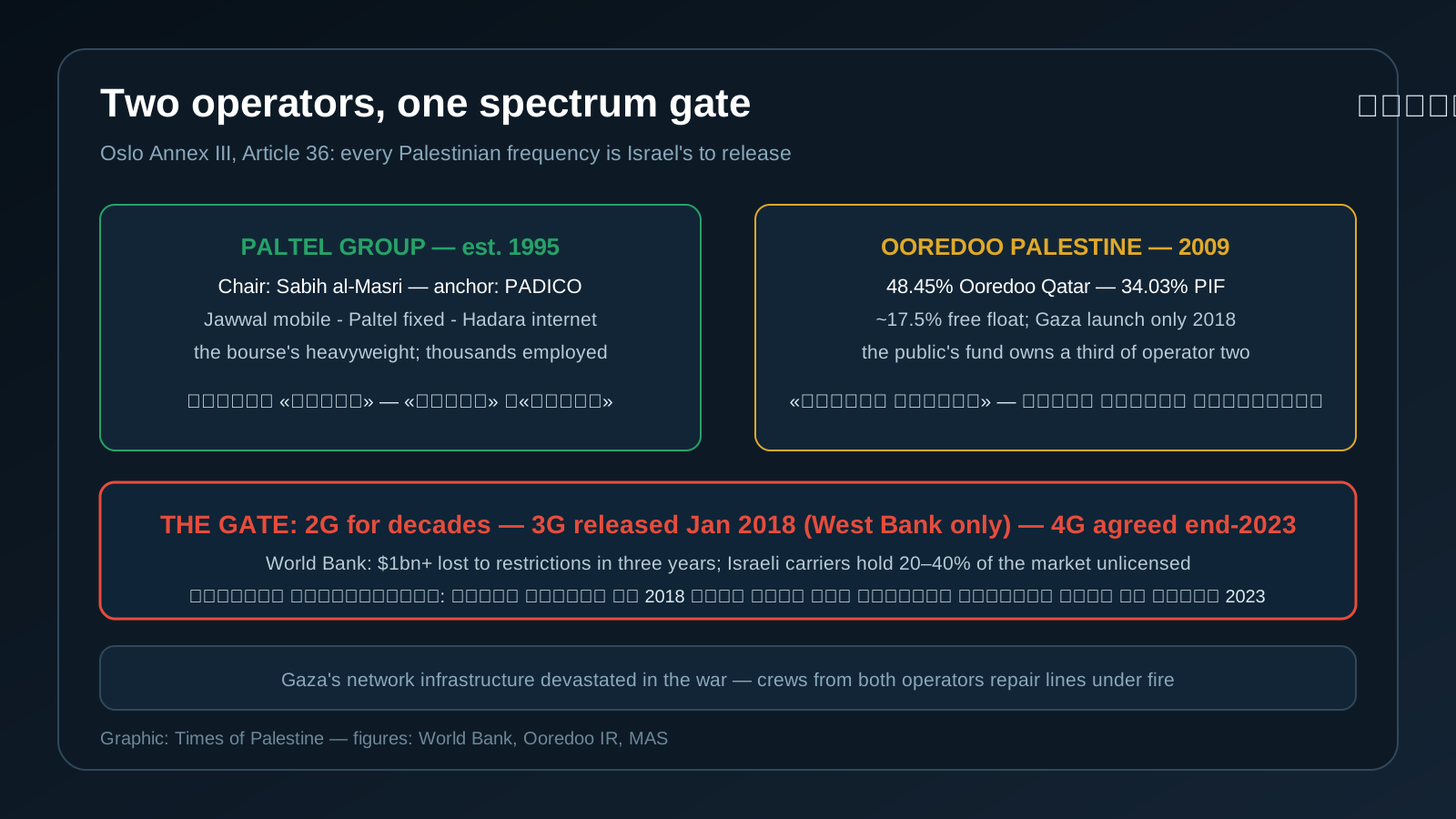
The daily sessions show how narrow the market has become. On 9 August the exchange turned over $448,988 across 218,821 shares in 132 transactions, with fifteen companies trading; Ooredoo Palestine alone took 35 per cent of the liquidity and the Palestine Telecommunications Company another 26 per cent. Five days earlier, three-quarters of a session's liquidity moved through off-market transfers in a single stock.
Rising prices, falling turnover: the Al-Quds index gained about 6 per cent in the first half of 2026 while trading value fell roughly 25 per cent year on year.
Palestine Exchange half-year figures
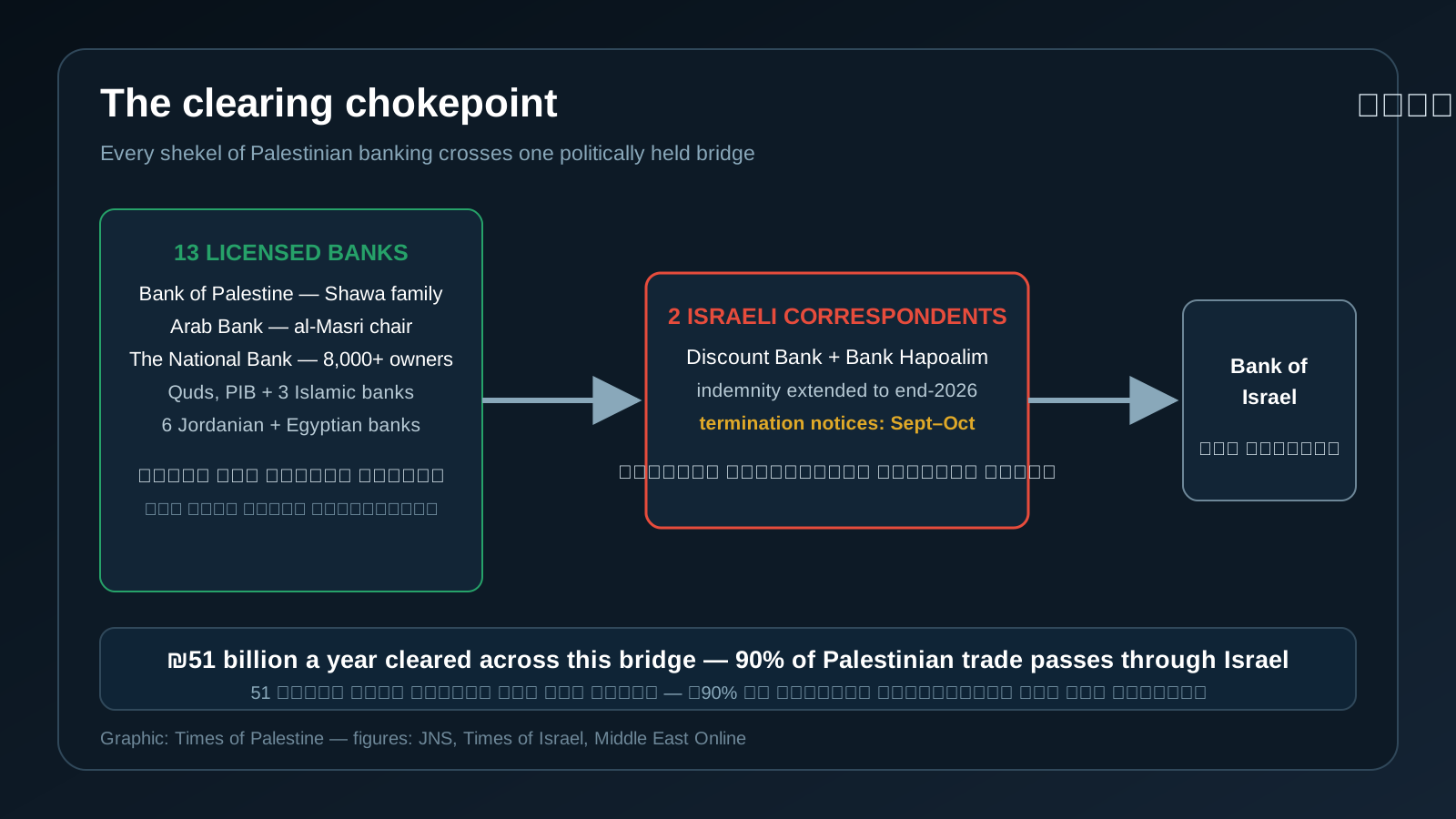
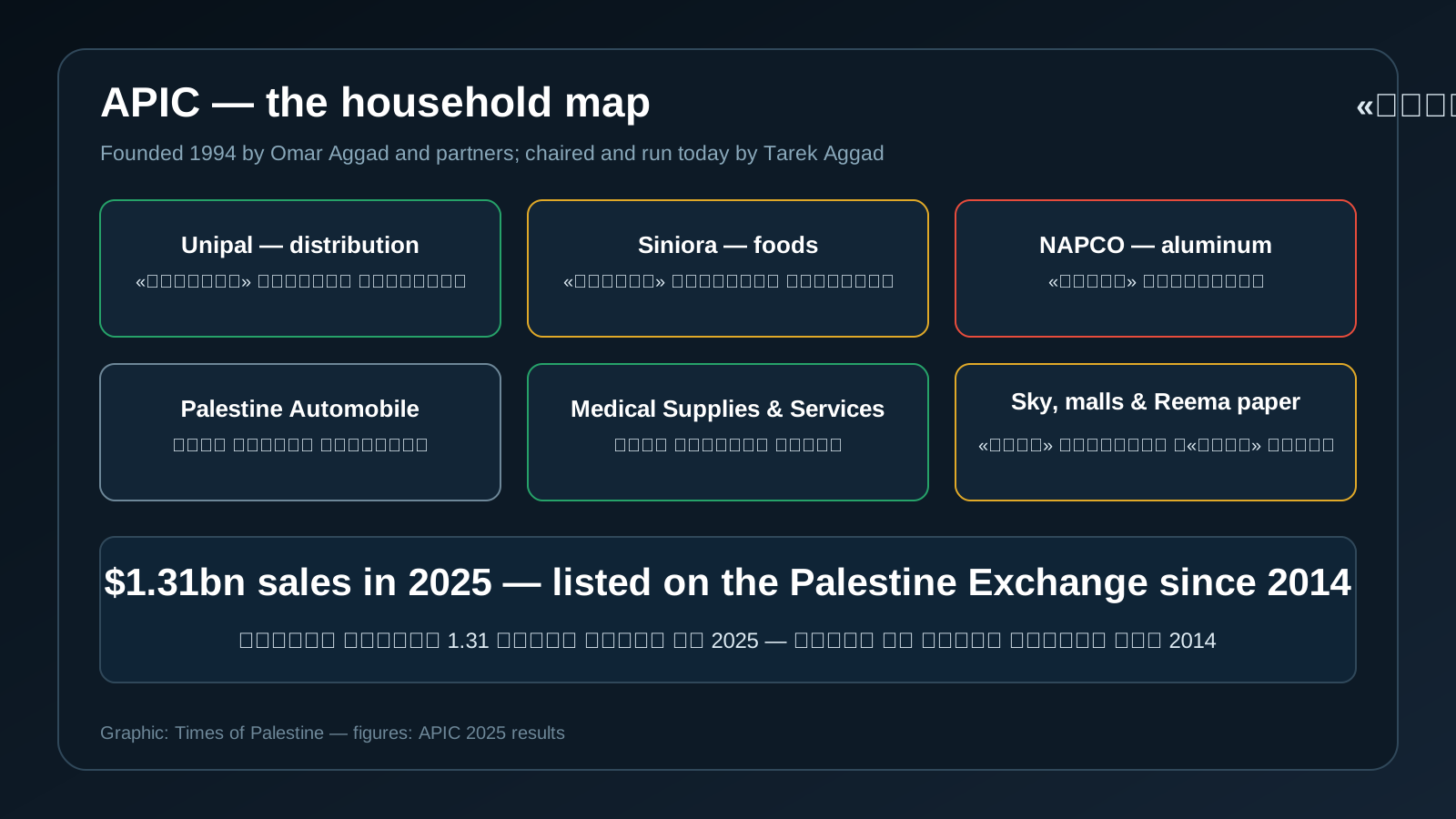
A market where a handful of names carry most of the money is a market where the index measures those names rather than the economy around them. The companies driving it — telecoms, banks, holdings — are the parts of the Palestinian private sector that survived the last two years with their balance sheets intact.
The economy the exchange sits inside looks nothing like its index. The Palestinian Central Bureau of Statistics expects unemployment to run at 41.8 per cent in 2026, down from 45.8 per cent in 2025, with Gaza's rate far above the West Bank's. The clearance revenues that fund the Palestinian Authority's payroll remain hostage to a quarterly Israeli signature.
Both facts are true at once, and Palestinian investors have been reading them together for two years: the listed companies are recovering, the households are not, and the money that used to move between them has gone quiet.