Her Story
Euro-Med ties Gaza's tripled miscarriage rate to Israel's aid restrictions
Graphic: Times of Palestine
Original Reporting
The Newsdesk gathers reporting from wire services and primary sources and rewrites every story in-house before publication. How our journalism is made →
Gaza's medics recorded 3,950 miscarriages in the first six months of this year — more than three times the 1,197 recorded in the last six months of 2025, findings published this month by the Euro-Mediterranean Human Rights Monitor and United Nations agencies show.
The rights monitor ties the surge to the conditions Israel's aid restrictions have built: hunger, untreated infection, displacement, and a health system reduced to fragments. The same records show Gaza's birth rate falling 3.2 percent since the start of the year.
What a pregnancy now survives#
The United Nations Population Fund counts roughly 50,000 pregnant women in Gaza, with up to 180 births a day, while only about a third of hospitals function even partially. One baby in five arrives premature or underweight.
By the agencies' joint estimate, 55,000 pregnant and breastfeeding women were expected to be at severe risk of death from malnutrition by mid-2026 — three times the 17,000 of May 2025. Behind each figure in that ledger is a woman carrying a pregnancy through hunger she did not choose and cannot escape.
Medics recorded 3,950 miscarriages in six months — a rate more than triple the half-year before.
Euro-Mediterranean Human Rights Monitor and UN records, January–June 2026
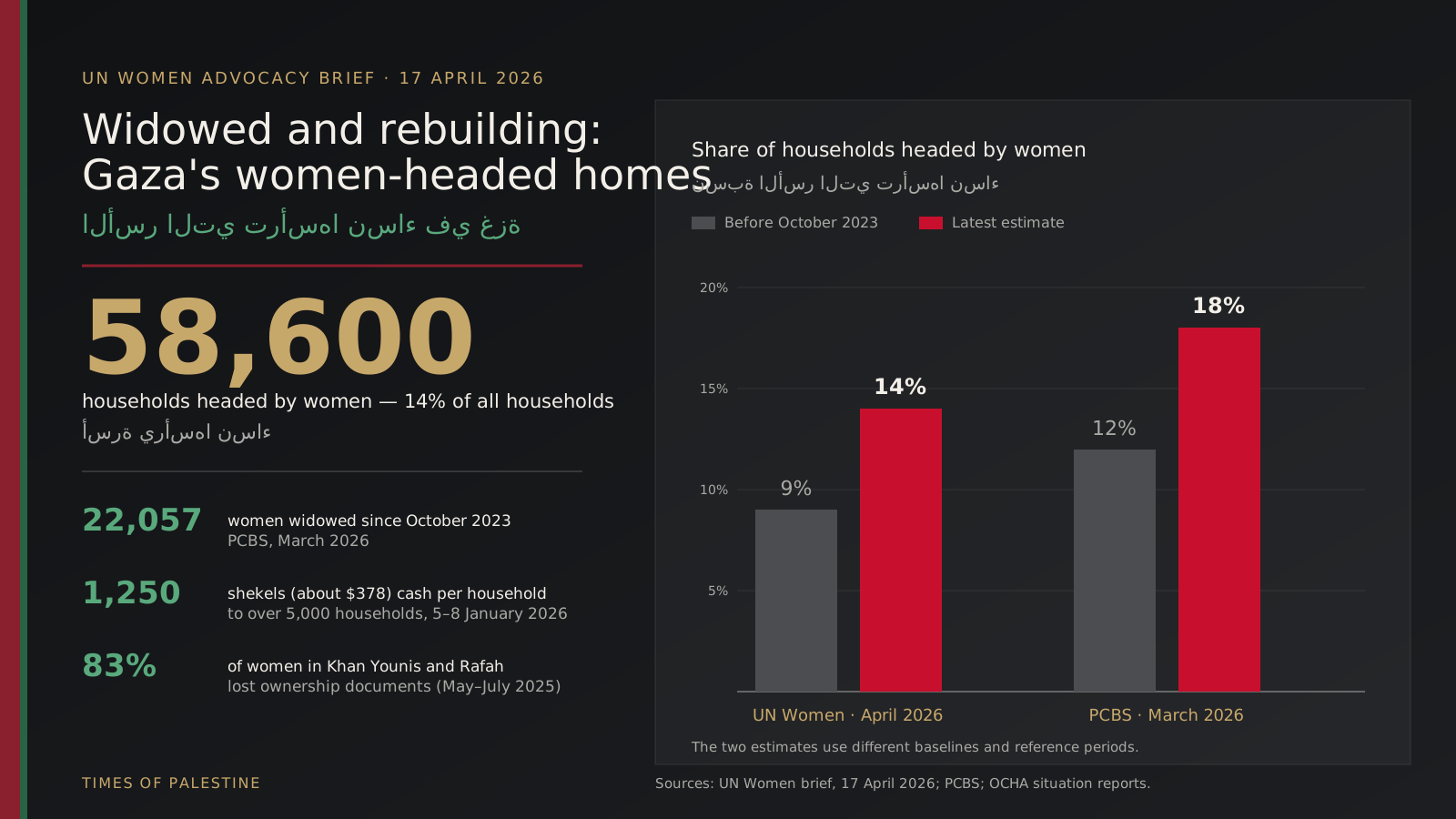
The war's damage to mothers does not end at delivery. The UN's agencies have documented newborns sharing incubators and mothers too malnourished to nurse, and Gaza's 22,000 war widows — the Palestinian statistics bureau's count — carry households through the same shortages while pregnant neighbors wait out their terms in tents.
The midwives sent into the gap#
The response runs on midwives. Since the ceasefire took hold last October, the UN Population Fund has deployed more than seventy of them across the strip, raised medical tents beside damaged hospitals, and begun restoring the Al Khayr maternity hospital in Gaza City along with primary health centers.
A midwife with a kit bag can walk to a tent no ambulance reaches, and in much of Gaza she is now the maternity system. The agency calls the work restoring continuity of care; the women who deliver safely in a tent because she came call it something simpler.
What the aid workers say they cannot supply from a kit bag is the missing half of the equation: food, clean water and medicine at the scale only open crossings provide. The records of the next six months will show whether those crossings opened.