Arab Support
Egypt hosts Hamas's new leader to unblock the ceasefire's second phase
Graphic: Times of Palestine
Original Reporting
The Newsdesk gathers reporting from wire services and primary sources and rewrites every story in-house before publication. How our journalism is made →
The mediation that keeps the Gaza ceasefire alive is done in one building in Cairo, and on Sunday it received the man who now leads the movement on the other side of the table.
Khalil al-Hayya, Hamas's political leader and chief negotiator, travelled to Cairo to meet the Egyptian intelligence chief, Hassan Rashad, Al Jazeera reported. It is al-Hayya's first visit to Egypt since he took over the leadership in late July.
The Times of Israel reported that the delegation with him includes the Shura Council chairman, Mohammed Darwish, the movement's international relations chief, Khaled Meshal, its West Bank head, Zaher Jabarin, and Basem Naim, who runs its Arab and Islamic relations office.
What Egypt is actually carrying#
The agenda is the implementation of the agreement and the second phase that has not begun. Benjamin Netanyahu has rejected the fifteen-point plan under which Hamas would hand its weapons to a Palestinian governing committee, and has said Israel will carry out no withdrawal until Hamas is genuinely disarmed.
We continue to await pressure from mediators and the US side on Netanyahu to compel compliance with the roadmap.
Basem Naim, Hamas political bureau
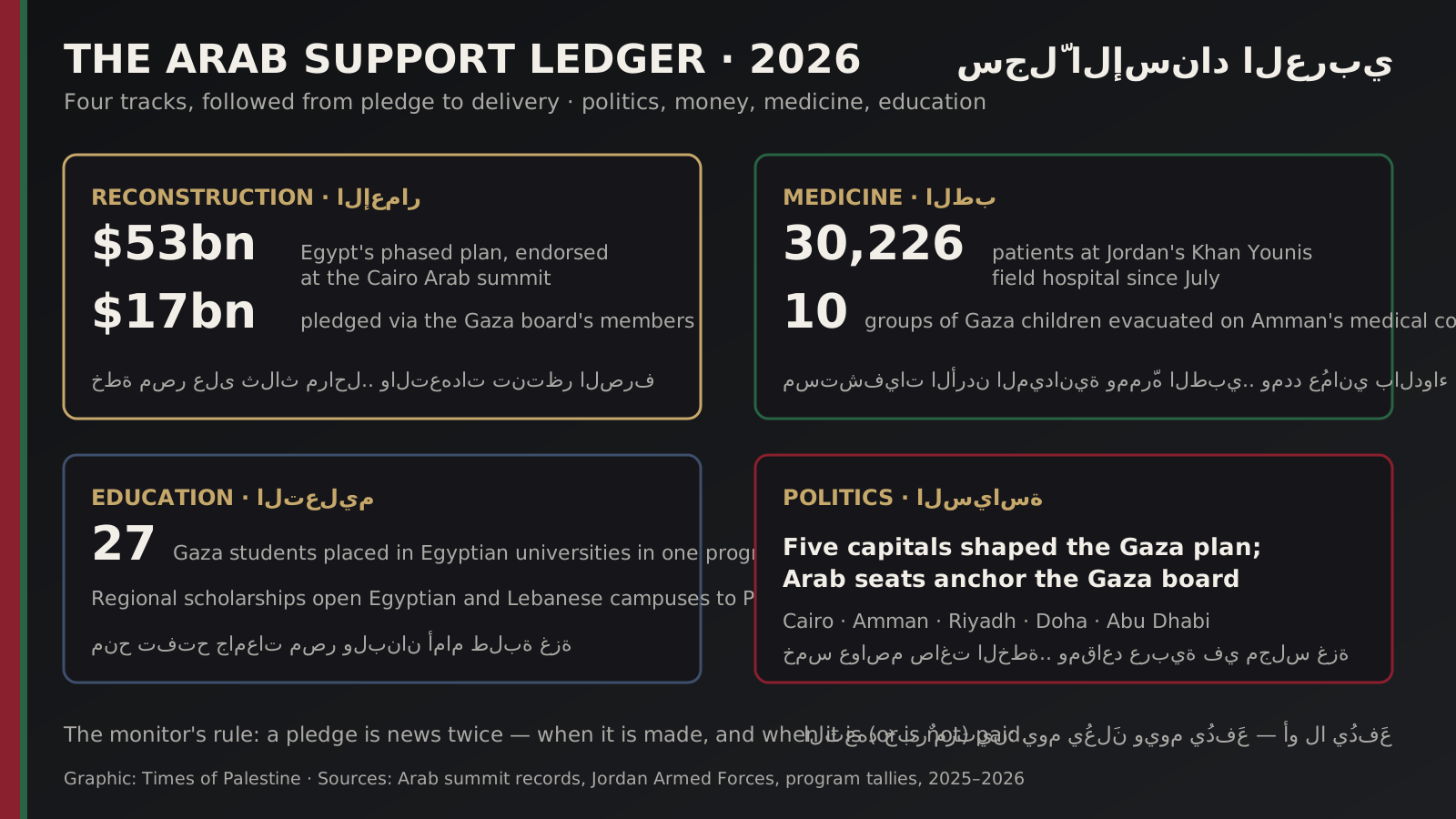
Egypt's role in this file is not a pledge awaiting disbursement. It is delivered work, repeated: round after round of talks hosted in Cairo, the El-Arish corridor through which the aid convoys enter, and the police training programme for Gaza that Egypt and Jordan have been running for the force that any second phase will need.
What Cairo cannot deliver on its own is the pressure that moves Israel, and Egyptian officials have never claimed otherwise. Jared Kushner is due in Israel and Egypt next week with Nickolay Mladenov, the Board of Peace's high representative, to work through the differences over the roadmap.
The measure of this week is therefore narrow and concrete. Egypt has brought the parties back into the same city while the disarmament question is still unanswered, and it has done so at a moment when Gulf capitals, according to the American press, are losing confidence in Washington's ability to close anything.
Keeping the table standing is the smaller task. It is also the one nobody else in the region is doing.