Arab Support
Arab hospitals take Gaza's patients while the evacuation queue stays 16,500 long

Graphic: Times of Palestine
Original Reporting
The Newsdesk gathers reporting from wire services and primary sources and rewrites every story in-house before publication. How our journalism is made →
The medical corridors out of Gaza work. They are simply far narrower than the list of people waiting to use them, and the width is set by a clearance chain that no Arab hospital controls.
About 16,500 patients are registered with the World Health Organization for medical evacuation. Against that number, the movements are counted in dozens: 142 patients left between 2 and 10 February 2026, 91 of them through Rafah, and a WHO-supported convoy on 26 March moved 17 patients into Egypt for treatment Gaza's hospitals can no longer provide.
What the Arab states are actually running#
Egypt is the corridor. Patients leave through Rafah and are received in Egyptian hospitals, and the same route carries the aid convoys in the other direction.
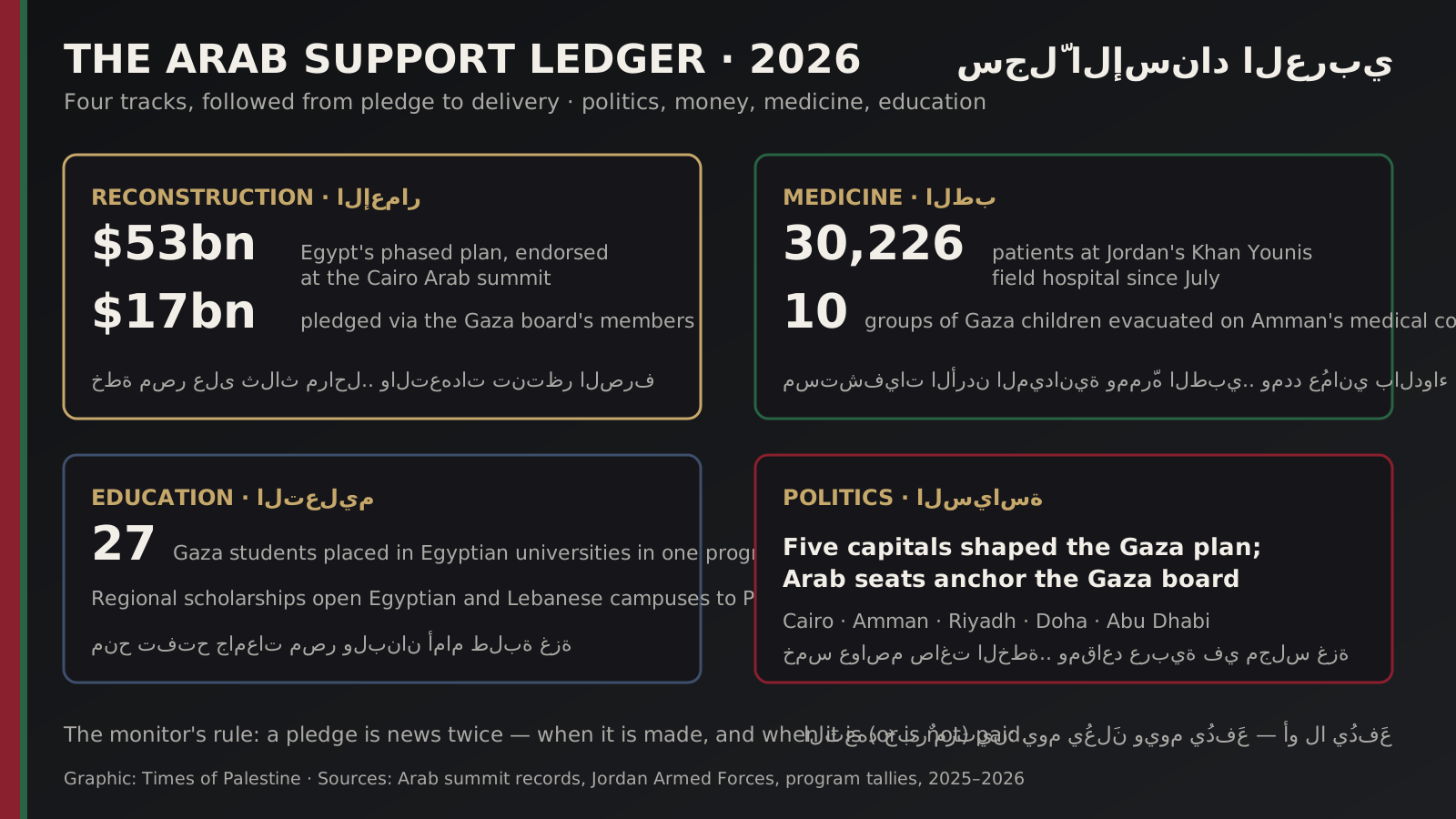
Jordan runs its third field hospital in southern Gaza and, through Médecins Sans Frontières, receives the hardest reconstructive cases in Amman — 22 patients including 13 children in one recent transfer to the organisation's reconstructive surgery hospital there.
The United Arab Emirates operates a field hospital in the southern Strip and a floating hospital anchored at El-Arish in Egypt, and has been sending in medical supplies through the same logistics chain — a recent consignment carried 40 tonnes of medical material and four ambulances.
These are deliveries, not pledges, and they should be credited as such: beds that exist, surgeons who operate, ambulances now in Gaza.
The bottleneck has a name#
A patient leaves Gaza only after every one of these steps: a finding that the treatment is unavailable inside the Strip, approval by the referral committee, acceptance by a host country, an Israeli security clearance, and an open crossing on the day.
Arab governments control exactly one of the five — acceptance. They have supplied that repeatedly, and the queue has not moved accordingly, because the clearance and the crossing sit elsewhere.
That is the honest division of responsibility in this file, and it points at the next practical stage rather than at blame: standing host-country quotas that do not expire while a security clearance is pending, a published referral list so families can see where a name stands, and a fixed number of medical exits per week written into the crossing arrangements rather than negotiated case by case.
Until then, the corridors will keep saving the patients who reach them, and the 16,500 will keep waiting for a step that is not medical at all.