Arab Support
Saudi and Emirati convoys supply Gaza's field hospitals and food baskets
Graphic: Times of Palestine
Original Reporting
The Newsdesk gathers reporting from wire services and primary sources and rewrites every story in-house before publication. How our journalism is made →
Gaza's hospitals are half a system. What fills the gap is a network of field hospitals, and this month two Gulf states kept it stocked.
Only about half of the Strip's hospitals are even partially functional and none operates at full capacity, the World Health Organisation set out in its 2026 emergency appeal, with roughly half of primary healthcare centres still working. The WHO has documented 22 attacks on hospitals and healthcare centres in Gaza since the start of this year.
Field hospitals are what stands in the difference. The Palestinian Red Crescent opened another on 10 August, intended to serve close to half a million people.
What Saudi Arabia delivered#
The King Salman Humanitarian Aid and Relief Centre sent another convoy into Gaza on 13 August carrying food baskets, part of the Saudi public campaign for Palestinians, with a further convoy following in the same period.
Food baskets are the least glamorous item in the aid ledger and among the most reliably counted: they arrive, they are distributed, and their number is verifiable at the crossing. That is delivery, not pledge, and it should be recorded as such.
What the Emirates delivered#
Under Operation Chivalrous Knight 3, five Emirati convoys carried 75 trucks and 663 tonnes into Gaza in the week to 9 August, the Dubai daily Emarat Al Youm reported, routed through the El-Arish logistics centre.
Alongside the food, the Emirates sent a medical consignment of about 40 tonnes with four ambulances for the health system, and a separate medical convoy of more than 30 tonnes for its own field hospital in Rafah and its medical centre in Khan Younis.
The Emirati field hospital in Rafah is a delivered institution with beds, staff and a supply line that has now been replenished. It is one of the field hospitals holding up what is left of the health system.
Where the record still separates promise from payment#
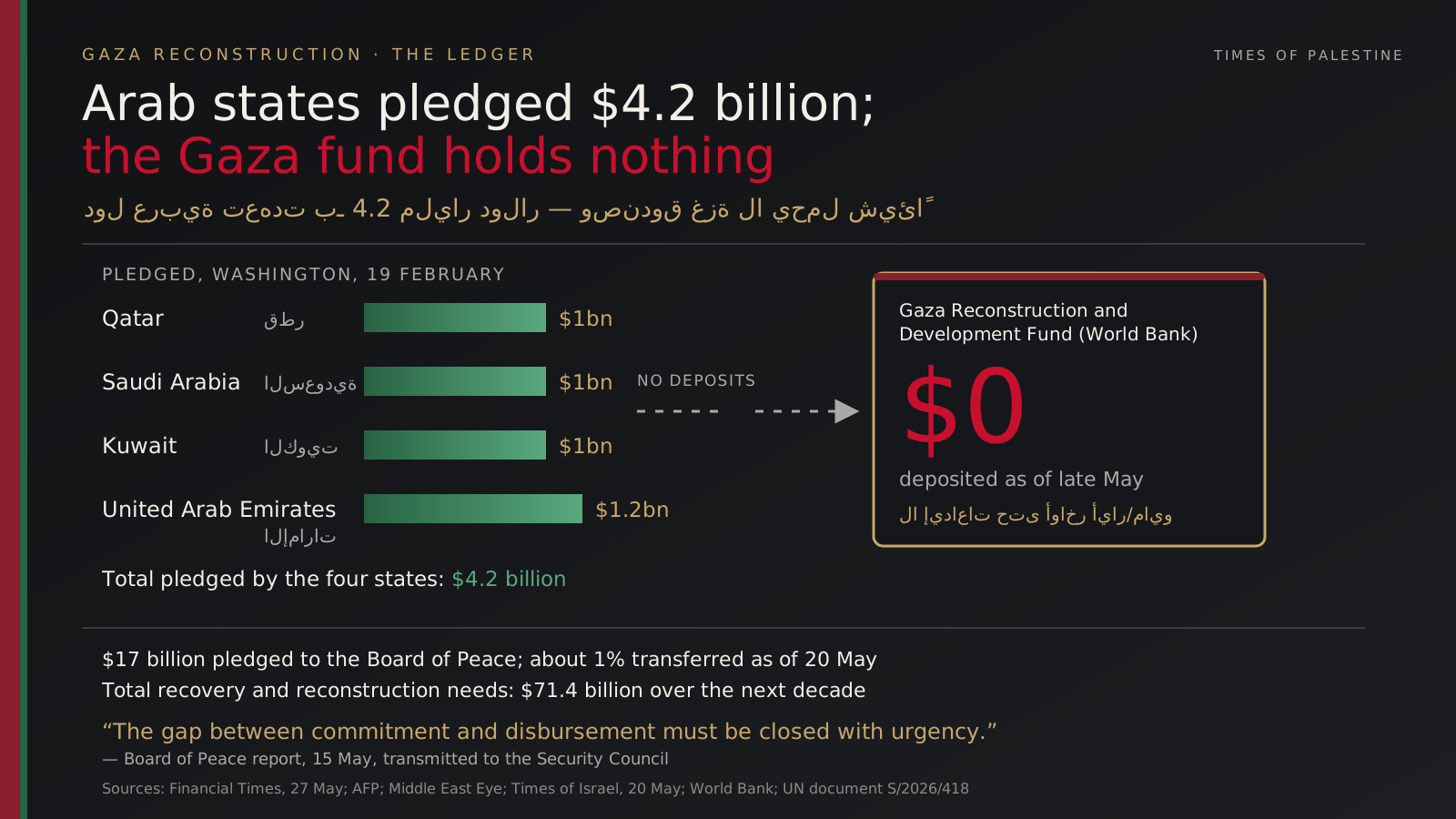
Aid in trucks and money in funds are different accounts. Arab states pledged some 4.2 billion dollars for Gaza's reconstruction; the World Bank-administered fund set up to receive it has not received it.
Both facts are true at once, and a reader is owed both. Convoys that arrive are not a substitute for reconstruction financing that has not, and a fund holding nothing does not cancel 663 tonnes that crossed a border in a week.
The practical question for the autumn is which of the two the field hospitals depend on. Consumables, fuel and staff salaries are recurring costs, and a convoy answers them for weeks rather than seasons.
Until Gaza's major hospitals reopen — which requires capital, equipment and a construction pipeline none of the convoys carry — the field hospitals are the health system, and whoever keeps them supplied is keeping it alive.