Culture & Arts
Palestinians reopen Gaza's libraries and Ramallah's festival after two silent years
Graphic: Times of Palestine
Original Reporting
The Newsdesk gathers reporting from wire services and primary sources and rewrites every story in-house before publication. How our journalism is made →
Culture was among the first things Israel's war took from Palestinians and among the last anyone expected back. It is coming back anyway, building by building, and the people doing it are worth naming.
In central Gaza City, the Phoenix Library opened in late April in a building that survived. Omar Hamad, the young writer who founded it, raised more than a hundred thousand dollars from strangers online and put it into shelves, tables and a roof over a reading room — the Strip's first public library, standing where the bookshops used to be.
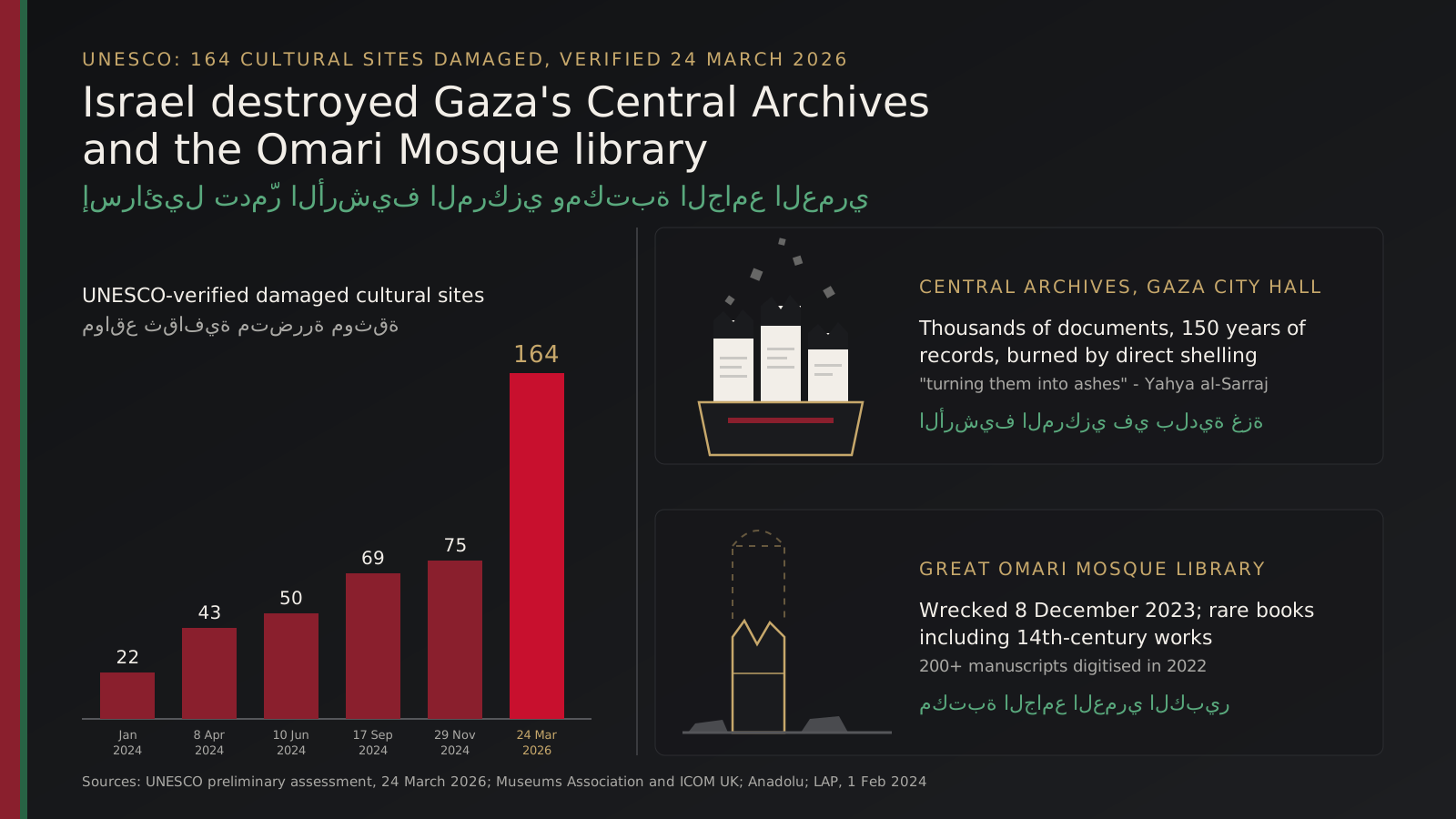
The count it opened against comes from the reporting inside the Strip. Nearly all of Gaza's cultural centres and institutions were destroyed in the first two years of the war and at least 150 of its leading cultural figures were killed, +972 Magazine found in its survey of the revival now under way.
The conservatory teaching without a building#
The Edward Said National Conservatory of Music keeps branches in Ramallah, Jerusalem, Bethlehem, Nablus and Gaza City. The Gaza branch no longer has a building it can use.
Ismail Daoud, the oud teacher who serves as its academic director in Gaza, restarted lessons anyway — first in the north, then in improvised spaces wherever families had gathered, teaching children in rooms and shelters that were never meant to hold a class.
The administration is now looking for the money to rebuild and reopen properly. Until it arrives, the conservatory is wherever Daoud sets down an oud and a child sits opposite him.
A library that needed a roof, a conservatory that did without one.
Both counted as open this year.
Ramallah lit its stage again#
In the West Bank, the Ramallah Contemporary Arts Festival ran from 5 to 16 July, its first edition since October 2023.
It came back larger than it left. Renamed the Ramallah Festival for Contemporary Arts to widen its remit, it brought 48 local and international artists and companies with dance, theatre, circus and video art, keeping contemporary dance as the spine of the programme.
Alongside it the festival convened the Palestine Arts Forum, gathering 22 artists, cultural programmers and institutions from fifteen countries — the kind of room that decides which Palestinian work tours next year, and which had not met since the war began.
What a reopening is worth#
None of this repairs the ledger. The destroyed centres are still destroyed, the artists killed are not replaced, and the Gaza branch of a national conservatory is a teacher, an instrument and whatever space is free.
But the direction has changed for the first time since 2023, and it changed because individuals decided it would: a writer who crowdfunded a library, a teacher who kept his students, a festival board that chose to programme sixteen days of work in a season when nobody would have blamed them for waiting.
The harvest, the school year and the festival calendar all reopen in the same autumn. Of the three, the festival is the one Palestinians control outright.