Culture & Arts
Israel destroyed Gaza's Central Archives and the Omari Mosque library
Graphic: Times of Palestine
Original Reporting
The Newsdesk gathers reporting from wire services and primary sources and rewrites every story in-house before publication. How our journalism is made →
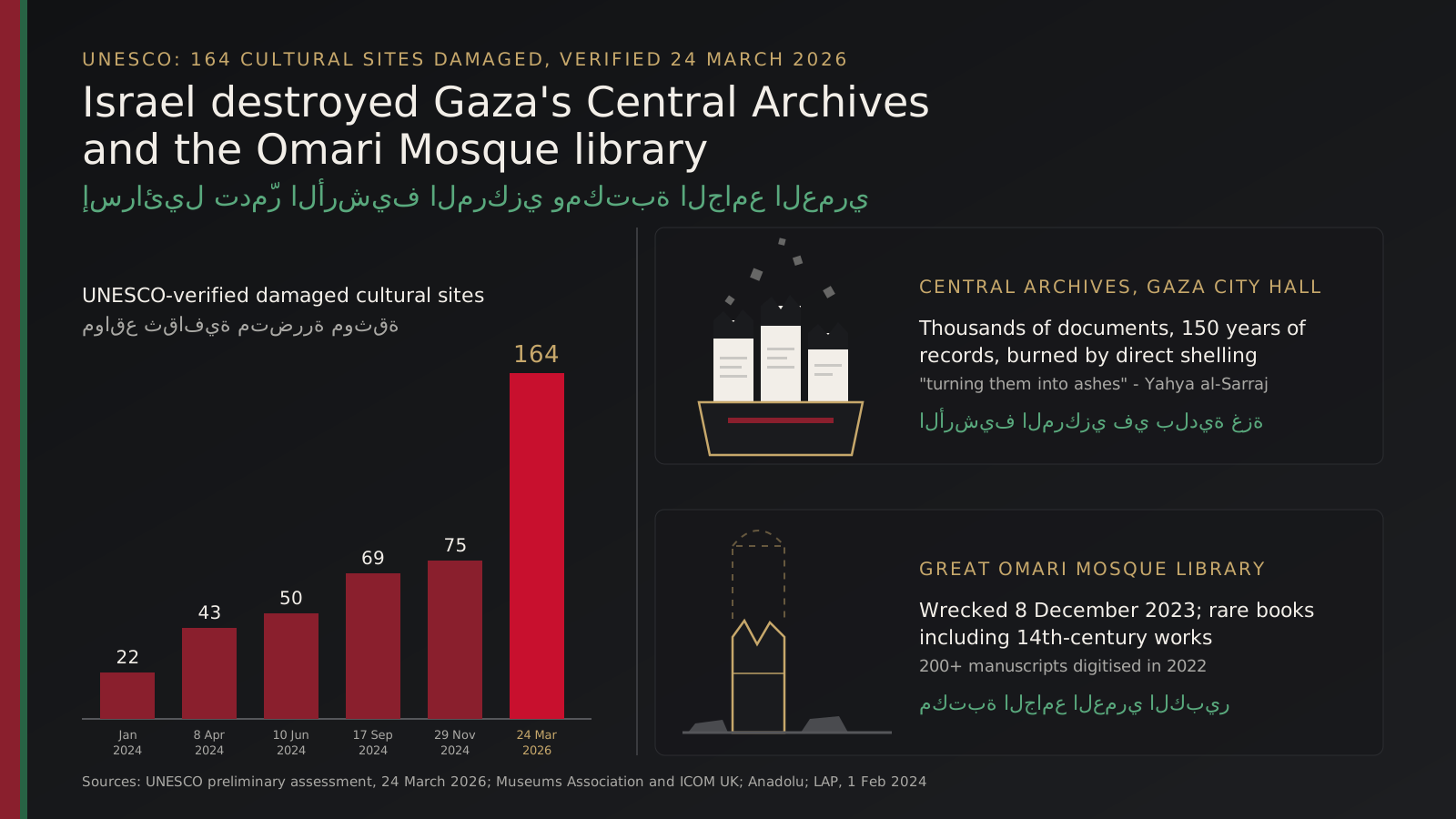
UNESCO has verified damage to 164 cultural sites in the Gaza Strip since 7 October 2023, according to the agency's preliminary damage assessment published through the UN's Question of Palestine portal and dated 24 March 2026. The breakdown given is 14 religious sites, 128 buildings of historical or artistic interest, three depositories of movable cultural property, nine monuments, two museums and eight archaeological sites.
That count has climbed steadily as verification catches up with the destruction. UNESCO listed 22 damaged sites in January 2024, 43 by 8 April 2024, 50 by 10 June, 69 by 17 September and 75 by 29 November 2024, according to figures published at the time by the Museums Association and ICOM UK.
UNESCO says its assessment rests on remote monitoring using satellite imagery and analysis from UNITAR/UNOSAT, and that since the ceasefire of 10 October 2025 it has added rapid on-site assessments where access and security allow.
Among the losses is a body of records that cannot be re-photographed from orbit.
The head of Gaza municipality, Yahya al-Sarraj, told Anadolu Agency on 29 November 2023 that Israel had destroyed the Central Archives, which held thousands of documents going back more than 150 years, including plans of historic buildings and papers in the handwriting of well-known national figures.
"These documents, dating back a long time, were burned, turning them into ashes," he said, adding that the Rashad al-Shawwa cultural centre had also been struck.
Librarians and Archivists with Palestine, in a report issued on 1 February 2024, recorded the Central Archives at Gaza City Hall as suffering "complete destruction from direct shelling, causing a fire which fully destroyed the archives", holding 150 years of records. Neither that report nor the Anadolu account carries any Israeli explanation of the strike.
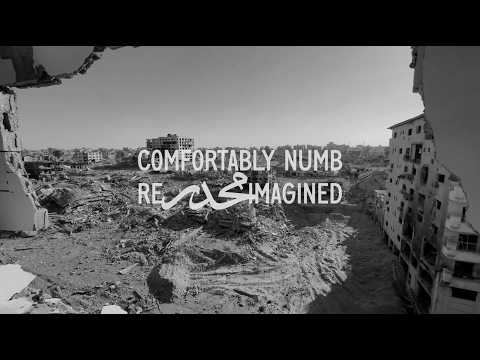
The Great Omari Mosque, the oldest and largest in Gaza City, was wrecked on 8 December 2023. Al Jazeera reported that Hamas said Israel had bombed the medieval mosque and called on UNESCO to protect Gaza's historic buildings; Hamas's antiquities ministry condemned what it called the "ransacking of historical and archaeological sites".
Accounts of what survived differ: Al Jazeera and the South China Morning Post reported that only the minaret was left standing, while the archaeologist Stephennie Mulder wrote in The Conversation that the lower half of the minaret and a few exterior walls were the only parts still up.
The Silk Cities platform records the collapse of significant portions of the structure including the Mamluk-era minaret.
The mosque's library was, by several accounts, the greater loss. Librarians and Archivists with Palestine reported that the mosque, built in the seventh century, held one of the most significant collections of rare books in Palestine, including works from the 14th century, and that more than 200 manuscripts had been digitised in 2022.
Silk Cities notes the library was founded under the Mamluk sultan Baybars and once held thousands of manuscripts.
Gaza's Ministry of Awqaf and Religious Affairs, which is run by the Hamas authorities, put its own tally higher than UNESCO's: 1,109 of the Strip's 1,244 mosques hit, or 89 per cent, of which 834 were levelled and 275 damaged beyond use, according to a statistical report carried by al-Quds al-Arabi and al-Araby al-Jadeed.
The same ministry reported three churches in Gaza City completely destroyed, 40 of 60 cemeteries targeted, 643 waqf properties destroyed and losses in the religious sector above 500 million dollars.
Those figures have not been independently verified; UNESCO's much lower number reflects a narrower definition and a verification method that requires imagery or site access for each entry.
One church strike is documented in detail.
Vatican News reported that at least 17 Christians, including ten from a single family, were killed on the evening of 19 October 2023 when a building inside the compound of the Greek Orthodox Church of Saint Porphyrius collapsed, with some 400 people sheltering there; the Greek Orthodox Patriarchate attributed the explosion to Israeli missiles.
Airwars, which reconstructs individual strikes, identified the names of at least 23 civilians killed, among them ten children, from three families. According to Vatican News, the Israeli military said it had bombed a Hamas command and control centre and that the church was not the target.
Museum collections went with the buildings.
The Museums Association reported that Israeli forces demolished the main buildings of al-Israa University south of Gaza City, including a museum holding around 3,000 objects, and that Birzeit University accused Israeli troops, who had used the campus as a military base, of looting the collection before the demolition; the association noted the looting allegations have not been independently verified.
Al-Israa University said in a statement carried by the Palestinian news agency WAFA that the museum held more than 3,000 rare archaeological artefacts and that they were looted before the museum was destroyed. The Museums Association also recorded Rafah Museum and al-Qarara Museum as hit by airstrikes in the war's early days.
UNESCO's own list includes the Ministry of Tourism and Antiquities storage facility for movable cultural objects in Gaza City.
Older Palestinian archives were removed rather than burned, and have not come back.
Between May 1948 and February 1949 librarians from the Jewish National Library and Hebrew University Library took some 30,000 books, manuscripts and newspapers from emptied Palestinian homes in west Jerusalem, according to research by the Israeli scholar Gish Amit reported by The Electronic Intifada and Jerusalem Story; a further 40,000 to 50,000 books were gathered elsewhere by staff of the Custodian of Absentee Property, of which roughly 26,000 were judged to contain incitement and sold as waste paper.
Publishing Perspectives reported that the National Library holds several thousand Arabic volumes stamped AP, for Abandoned Property, and that requests to film the collection and to interview the Custodian were refused; the Arabic outlet Jadaliyya puts the AP holdings at more than 8,000 books, including the private library of Khalil al-Sakakini.
The library and archive of the PLO Research Center, founded in Beirut in 1965, were seized by Israeli forces in September 1982 and, after examination by Israeli intelligence, returned in a prisoner exchange and flown to Algiers in 1983, the AJS Review recorded, adding that their current fate is uncertain.
The journal Curriculum Inquiry reports the collection remains in storage at an Algerian military base.
The Times of Israel, reporting on Jonathan Gribetz's research, wrote that the centre's late director Samih Shabeeb said there were no plans to bring the archive back, and that an Israeli official said one item, a 17th-century Yemeni Hebrew manuscript, went to the National Library in Jerusalem.
Access to what Israel does hold is itself restricted. The Akevot Institute's 2019 report Silencing found that teams identifying themselves as state and military archive declassifiers have for years ordered files sealed in vaults, with particular attention to records of the 1948 war and the uprooting of the Palestinian population.
At Qasr al-Basha in Gaza City, whose museum treasures Reuters was told are gone, workers from the Center for Cultural Preservation have begun surveying surviving stones for a restoration that has no timetable. Whether UNESCO's on-site assessments will reach the north, and whether the crates flown to Algiers in 1983 will ever be inventoried, remains undetermined.