Transparency & Accountability
PayPal locks Palestinians out, then verifies them through an Israeli biometrics firm
Graphic: Times of Palestine
Original Reporting
The Newsdesk gathers reporting from wire services and primary sources and rewrites every story in-house before publication. How our journalism is made →
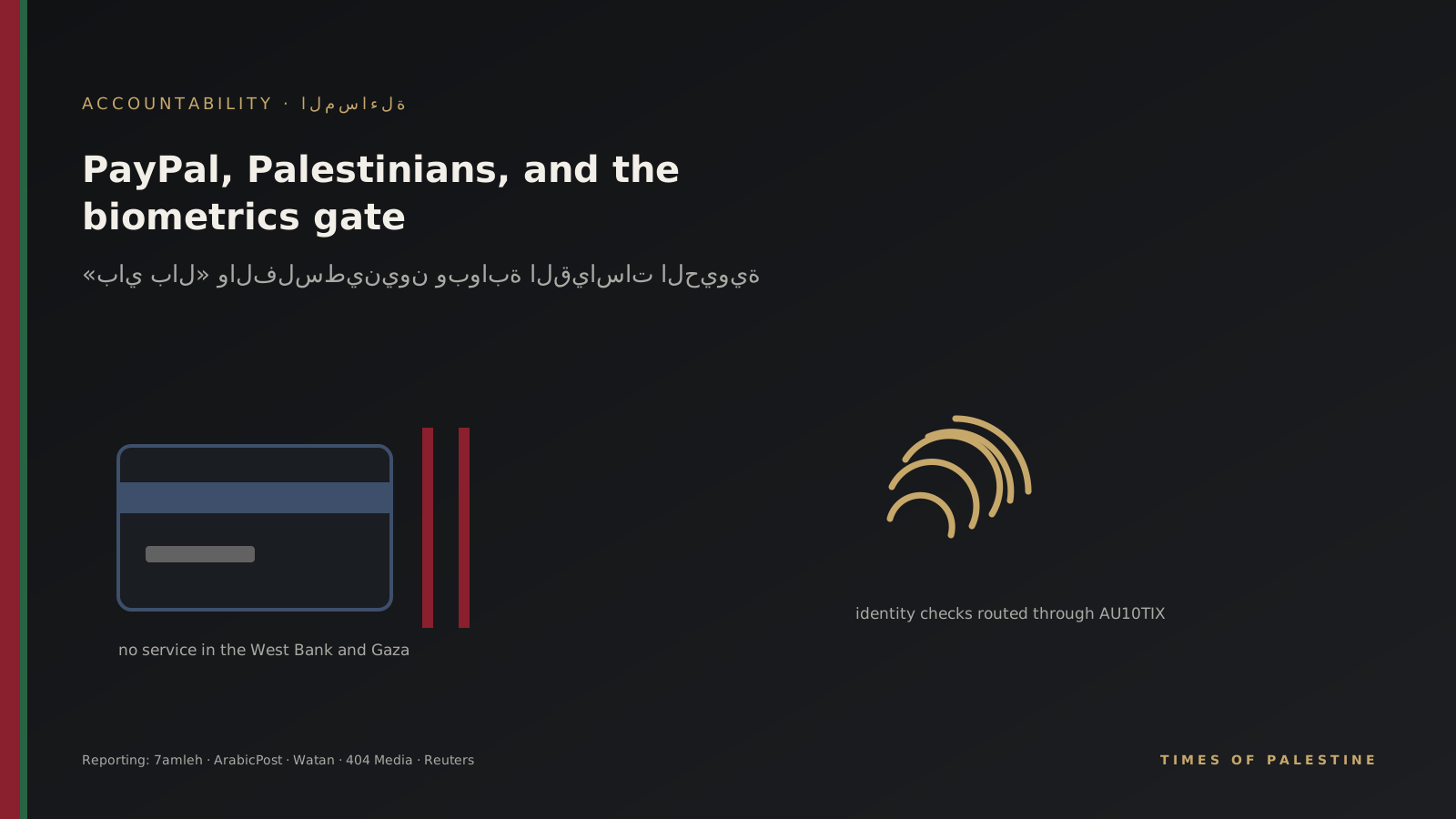
PayPal has refused for two decades to serve Palestinians in the West Bank and Gaza. This summer, reporting in the Arabic press added a second layer to the file: the Palestinians who do manage to use the platform now face tightened identity checks — passport or ID uploads and facial photographs — processed in partnership with an Israeli verification company.
The two halves of the policy sit uneasily together. In the occupied territory itself, a Palestinian cannot open a PayPal account at all, while an Israeli settler living in the same territory can; outside it, the Palestinian who reaches the service through a foreign account or diaspora address must now hand over the most personal data there is to keep it.
The exclusion, on the record#
The baseline has been documented for years. PayPal serves Israelis, including residents of West Bank settlements, but offers no service to Palestinians in the West Bank and Gaza — a gap the digital-rights group 7amleh has campaigned against since 2016, backed by a petition of more than 230,000 signatures and letters from human-rights organizations.
The Electronic Frontier Foundation called the policy indefensible in 2021, and members of the US Congress pressed the company in writing in 2022 to explain itself, Middle East Eye reported. PayPal has never given a public accounting; when Reuters put the campaign's demands to the company, it did not respond, and campaigners say the only explanation ever offered is that Palestine is classified internally as "high risk."
The cost lands on working people. Palestinian freelancers and small exporters describe losing foreign clients the moment payment came up, and after October 2023 the squeeze tightened further — Noon Post reported waves of frozen accounts belonging to Gaza and West Bank users who had reached PayPal through workarounds, their balances locked with no appeal.
The new layer: biometrics through an Israeli vendor#
In June 2026, PayPal rolled out updated verification procedures that require affected Palestinian users to upload identity documents — a passport or national ID — together with facial photographs, ArabicPost reported in an investigation published on 7 August, with the Jordanian-Palestinian outlet Watan following two days later.
Both reports centre on the same detail: the checks run through AU10TIX, an Israeli identity-verification company based in Hod HaSharon that grew out of the airport-security contractor ICTS and processes ID checks for global platforms.
A Palestinian is refused the service at home, and asked for a face scan to use it from anywhere else.
For Palestinian users, the arrangement raises a question that goes beyond ordinary know-your-customer friction: who ends up holding a Palestinian's passport scan and facial geometry, under which country's law, and with what exposure to Israel's security establishment.
The outlets note that the concern is sharpened by AU10TIX's record. In 2024, 404 Media reported that the company had left administrative credentials exposed online for more than a year — an opening that could have revealed the identity documents of users across the major platforms it serves.
None of the reporting alleges that verification data has been handed to any government. The accountability question is narrower and older: a company that will not explain why it excludes one population is now asking that same population for its biometrics, through a vendor headquartered in the state occupying them, and has not publicly addressed either policy.
What would answer the file#
The remedies campaigners seek have not changed. 7amleh's demands remain service for Palestinians in the West Bank and Gaza on equal terms, a published explanation of the "high risk" designation, and human-rights due diligence of the kind PayPal's own policies promise. To those, this summer's reporting adds a fourth: a plain statement of where Palestinian users' verification data goes, who processes it, and how long it is kept.
Until the company answers, the asymmetry stands as the story. Payment platforms measure trust in documents and face scans; Palestinians are asked to supply both, and are still waiting to be trusted with an account.