Sport
Gaza's women amputees built the Strip's first football team
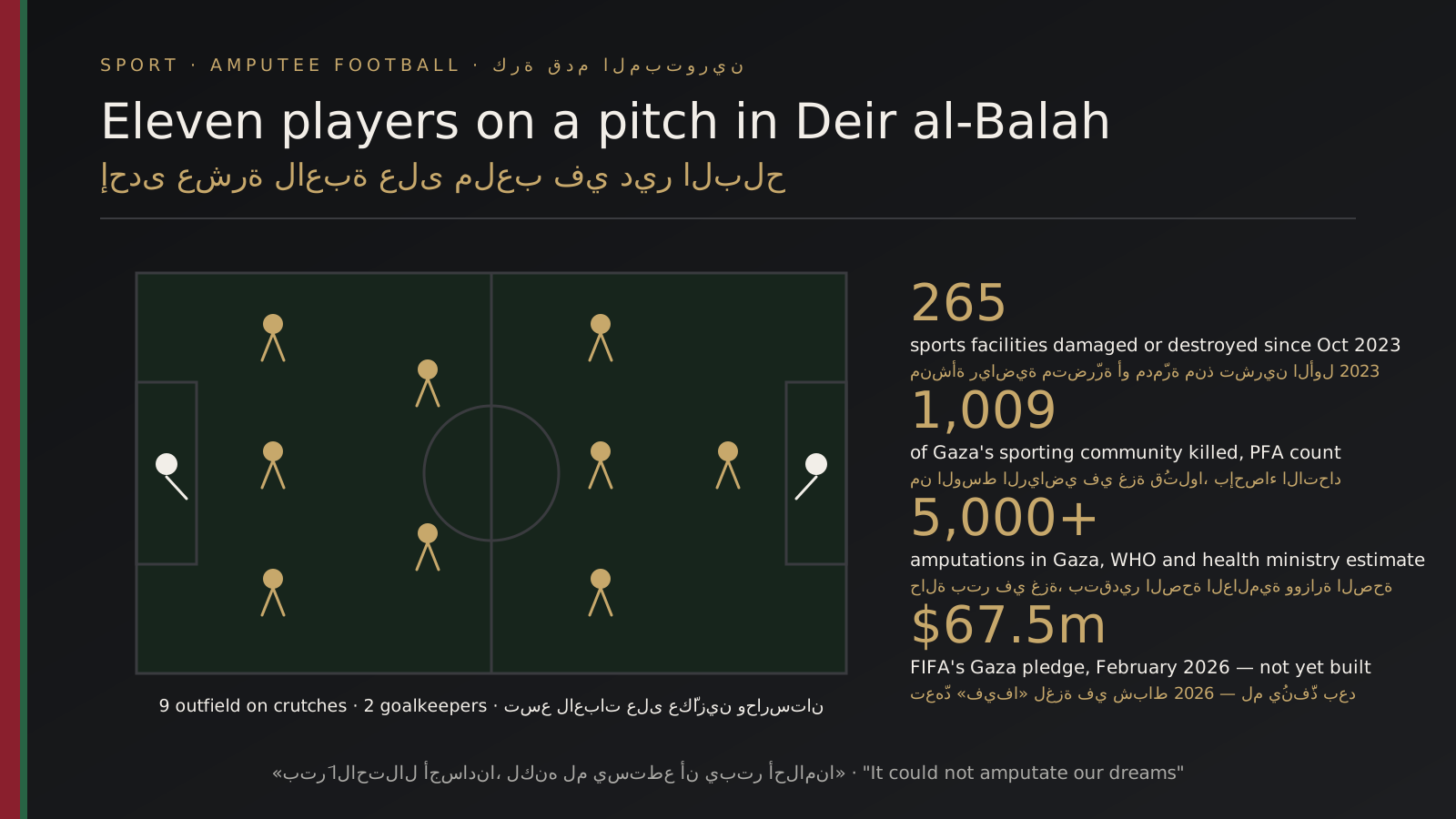
Graphic: Times of Palestine
Original Reporting
The Newsdesk gathers reporting from wire services and primary sources and rewrites every story in-house before publication. How our journalism is made →
The pitch is small and the turf is artificial, and it sits in Deir al-Balah in the middle of the Gaza Strip. Eleven women train on it. Nine of them play on one leg and a pair of crutches. Two of them keep goal with one arm.
They are the first women's amputee football team Gaza has had, and they assembled themselves out of a year that took their limbs.
Rozan Khaira lost her leg in an air strike in November 2023. She gave Al Jazeera the line the team has since carried into every session.
The occupation amputated our bodies, but it could not amputate our dreams or our will to live.
Rozan Khaira, forward
Who plays#
Farah Abu Qinas is twenty-three. She lost her left leg in an air strike in June 2024. Aisha al-Abadla was born with an incomplete arm and plays in goal, one of the two goalkeepers the format allows.
The rule in amputee football is the reason the team looks the way it does: outfield players run on crutches with one leg, and the goalkeeper has one arm. It is not a modified version of the game. It is the game, played by its own laws, at speed.
Fouad Abu Ghalyon, who presides over the Palestine Amputee Football Association, founded the women's side. Khader Abdelhadi, a sport psychologist, coaches the Gaza Hope team and works with the players on what the sessions are for beyond the football.
The men's side came first. Gaza Al-Irada was founded in May 2018, long before the war, and kept its shape through it under the coach Hatem al-Mughrabi. Ali Tafesh, a twenty-four-year-old law graduate, was a sprinter before he lost his leg; his mother and brother were killed in a strike on their home in February 2024. Saadi al-Masri, forty, was a national swimming champion.
The ground they play on#
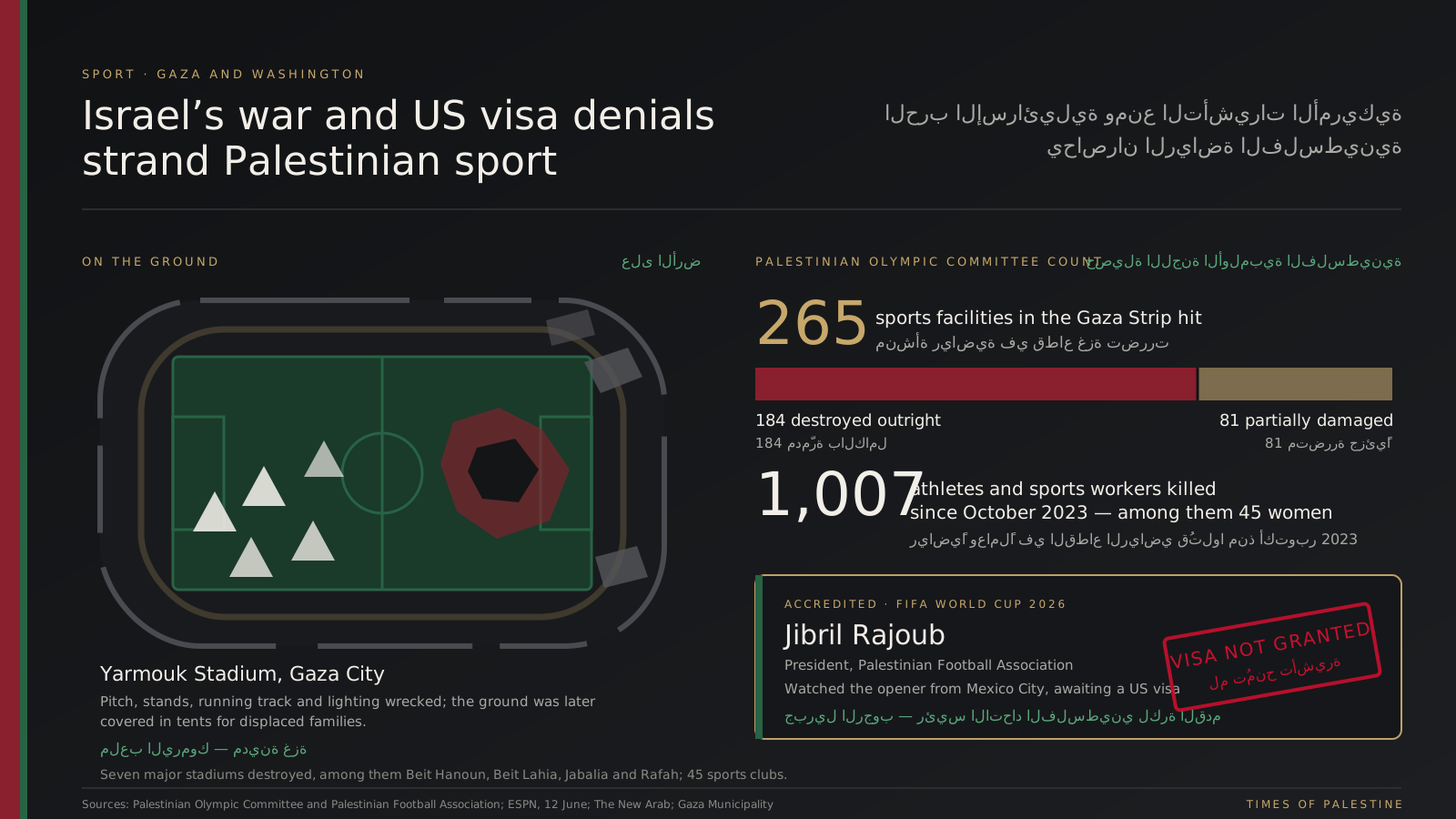
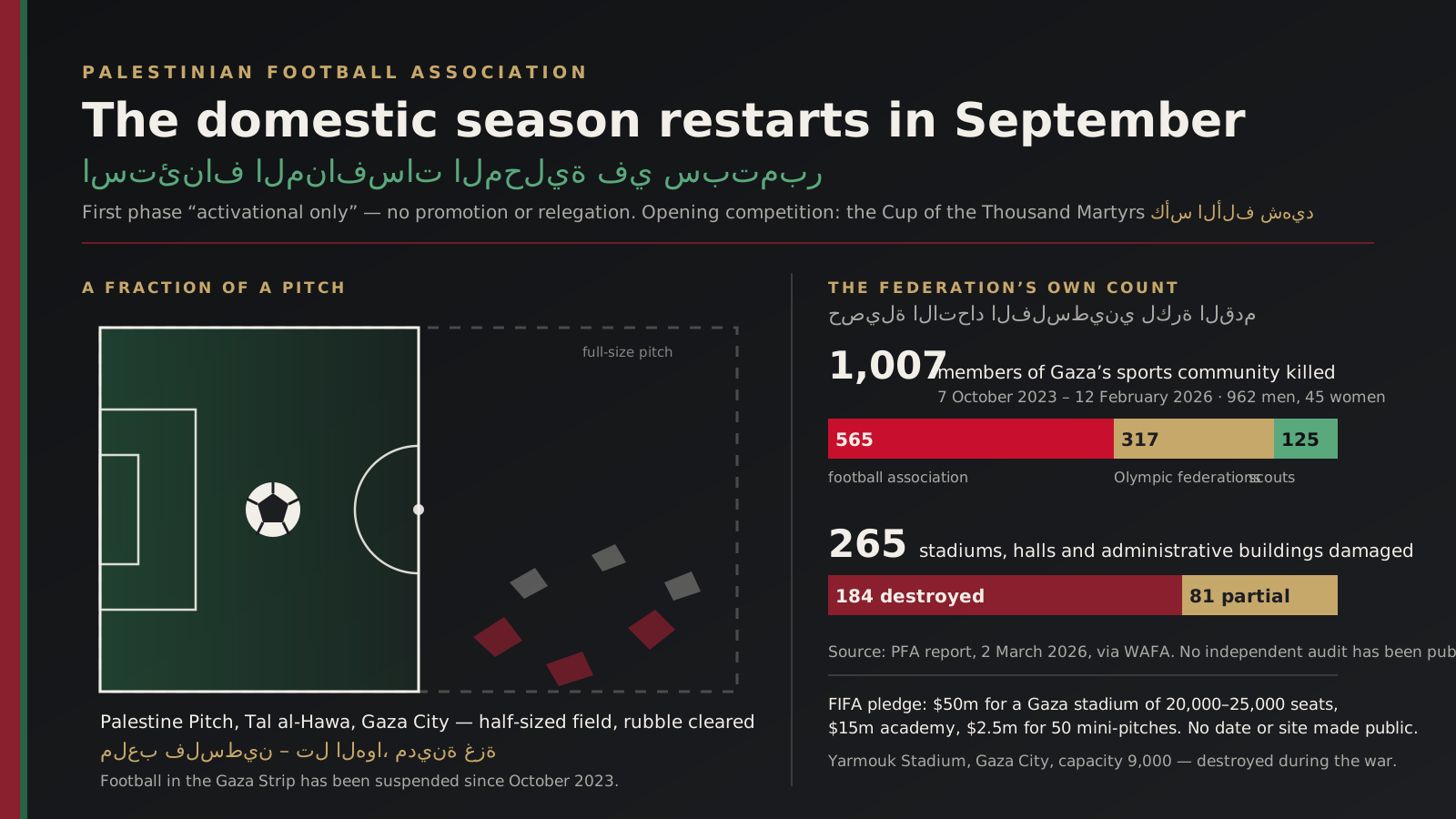
Nothing about the setting is ordinary. The Palestinian Football Association counts 265 sports facilities damaged or destroyed since October 2023 — pitches, gyms, club buildings, swimming pools. Several stadiums have spent the war as shelters for displaced families. Palestine Stadium in Gaza City still stands, barely, and works within severe limits.
The association's March report counted 1,007 people from Gaza's sporting community killed since October 2023 — players, coaches, referees, administrators — a figure that had reached 1,009 by the summer.
The World Health Organization and Palestinian health authorities estimate that more than five thousand people in Gaza have had a limb amputated since October 2023. The team is drawn from that number, and so is its purpose.
Elsewhere in the Strip the game has come back on whatever ground could be cleared: neighbourhood leagues played on levelled sand with stones swept to the edges, orphans' teams on lots that were houses.
What has been promised, and what has been built#
In February, at the inaugural Board of Peace meeting in Washington, FIFA announced the largest commitment football has ever made to Gaza: 50 million dollars for a national stadium seating twenty to twenty-five thousand, 15 million for an academy, 5 million for five full-sized fields and 2.5 million for fifty mini-pitches — 67.5 million dollars in all.
"We don't have to just rebuild houses or schools or hospitals or roads," the FIFA president Gianni Infantino said at the announcement. "We also have to rebuild and build people, emotion, hope and trust."
The commitment is real and it is large, and it is at the pledge stage. No construction timetable and no funding schedule have been published, and players in Gaza describe the programme as something they are still waiting for.
Distinguishing the two is the whole of the story. A promise of this size is worth holding to its delivery, and Gaza's footballers are the people who will know first when the first pitch is laid.
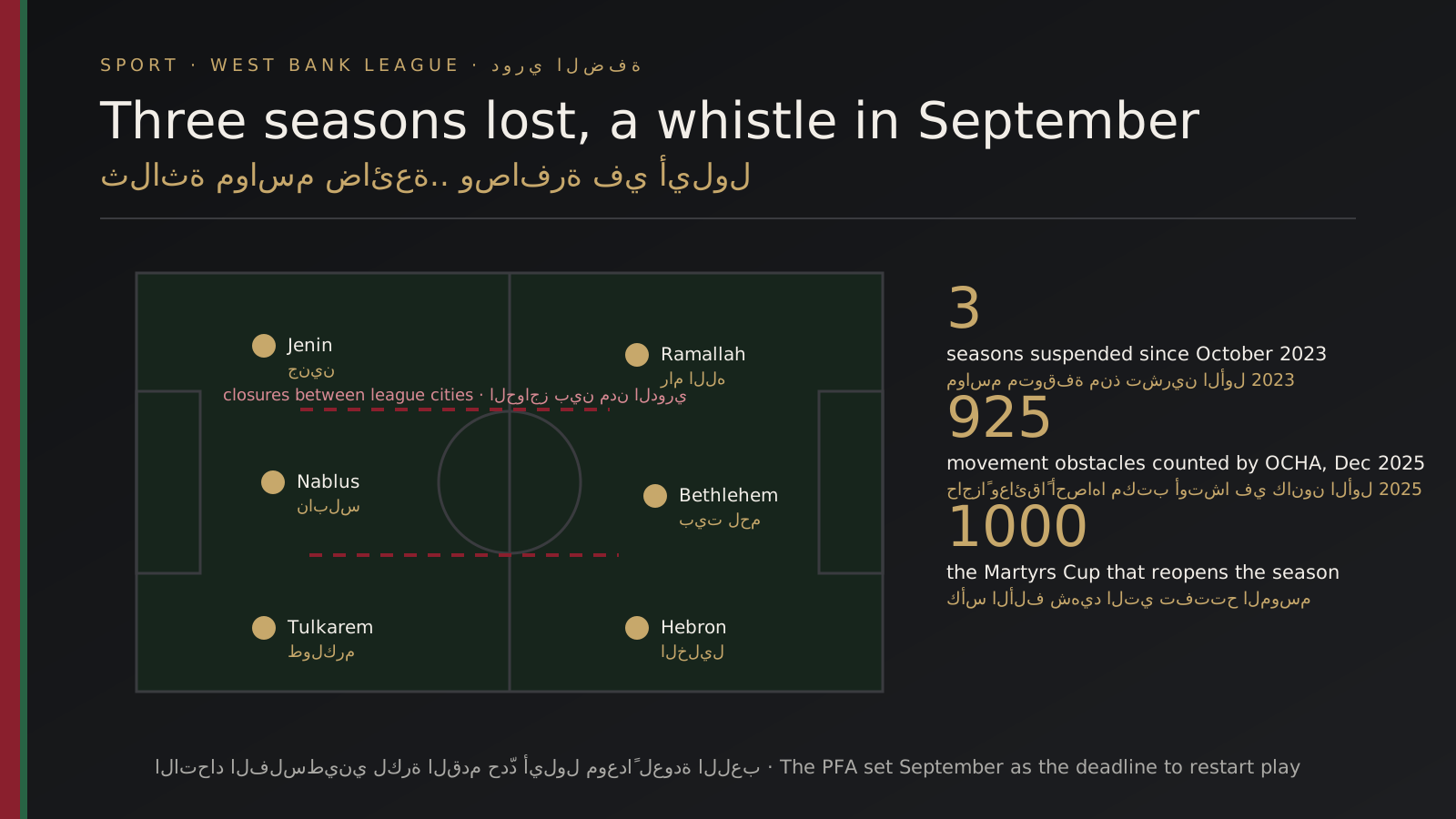
Meanwhile the Palestinian Football Association has restarted league play. Jibril Rajoub, its president, set 4 September for the resumption, and the Thousand Martyrs Cup opens the season with more than two hundred clubs — 146 in the West Bank, 44 in Gaza and 36 in the refugee camps of Lebanon.
What the sessions are#
The equipment shortages are constant. There is no reliable transport to training, and crutches, sports shoes and basic protective kit are hard to find. The programme runs on community support and partnerships rather than a budget.
What it produces is not modest. A woman who was carried out of a strike in 2023 is now a forward with a position, a coach, a fixture list and ten teammates who understand exactly what her week costs her.
That is the sentence Gaza's sports pages have been waiting three years to write, and eleven women in Deir al-Balah wrote it themselves.
%20(cropped).jpg?width=640)