US Press
Trump answers Iran's Hormuz demands with a compensation demand of his own
Graphic: Times of Palestine
Original Reporting
The Newsdesk gathers reporting from wire services and primary sources and rewrites every story in-house before publication. How our journalism is made →
A week ago the American press was reporting that Washington, Tehran and Muscat were days from an interim deal to reopen the Strait of Hormuz. This week it is reporting the opposite, and the reversal runs through Gaza's reconstruction accounts.
Iran's Supreme National Security Council set out its conditions on Saturday. Its secretary, Mohammad Bagher Zolghadr, said the strait would stay shut until the United States lifts its naval blockade and its sanctions, withdraws its forces from the region, pays reparations for the 2025 and 2026 wars and releases Iran's frozen assets. The council also demanded an end to American attacks on Iran's regional allies.
"Until America corrects its behavior, the Strait of Hormuz will not be reopened," the council said in the formulation carried across the US wires.
Trump's counter#
On Monday the president answered in kind. Trump said he would require compensation from Iran as a condition of talks — not only for the current war, but for Iranian attacks on American targets going back more than two decades, and payments to the families of Iranian protesters killed by the authorities over the past fifty years.
Al Jazeera reported the exchange on Tuesday. The American coverage read it the same way: two compensation claims pointed at each other, and a deal further away than it looked last week.
CNBC framed the week as a shift by the administration from military to economic pressure. Bloomberg's account had deal hopes dimming after the Iranian demands landed.
What Tehran says is not happening#
The Iranian foreign minister, Abbas Araghchi, said on Sunday that no negotiations are under way between Tehran and Washington, adding that intermediaries "are still making efforts to find ways to resume negotiations."
A foreign ministry spokesman drew a further line for the New York Times: the talks with Oman on shipping routes are separate from any discussion of fully reopening the waterway. Progress in Muscat, in other words, is not progress on the strait.
That distinction matters, because the optimism of last week rested on conflating them.
Why a Palestinian reader should follow it#
The strait carries about a fifth of the world's seaborne oil. It also sits upstream of the money.
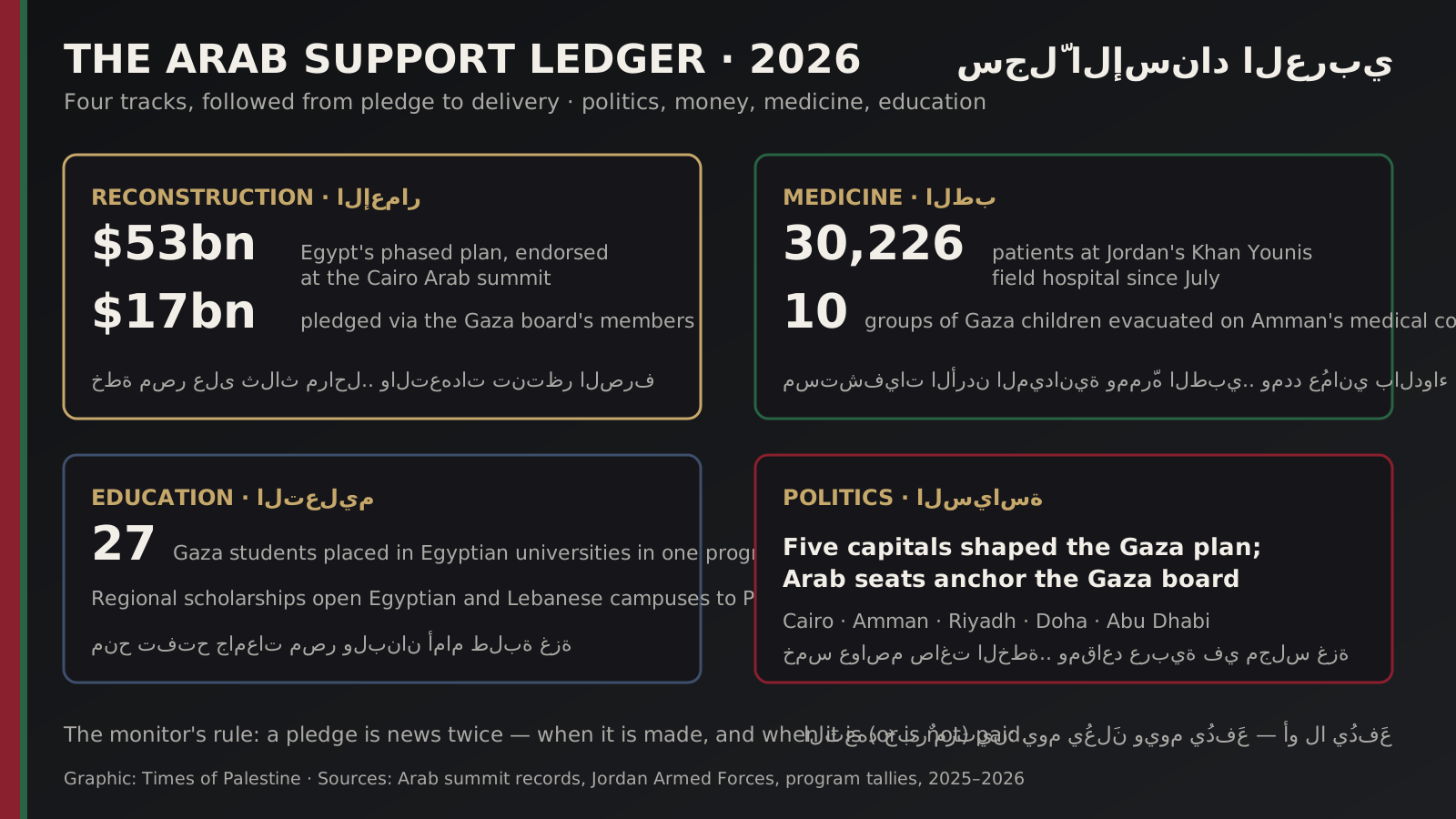
The Gulf pledges made to Gaza's reconstruction — the sums announced at the Board of Peace and after it — are made by governments whose revenues move through that water. A closed strait does not stop a pledge from being announced. It changes when, and whether, a pledge becomes a transfer.
There is a second effect, and it is about attention. Washington has spent August arguing with itself about Iranian compensation while the Gaza file waits on a sequencing dispute over disarmament and withdrawal that this paper has tracked since the Board of Peace published its fifteen points.
Both cannot occupy the front of the president's desk at once. The Palestinian interest in the Hormuz story is not the oil price. It is the calendar.



%20(cropped).jpg?width=640)