The Diaspora
Governments ask Gaza's families for biometrics no one in Gaza can give

Graphic: Times of Palestine
Original Reporting
The Newsdesk gathers reporting from wire services and primary sources and rewrites every story in-house before publication. How our journalism is made →
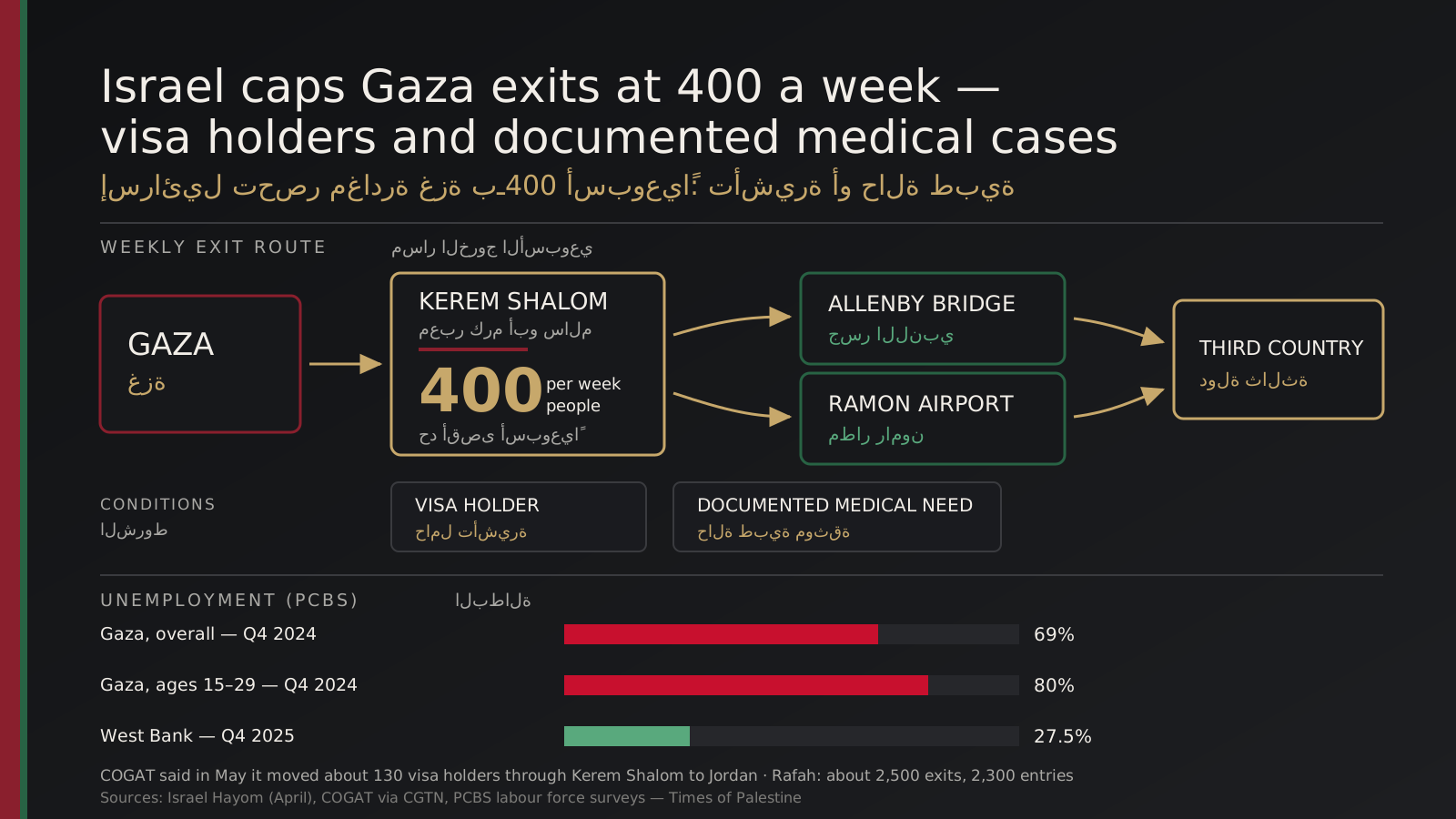
A Palestinian in Toronto or Manchester who wants to bring a sister out of Gaza runs into the same wall in almost every country: the application cannot be completed without biometric enrolment, and the visa application centres open to Palestinians are in Egypt. Reaching Egypt requires leaving Gaza. Leaving Gaza, for most people, requires the visa.
That closed loop is the practical shape of family reunification in the third year of the war, and it explains why approvals and arrivals are two very different numbers.
What Canada's file shows#
Canada opened temporary measures for the extended family of citizens and permanent residents in Gaza on 21 December 2023. The intake was capped at 1,000 applications, raised to 5,000, and the cap was reached on 6 March 2025.
By 1 August 2025, of the five thousand places taken, about 860 people had actually arrived in the country, according to tallies compiled by the Canadian organisations campaigning on the file. The rest were held by closed crossings, exit approvals that never came, and procedural delays on both ends.
The programme has been kept alive since. Ottawa's special measures were due to expire on 31 July 2026 and were extended, and a public policy issued in April 2026 smoothed entry for people already holding approved temporary resident visas — the group whose paperwork is finished and whose road is not.
The presence that has built up in the meantime is measurable: 2,383 valid work permits and 236 valid study permits held by Palestinian passport holders in Canada as of 31 May 2026.
Amnesty International's Canadian section and partner organisations have asked the government to repair the visa pathway rather than let approvals expire unused — extending validity, restoring processing capacity, and treating the exit problem as part of the programme rather than as somebody else's.
Britain narrowed the door instead#
The British government has consistently declined to create a bespoke Gaza family scheme of the kind built for Ukraine, saying Palestinians should use existing routes.
Those routes then narrowed. On 4 September 2025 the Home Office suspended new applications under the refugee family reunion rules, after the number of refugees' family members granted visas rose from 4,300 in 2023 to 20,600 in the year to March.
Families were directed to the standard rules, which require a sponsor earning at least £29,000 a year and basic English from the applicant, with a stricter system announced for spring 2026.
For a family in Gaza, an income test and a language certificate are not the hard part. The hard part is still the biometrics appointment on the other side of a crossing they cannot use.
What would actually move people#
The mechanics that unlock this file are unglamorous and well understood by the officials who run it: biometric enrolment inside Gaza or waived pending arrival, visa validity that survives the wait, exit coordination handled government-to-government rather than left to families, and a named caseworker instead of a portal.
Three of the four are administrative decisions that cost little. The fourth — getting a name onto a crossing list — is the one that has kept thousands of completed files sitting in inboxes while the people they describe stay where they are.

.jpg?width=640)