Her Story
Gaza's mothers feed their babies ground chickpeas when the milk stops
Graphic: Times of Palestine
Original Reporting
The Newsdesk gathers reporting from wire services and primary sources and rewrites every story in-house before publication. How our journalism is made →
A mother in Gaza whose milk has dried grinds chickpeas, stirs them into water and feeds that to her baby. Others use tahini the same way. Save the Children's teams in the Strip reported both practices this month, and described them as what mothers do when there is no alternative left to try.
The organisation said Palestinian mothers are struggling to breastfeed more than ten months after the ceasefire, and named the reason: Israeli restrictions on humanitarian aid and on commercial goods entering Gaza. Some women are stopping earlier than they want to, not by choice but for want of food and of anyone to help them continue.
What the screening found#
The scale is in the United Nations' own July 2026 figures. Of nearly 29,000 pregnant and breastfeeding women screened for malnutrition, more than 20,000 needed targeted supplementary feeding — two in every three women who were weighed and measured.
Save the Children and its partners said the rates they diagnose in their clinics are worst in northern Gaza, and listed what produces them: continuing military activity, food insecurity, displacement, living conditions that do not support recovery, a narrow range of food and limited access to health care.
Two in three
Of nearly 29,000 pregnant and breastfeeding women screened in Gaza in July 2026, more than 20,000 required targeted supplementary feeding, according to United Nations data
Breastfeeding is not an individual achievement#
It is worth stating plainly what these numbers describe, because the language of nutrition can make it sound like a private matter of a woman's body.
Milk supply responds to calories, hydration, rest and the absence of terror. A woman displaced four times, sleeping in a tent through a Gaza August, eating one narrow meal a day and waiting for news of relatives, is not failing at something. Her body is doing exactly what a body does under those conditions.
The support that would change it is ordinary and specific: enough food reaching the markets, clean water, a midwife or a lactation counsellor within walking distance, and regulated infant formula for the mothers who genuinely cannot feed. Save the Children has asked for all of it, and for the aid restrictions that keep it out to be lifted.
The households doing this work#
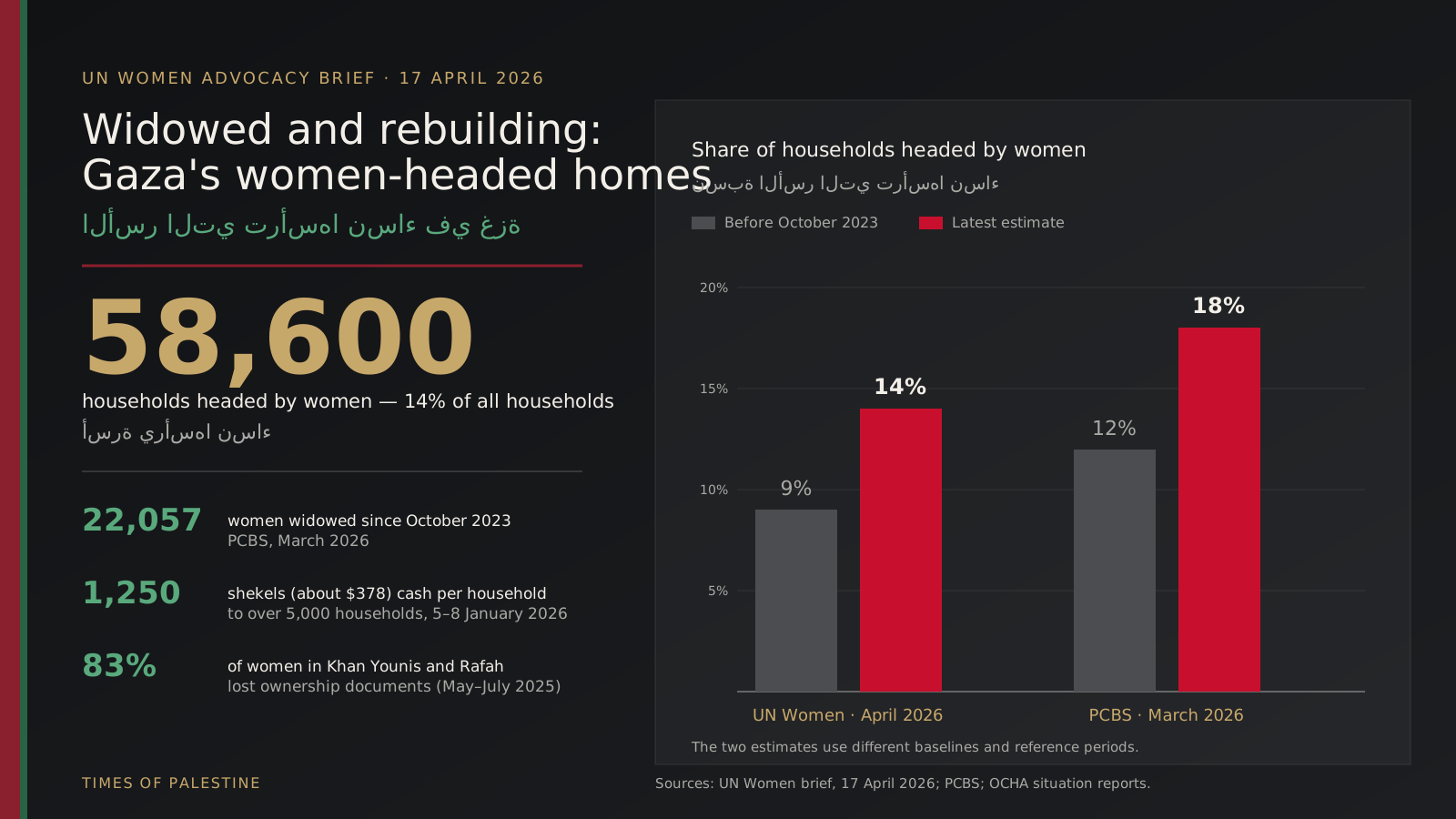
Gaza's mothers are carrying this inside a household structure the war rearranged. The Palestinian Central Bureau of Statistics reported on 8 March that 22,057 women have been widowed since October 2023, and that female-headed households in Gaza rose from 12 percent before the war to roughly 18 percent.
Roughly 150 babies are born in the Strip every day, by the United Nations Population Fund's count. Each of those births lands in a household where a woman is more likely than before to be the only adult earning, queueing, carrying water and deciding which child eats first.
That is the work being done between the screening rounds. It does not appear in the figures, and the figures do not hold without it.