Politics & Diplomacy
Treasury cuts an Egyptian bank from dollars; Israel drops Palestinian banks

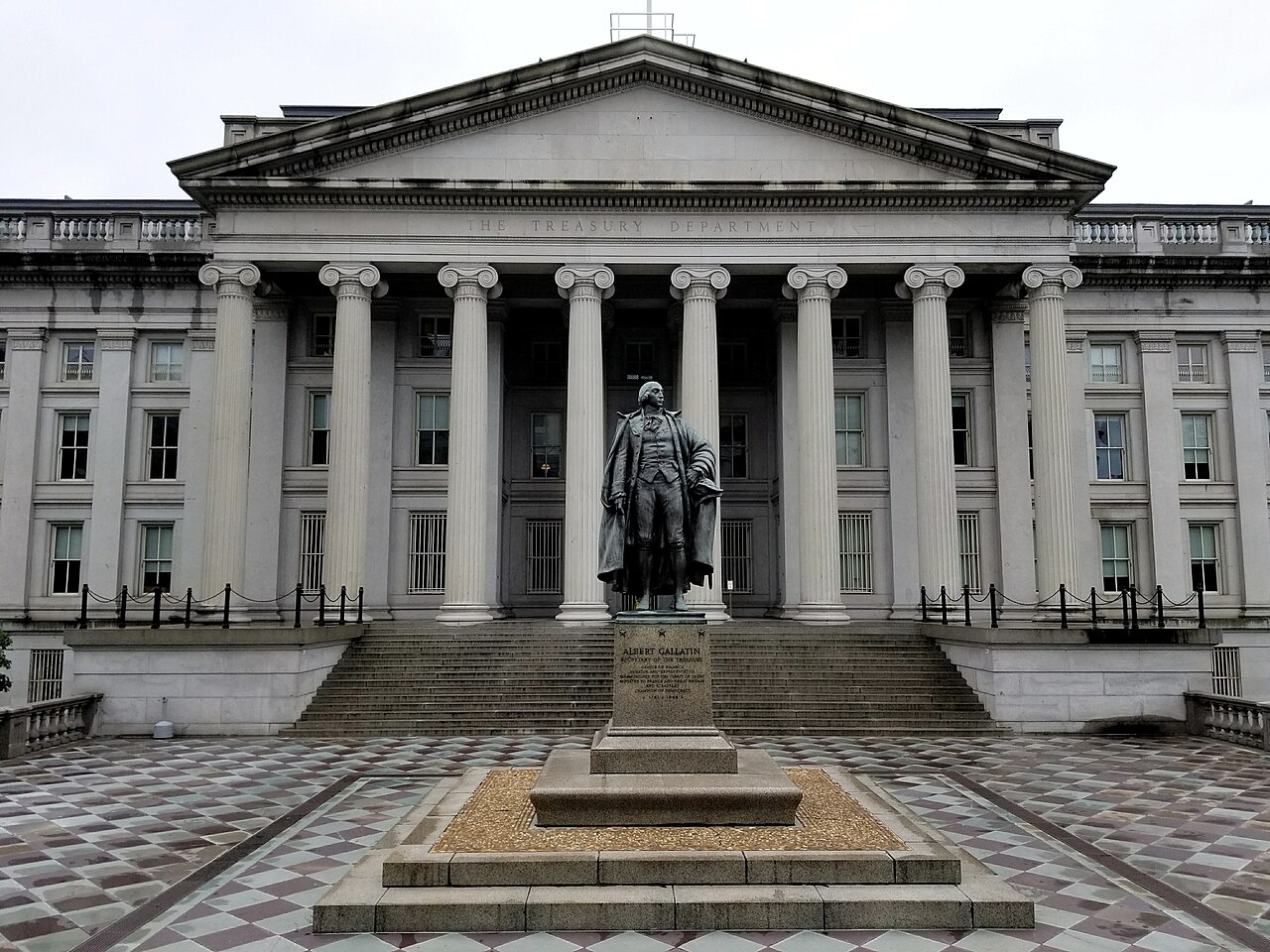
Image credit: Treasury Secretary Scott Bessent — US Department of the Treasury / Wikimedia Commons, public domain · License
Original Reporting
The Newsdesk gathers reporting from wire services and primary sources and rewrites every story in-house before publication. How our journalism is made →
The sharpest instrument in the American financial arsenal went off on Friday, and it went off inside an Arab economy.
The Treasury Department's Financial Crimes Enforcement Network proposed a rule severing the United Arab Emirates branches of Banque Misr — one of Egypt's two great state banks — from correspondent accounts at American institutions. Those accounts are the only route by which a bank anywhere on earth reaches the dollar.
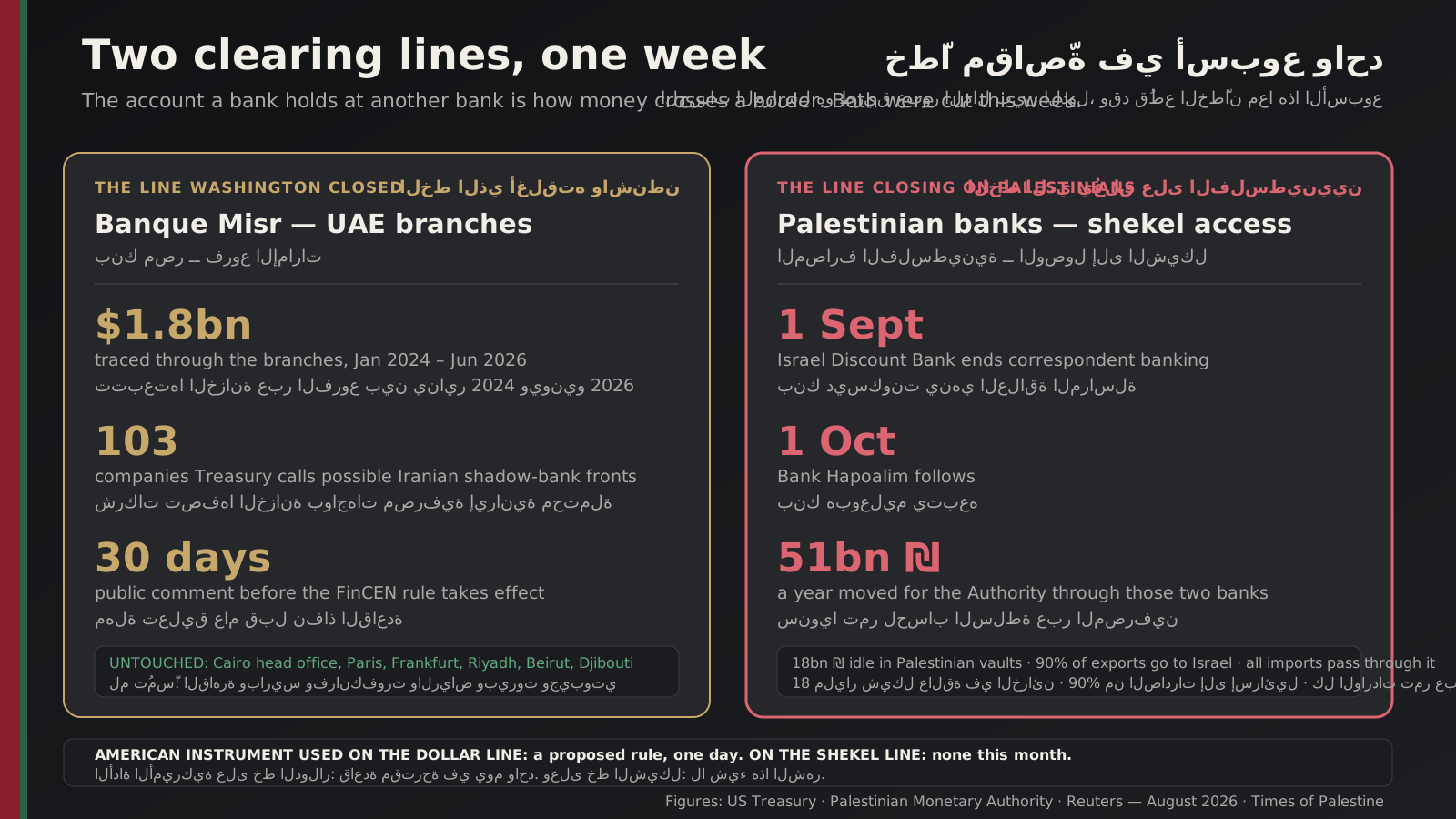
Treasury said it had traced about $1.8 billion moving through those branches between January 2024 and June 2026 on behalf of 103 companies it called potentially part of Iranian shadow banking networks. The rule now runs a thirty-day public comment period before it bites.
"Iran's enablers cannot continue to enjoy access to the U.S. dollar and the global financial system," Treasury Secretary Scott Bessent said, according to the Associated Press. Banque Misr UAE, he added, "decided to find out the hard way."
It is worth reading that sentence from Ramallah this weekend. On Tuesday a different clearing line closes on Palestinians, and no American official has said anything remotely like it.
Three days from the shekel cut#
Israel Discount Bank ends its correspondent banking relationship with Palestinian banks on 1 September. Bank Hapoalim follows on 1 October. The Reuters news agency reported both dates in July, citing Israeli officials and the governor of the Palestinian Monetary Authority.
Correspondent banking is the same plumbing Treasury just cut in Dubai — the account one bank holds at another so that money can cross a border. For Palestinian banks, the currency at the other end is not the dollar but the shekel, and the counterparties are Israeli.
Reuters put the traffic through those two Israeli banks at 51 billion shekels, about $16.6 billion, a year on the Palestinian Authority's behalf. The Palestinian Monetary Authority gave the same figure for 2025 when its governor, Yahya Shunnar, convened an emergency session in Ramallah on 24 July.
Ninety percent of Palestinian exports go to Israel, the monetary authority said at that session, and all Palestinian imports either originate in Israel or pass through it. Roughly 18 billion shekels, some $6 billion, is already sitting idle in Palestinian bank vaults with no way out.
Severing the relationships, Shunnar warned, is driving the Palestinian economy "toward collapse, threatening food security and the provision of essential services." He appealed to the International Monetary Fund, the Arab Monetary Fund, the Central Bank of Jordan and the UN special coordinator's office.
Ninety percent of Palestinian exports go to Israel, and every import originates there or passes through.
Palestinian Monetary Authority, 24 July 2026
An indemnity that permits but cannot compel#
The legal device holding this together is a waiver signed by Israel's finance minister, Bezalel Smotrich — an indemnity that shields Israeli banks from money-laundering and terror-financing liability for handling Palestinian shekel payments.
Smotrich spent much of the past year signing it two weeks at a time. Under pressure that included the Trump administration, he extended it through the end of 2026 in early July, the Times of Israel reported.
The extension is why the deadlines matter more than they appear. An indemnity permits an Israeli bank to stay; it does not oblige one to. Discount and Hapoalim gave their notice after the waiver was extended, not before.
That is the gap Washington has not closed. The administration has warned Israel privately against a collapse of the Palestinian Authority, the Times of Israel reported in July, and the warnings have not moved a commercial decision.
The contrast with Friday is not rhetorical. In the Emirati case Washington did not ask a bank to keep a relationship — it proposed a rule and gave the bank thirty days. Treasury holds no comparable authority over an Israeli bank's shekel business, but it does hold every Israeli bank's own dollar access, and it has not put that on the table.
Washington's last full-throated intervention on this file came in October 2024, when Secretary of State Antony Blinken and Treasury Secretary Janet Yellen jointly pressed Israel to extend the banking arrangement for at least a year, warning that short extensions manufactured "another looming crisis." Two years on, the crisis arrives on schedule and the joint statement has no successor.
The war that moved from bombs to banks#
Friday's action is not an isolated designation. It is the shape American policy has taken six months into the war with Iran.
Secretary of State Marco Rubio told allied foreign ministers this week that Washington does not currently plan new strikes on Iran, Axios reported on 26 August. The leverage instead runs through sanctions, the naval blockade and keeping oil moving through the Strait of Hormuz. One official told Axios that Rubio did not rule out strikes should Iran attack first.
President Trump said on Monday that mines had been cleared from international waters in the strait and warned against laying new ones. "That sucker is open," he said.
The same Friday brought two further designations. Treasury's Office of Foreign Assets Control named Reza Mohammad Taeedi, the manager of Bank Melli's Dubai branch, and Kameng Trading Limited of Hong Kong, which the State Department said had helped designated Iranians reach the international financial system.
Egypt's central bank moved quickly to contain the damage, saying the measure touched only Banque Misr's Emirati branches and their dollar transfers, reached no other Egyptian bank, and left the Cairo head office and the branches in Paris, Frankfurt, Riyadh, Beirut and Djibouti untouched. It said it and the foreign ministry were in contact with American authorities.
Bessent intends to press the case at Group of 20 finance meetings next week, the Associated Press reported.
For Arab finance ministries, the message of the Banque Misr file is that a dollar relationship is a permission, reviewable at short notice, and that being an American partner does not exempt a state bank from review. Egypt is at the same time the mediator hosting the Gaza talks and training part of the police force meant to hold the Strip.
Gaza, meanwhile#
On the ceasefire itself Washington's leverage is running the other way. The Israeli army said on Friday it had killed Hamas and Islamic Jihad operatives in Gaza, and its chief of staff said the pursuit continues, days after the American-led Board of Peace called publicly on Israel to confine its fire to immediate threats.
Jared Kushner told Prime Minister Benjamin Netanyahu earlier this month that the "imminent threat" exception Israel invokes for continued strikes should not be "widely interpreted," and that civilian casualties were an increasing concern for the board. Israel has kept striking.
So the ledger for a Palestinian reader at the end of August reads in two columns. Where Washington chose to act, an Arab state bank lost its dollar line in a single day and its central bank spent the weekend on the phone to Treasury. Where Washington chose to advise, an Israeli army kept bombing and an Israeli bank kept its notice date.
Neither column is about goodwill. Both are about which instrument gets picked up. The dollar system is the most precise coercive tool the United States owns, and for the West Bank's shekel plumbing it has stayed in the drawer.
What happens on Tuesday is knowable in outline and not in detail. Palestinian banks retain their licences and their deposits; what they lose is the ability to move money in the currency their economy actually uses. Fuel, flour and medicine are bought in shekels through Israeli intermediaries, and salaries the Authority still pays at a fraction of their value are paid the same way.
Hapoalim's own date, 1 October, then decides whether the loss is a disruption or a severance. Nothing in Washington's public record this month suggests an American instrument is being prepared for either date.








.jpg?width=640)