Money & Access
Gaza cash brokers take a tenth of families' transfers
Graphic: Times of Palestine
Original Reporting
The Newsdesk gathers reporting from wire services and primary sources and rewrites every story in-house before publication. How our journalism is made →
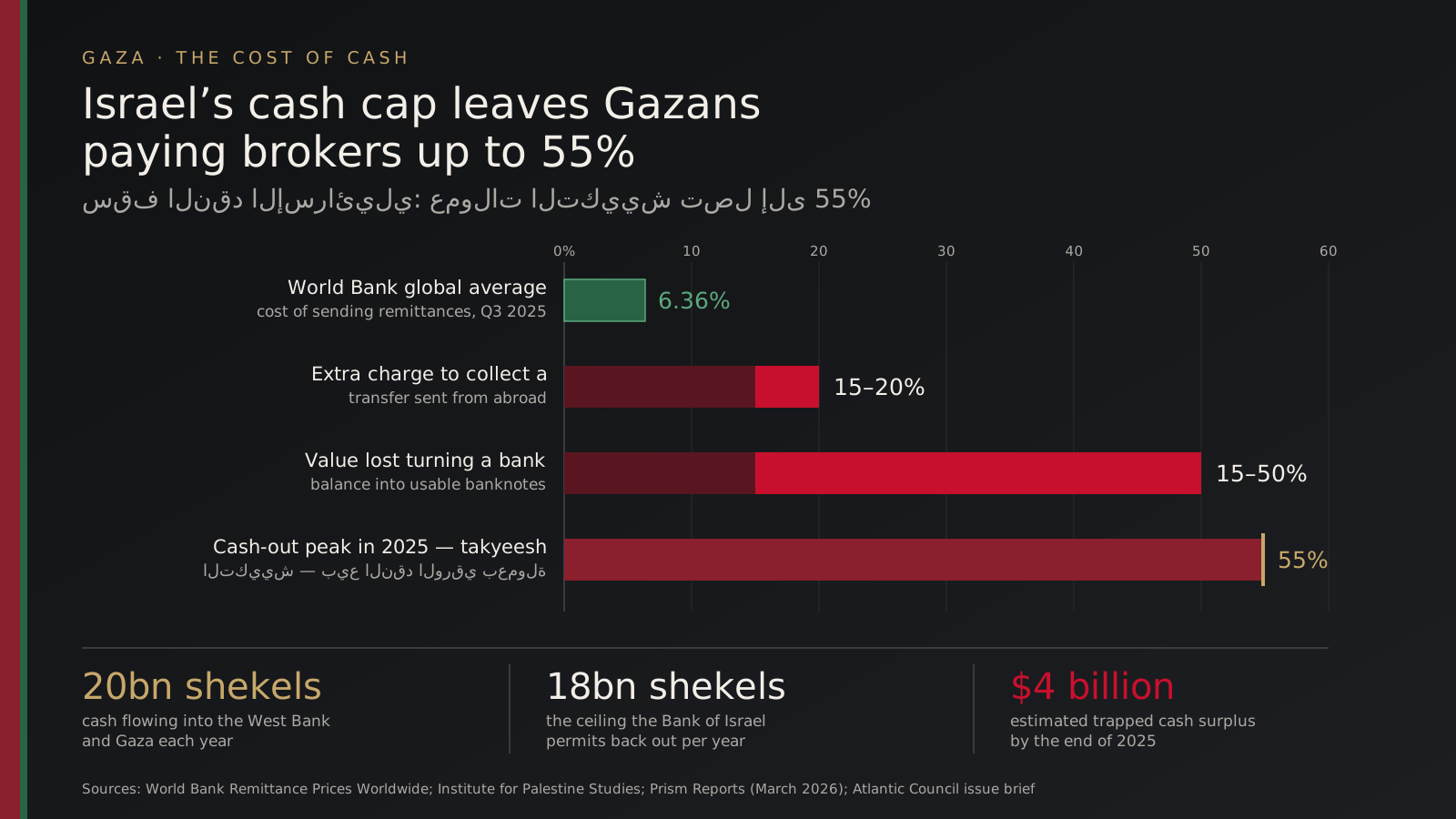
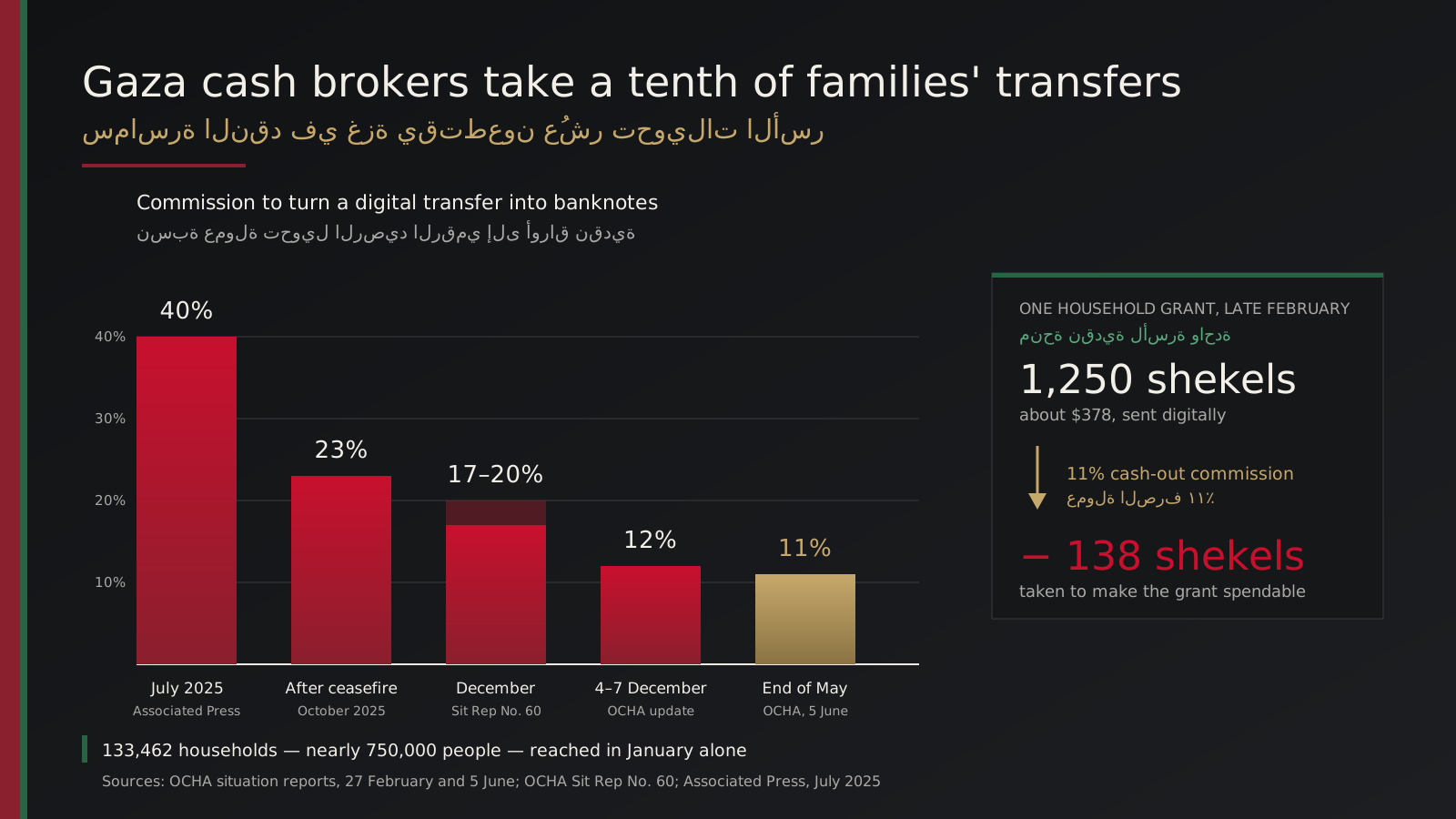
Cash brokers in Gaza were charging 11 per cent to turn a digital transfer into banknotes at the end of May, according to the situation report published by the UN humanitarian office, OCHA, on 5 June — down from 23 per cent in the weeks after the October 2025 ceasefire, and below the 12 per cent that OCHA's own December bulletin had called the lowest rate recorded in 2025.
The fee is levied on money people already own: salaries, remittances and humanitarian grants that arrive as an electronic balance and can only become spendable currency through an intermediary who holds physical notes.
Cash Working Group partners paid 1,250 shekels, about $378, to each household receiving multi-purpose cash assistance in late February, OCHA reported in its 27 February situation report, with the transfer sent digitally. At the commission rate recorded three months later, converting that entire grant into banknotes costs a household roughly 138 shekels.
The scale is large. More than 165,000 households in Gaza had received at least one such transfer in 2026 by late February, OCHA reported, and Cash Working Group partners reached 133,462 households — nearly 750,000 people — in January alone, against a target of 100,000 households a month through 2026.
OCHA's figures do not agree with one another. Its Situation Report No. 60, covering December, put cash-out commissions at 17 to 20 per cent; a humanitarian update covering the same month recorded a decline from 14–16 per cent in late November to a stable 12 per cent between 4 and 7 December. The reports offer no reconciliation of the two ranges, and OCHA does not publish the underlying agent-level data.
Field reporting finds a wider spread than any single average. Prism Reports, interviewing more than a dozen Palestinians in March, found commissions ranging from about 8 per cent in rare cases to as high as 50 per cent, worst during periods of intensified fighting. Jewish Currents reported in November that brokers charge anywhere from 1 to 50 per cent.
What the rate tracks is the supply of paper. No fresh banknotes have entered Gaza for years, the Institute for Palestine Studies wrote in a March account by Ohood Nassar, which described cash itself becoming a commodity, with commissions of 15 to 50 per cent and a price that varies by the condition of the note — worn notes carry lower commissions than well-preserved ones.
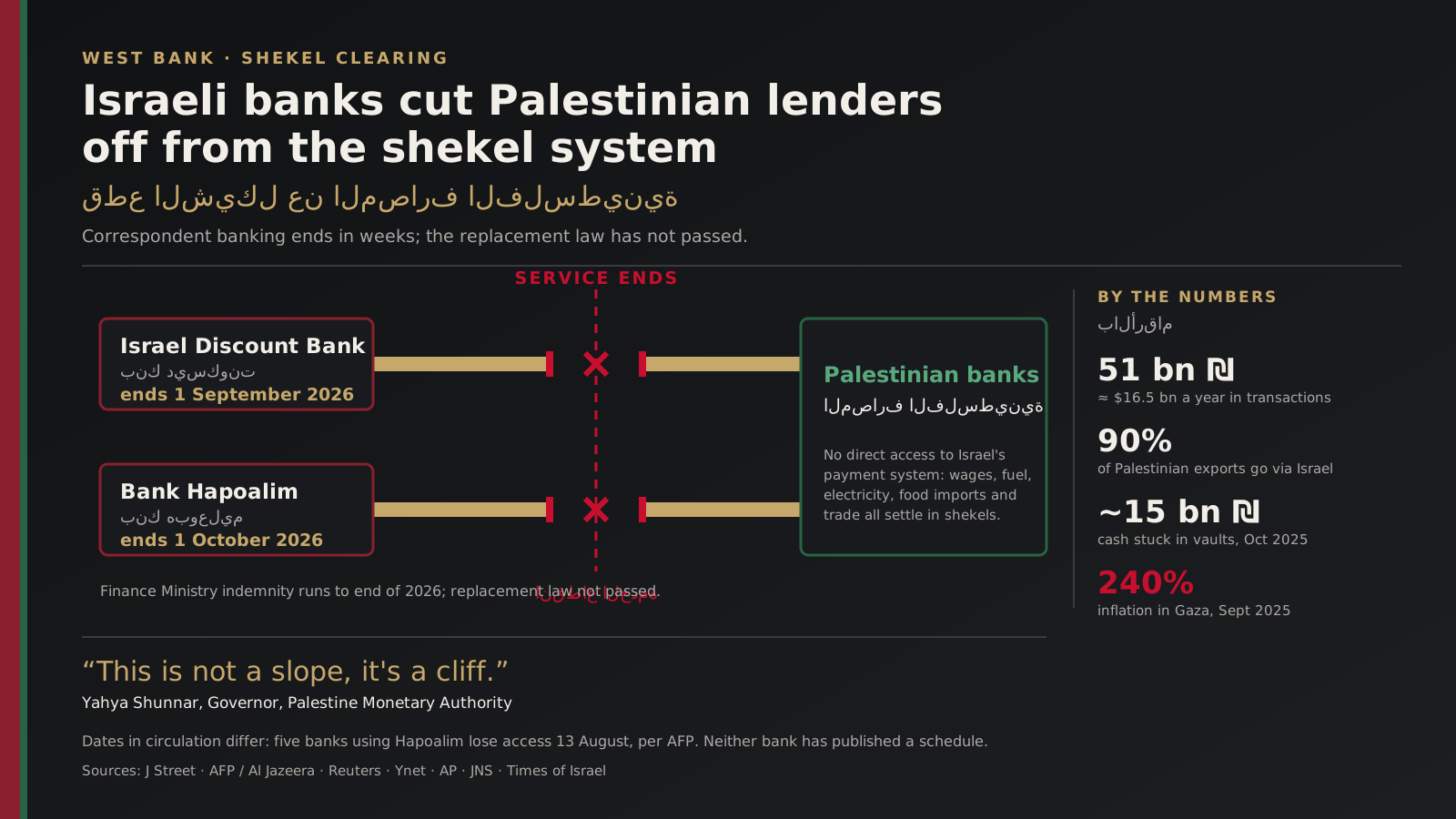
Truthout reported in April that banks in Gaza reopened for administrative transactions only, with no cash movement into the Strip, and that Israel continues to prevent the Palestine Monetary Authority from bringing liquidity in. On 16 January 2026, according to the same report, the Palestinian Chambers of Commerce, the Monetary Authority, UNDP and UNICEF launched a joint national campaign in response.
The banking system that would normally distribute notes is largely gone. An Atlantic Council report published on 21 August found 93 per cent of bank branches and 88 per cent of microfinance institutions inoperable, and said liquidity shortages have pushed Gazans toward informal intermediaries charging high fees.
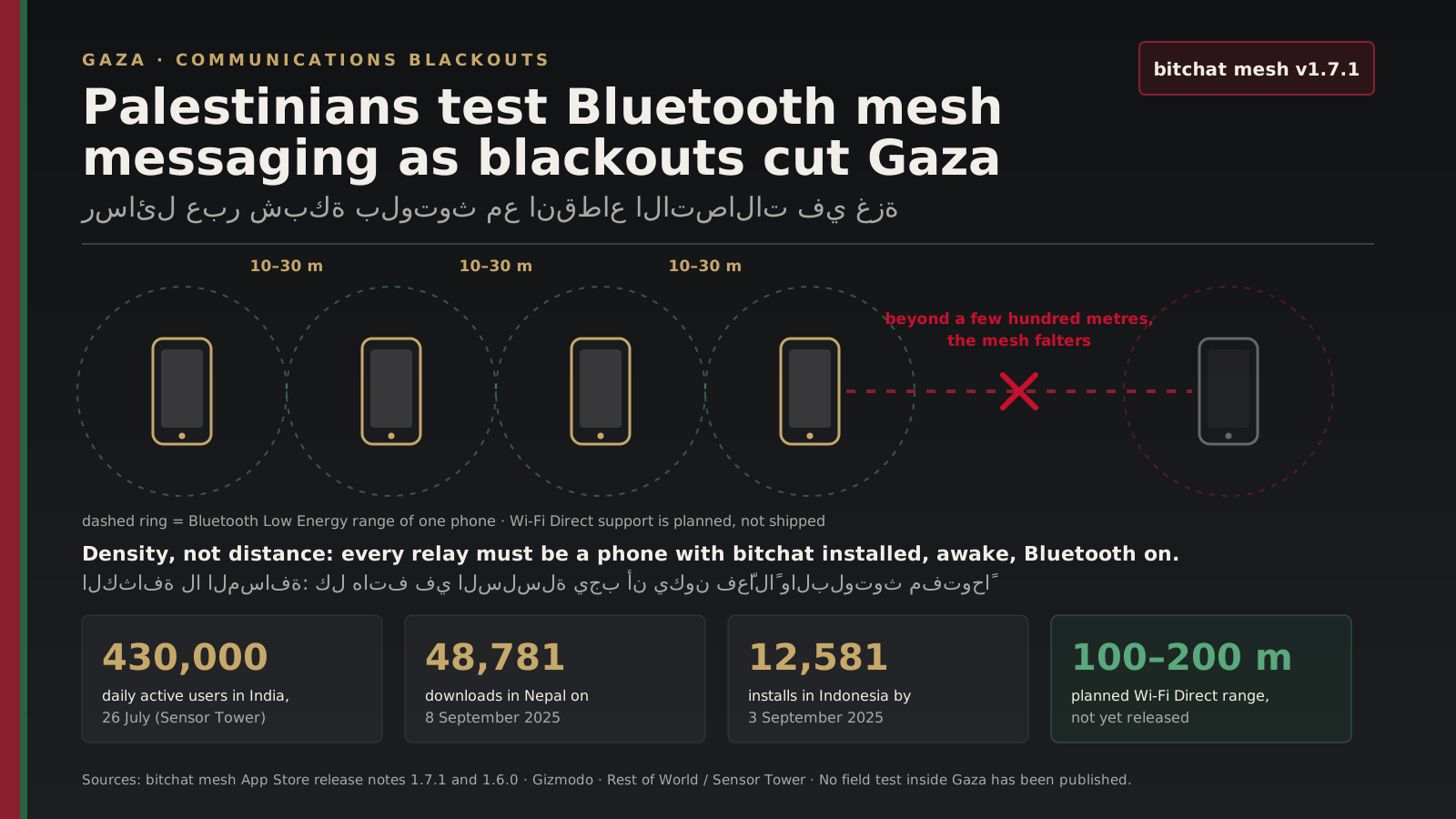
Digital payment has absorbed much of the demand. Palestine's instant payments system processed 3.5 million transactions worth about $442 million in Gaza in January, an increase of roughly 200 per cent since September, according to Atlantic Council research. +972 Magazine reported in December that residents increasingly use Gaza's local banking app to avoid brokers' fluctuating fees, but that internet outages routinely cancel sales mid-transaction.
Rates were far higher during the fighting. The Associated Press reported in July 2025 that commissions had surged to about 40 per cent, and quoted Ayman al-Dahdouh, a school director in Gaza City: "It's suffocating us, starving us." Xinhua's Arabic service reported in August 2025 that an education ministry employee, Ahmed al-Da'our, received $90 to $100 in cash from a $200 salary.
The paper that circulates is failing. Repairing a torn note costs between 3 and 10 shekels, the Associated Press reported, and repaired notes are still sometimes refused.
The Palestinian news agency WAFA reported in April 2025 that traders had stopped accepting the 10-shekel note and were refusing worn 20-shekel notes; the Jordan-based outlet 7iber reported in September 2025 that separate charges for small change and for undamaged notes had been added to the deductions taken from transfers.
Who is supposed to stop it is unresolved. The practice is criminalised under Palestinian law, Worldcrunch reported in May 2025.
A broker who gave his name as Hassan Ali told the investigative outlet Daraj that he continued to operate openly in a well-known area of Gaza after the war and had received no warnings or directives from the Monetary Authority; Daraj's investigation found brokers buying cash from merchants at 2 per cent and reselling it at rates that reached 30 per cent.
The Monetary Authority has said in press statements, cited in an Institute for Palestine Studies study, that bank branches and ATMs in Gaza came under repeated attack by parties outside the law.
Enforcement that has been announced went elsewhere. Al-Quds reported on 22 February that Gaza police and the economy ministry closed four businesses in western Khan Younis over price manipulation and refusal of old banknotes. No published action against commission rates was reported alongside it.
A study by the researcher Saif al-Din Yousef Odeh, summarised by Palinfo on 25 August, found bank deposits in Gaza rising through the collapse of 2023–2025 and characterised the returns from cash conversion as rent — income from controlling a scarce financial resource rather than from producing anything.
No commission figure has been published for July or August. Whether Israel will permit banknotes to enter remains the variable that sets the price, and no timetable for that has been made public.