Palestinians in Israel
Palestinian citizens of Israel raise their turnout and unsettle both blocs
Graphic: Times of Palestine
Original Reporting
The Newsdesk gathers reporting from wire services and primary sources and rewrites every story in-house before publication. How our journalism is made →
Two months before Israel votes, the variable Israeli pollsters keep returning to is the one their political system spends most of its time refusing to talk about: how many Palestinian citizens of Israel will go to the polls.
The Israeli daily Maariv published a poll analysis on Friday, by Moshe Cohen with the pollster Dr Moti Lazar, that puts the Zionist opposition at 59 seats — two short of a governing majority — and names the Joint List's strengthening, on rising turnout in Arab towns, as one reason it cannot reach 61.
The same analysis finds right-wing parties below the electoral threshold burning roughly ten mandates between them, with Ofer Winter taking the religious-national slot from Bezalel Smotrich. Lists must be submitted by 9 September.
The arithmetic and the paradox#
Read plainly, the numbers describe a community whose votes are decisive and whose politics both blocs have ruled out as partners. A larger Arab bloc makes an anti-Netanyahu coalition arithmetically harder, because the parties that would need those seats will not sit with the parties that hold them.
That is the kingmaker paradox in its exact form: the higher the turnout, the more consequential the vote, and the less the electoral system is willing to convert it into government.
Turnout is a decision each household makes, and the reasons for it this year are not abstract. The single largest of them is that people are being killed and nobody is being arrested for it.
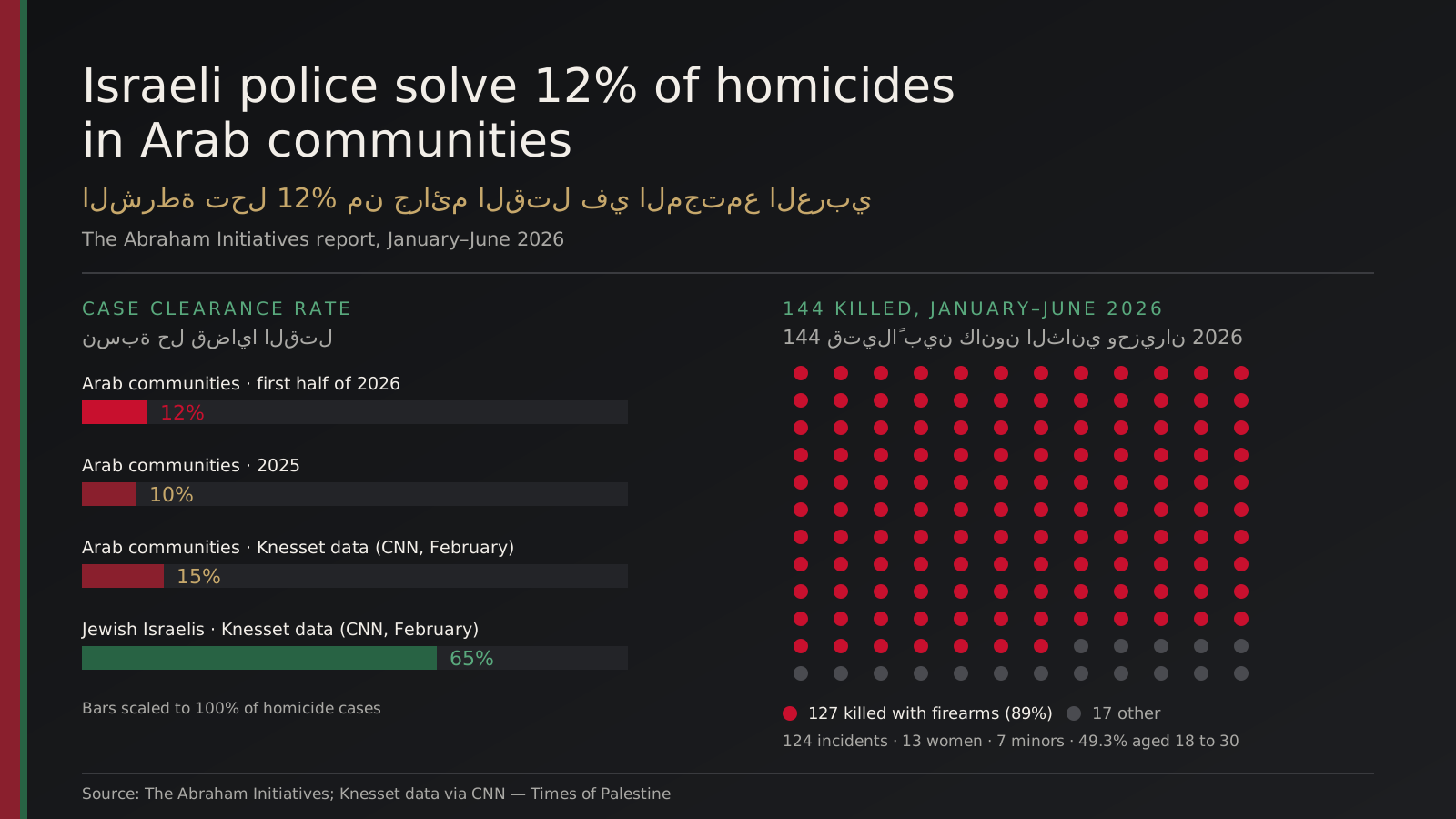
More than 140 Arab citizens killed by mid-year, and about twelve per cent of this year's killings ending in an arrest or an indictment.
The Abraham Initiatives' count, as reported in the Israeli and international press
Why the ballot became a safety question#
The Abraham Initiatives, which tracks the killings, counted more than 140 Arab citizens killed in criminal violence by the middle of this year, roughly twelve per cent above the same period in 2025. Last year was already the deadliest on record, with more than 250 killed.
Palestinian citizens are about a fifth of Israel's population and more than eighty per cent of its homicide victims. Around twelve per cent of this year's killings have produced an arrest or an indictment, which is another way of saying that most of them have produced nothing.
The ministry responsible for the police through that record is held by Itamar Ben Gvir, who spent this week telling Netanyahu he would not run on a joint list with Smotrich. His own party's internal polling, Maariv reports, showed him four seats worse off in a merger.
So the two halves of the story meet. The minister whose portfolio covers the unsolved killings is negotiating his seat count, and the community those killings fall on is deciding, town by town, whether a ballot is worth casting.
Nothing in the published polling answers that question yet. What the polling does establish is that Israeli analysts have stopped treating Arab turnout as a footnote and started treating it as the number the 27 October result turns on.