Transparency & Accountability
Israeli banks plan to cut Palestinian banks off from the shekel
Graphic: Times of Palestine
Original Reporting
The Newsdesk gathers reporting from wire services and primary sources and rewrites every story in-house before publication. How our journalism is made →
The Palestinian economy runs on a currency it does not issue, through banks it does not control, and on 1 September that arrangement is scheduled to lapse.
Ramiz Alakbarov, the deputy special coordinator for the Middle East peace process, told the Security Council on 11 August that Palestinian financial stability faces what he called a looming threat from that date, when Israeli correspondent banks plan to end the arrangements through which they process shekel transactions.
Almost every wage, invoice and import bill in the occupied territory is denominated in shekels. Palestinian banks hold them, but they cannot settle them: to move a shekel between the Palestinian banking system and anywhere else, an Israeli bank has to stand in the middle.
Those Israeli banks have spent years asking the Israeli government to indemnify them against lawsuits arising from that role, and the arrangement has survived on a waiver renewed at intervals.
Alakbarov told the council that the waiver's extension to the end of the year is welcome but insufficient, and that regulators on both sides need sustained engagement to reach a durable arrangement.
An indemnity that expires and a correspondent relationship that expires are not the same thing, and his briefing was a warning that the second is now the nearer date.
A second squeeze on the same money#
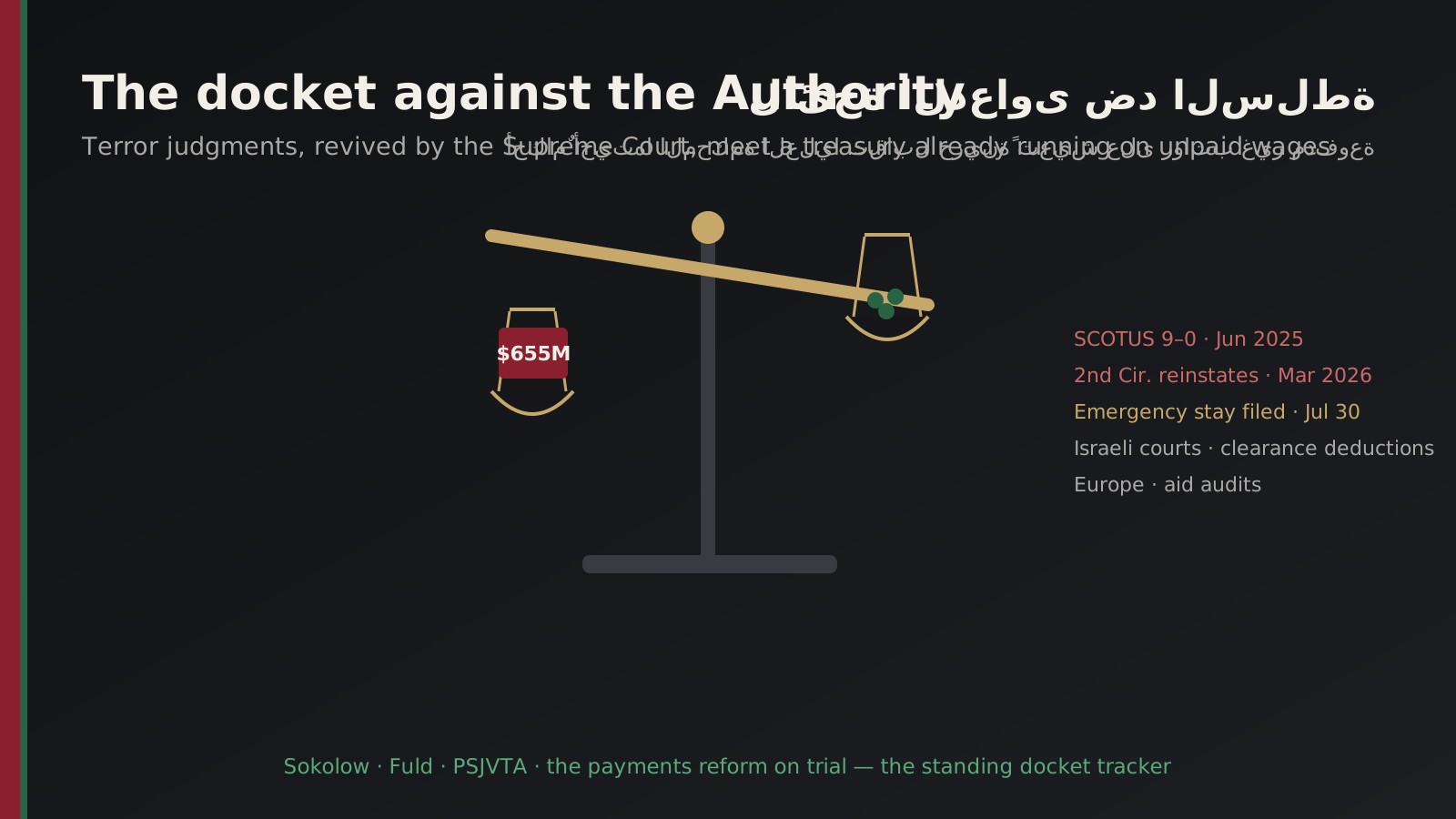
The deadline arrives on an authority already stripped of its revenue. Israel is withholding some six billion dollars in clearance revenues, Alakbarov said, which prevents the Palestinian Authority from paying full salaries and delivering basic services.
Clearance revenue is not aid. It is Palestinian import duty and value-added tax, collected by Israel at the ports under the Paris Protocol and owed onward under the same agreement.
The Institute for National Security Studies, the Tel Aviv research centre closest to Israel's security establishment, has put clearance at roughly 68 per cent of the Authority's public revenue and counted ten months in which none of it moved, since the finance minister Bezalel Smotrich stopped the transfers entirely.
The Authority has kept paying partial salaries through that period, which is how a payroll of well over a hundred thousand teachers, nurses, clerks and police has become a monthly fraction.
What the first of September would mean#
The clearance freeze decides how much money exists. The correspondent-banking question decides whether money can move at all.
If the shekel channel closes, a Palestinian importer cannot pay a supplier, a bank cannot settle a transfer, and a salary that survives the freeze still has no route from the treasury to a family in Nablus or Hebron.
Two arrangements written into agreements Israel signed are ending on Israeli decisions, one by ministerial order and one by commercial notice. Neither has a Palestinian signature on the decision, and there is no institution with the standing to compel either transfer.
That is the structural story a UN briefing put into the Security Council record on 11 August, eighteen days before the date it named.