The Diaspora
Israel limits weekly Gaza exits to visa holders and patients
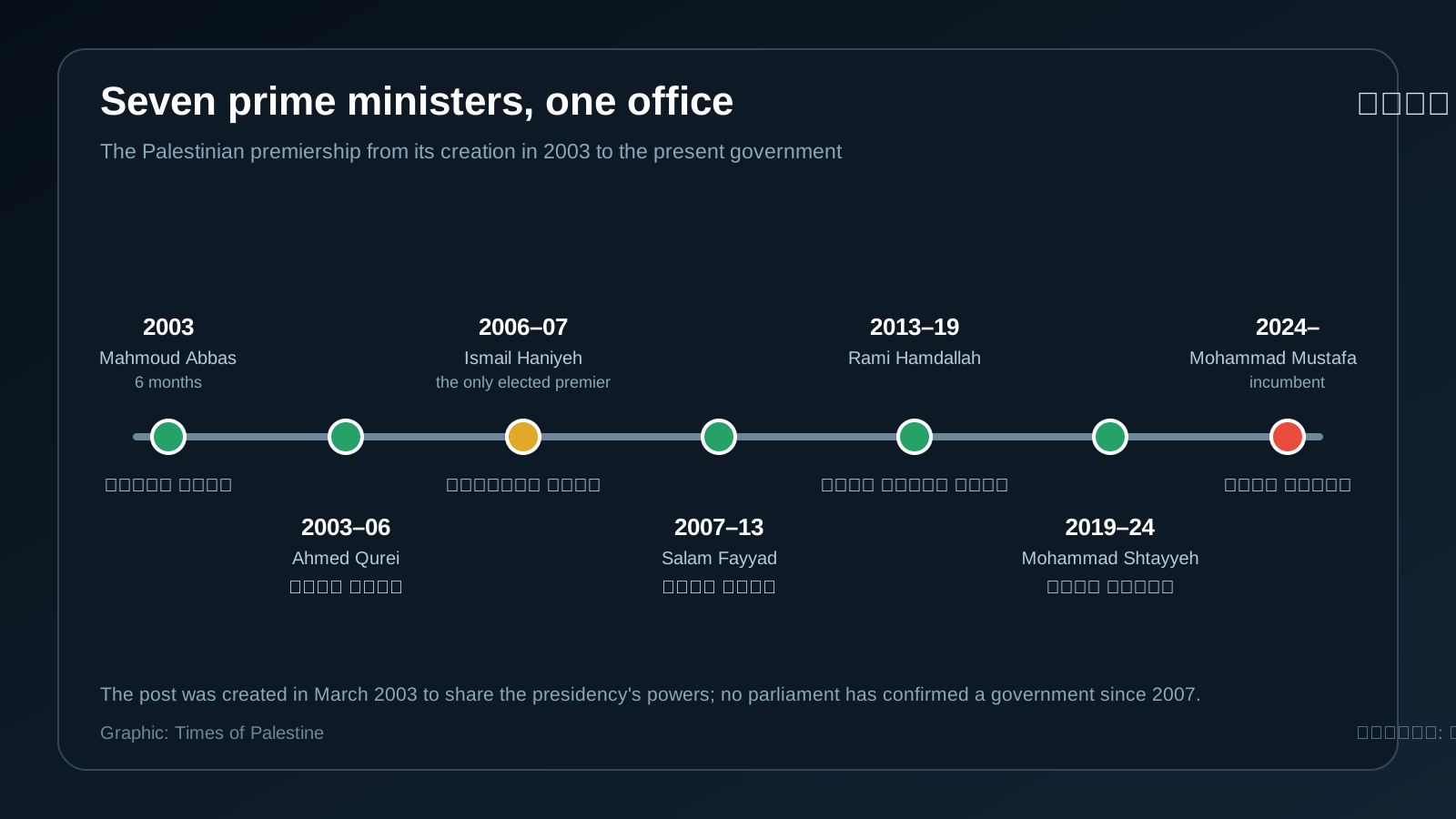
Graphic: Times of Palestine
Original Reporting
The Newsdesk gathers reporting from wire services and primary sources and rewrites every story in-house before publication. How our journalism is made →
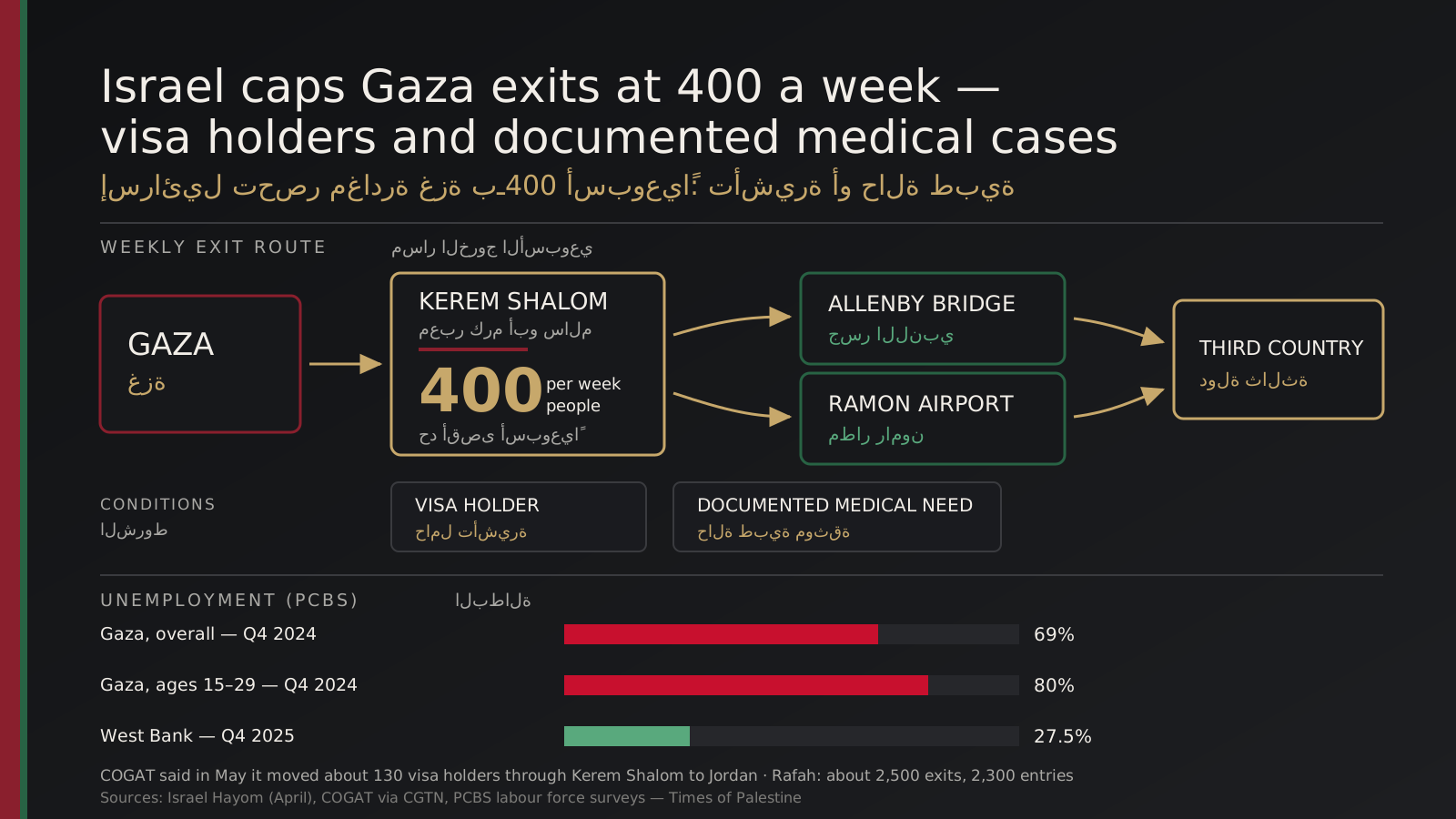
Israel allows up to 400 Gaza residents to leave for a third country each week, and only if they hold a visa or a documented medical need, the Israeli daily Israel Hayom reported in April, describing a route that runs through the Kerem Shalom crossing and onward to the Allenby bridge or Ramon airport.
Israel's military coordination body, COGAT, said in May that it had moved roughly 130 Gaza residents holding visas through Kerem Shalom to Jordan, according to CGTN, which also reported about 2,500 exits and 2,300 entries at Rafah.
Those are the numbers against which the pressure to leave has to be read. The Palestinian Central Bureau of Statistics, drawing on its labour force survey for the fourth quarter of 2024, put overall unemployment in Gaza at about 69 percent, with unemployment among 15-to-29-year-olds reaching 80 percent.
The bureau said youth aged 18 to 29 number about 1.2 million across the occupied territory, 21 percent of the population by mid-2025.
In the West Bank the collapse is slower and better documented. PCBS recorded unemployment of 27.5 percent among labour force participants in the fourth quarter of 2025, with labour underutilisation at 30 percent.
Among young people aged 19 to 29 holding an intermediate diploma or higher, the bureau put unemployment at 28.3 percent for men and 44.5 percent for women — the qualification a young Palestinian acquires is the one that fails to find work.
The scale of the shock is in the same data. PCBS reported that the number of unemployed people in the West Bank rose from roughly 129,000 in the third quarter of 2023 to about 280,000 in the fourth quarter of 2025, taking the rate from about 13 percent to 28 percent, which it attributed to the loss of work inside Israel and the settlements after October 2023.
Measurements of who wants to go are older than the war, and they disagree. PCBS survey material puts the share of 15-to-29-year-olds in Gaza wanting to emigrate at 37 percent, against 15 percent in the West Bank.
The eighth Arab Barometer wave, published in Palestine by the Palestinian Center for Policy and Survey Research in 2024, found 31 percent in Gaza and 21 percent in the West Bank saying they wanted to emigrate, with 45 percent giving economic reasons — 54 percent of Gazans against 37 percent of West Bankers.
A far higher figure circulates from the Israeli side: The Jerusalem Post reported in May that a COGAT survey shown to senior Israeli officials found nearly 80 percent of Gazans interested in emigrating. The Post did not publish the survey's sample or method, and no independent replication of that figure has been released.
Destinations, where they have been surveyed at all, cluster: an analysis published by the Israeli site Ynet in April 2025, citing survey findings, listed Turkey first, followed by Germany, Canada, the United States and Qatar, and found the wish to leave concentrated among 18-to-29-year-olds and degree holders.
What leaving costs is documented only for a window that has closed.
During the first months of the war, when Rafah was the sole exit, The Intercept reported in March 2024 that a travel agency handling Egyptian entry coordination advertised $5,000 per adult and $2,500 for those under 16; The Times of Israel cited an Israeli Channel 11 report giving the same figures.
OCCRP, in reporting with iMEdD based on interviews with 15 Palestinians and Egyptians who approached brokers, said prices fluctuated wildly and that people holding Egyptian nationality paid roughly $650 to $1,200. No comparable price data for the current Kerem Shalom and Rafah arrangements appears in the published record.
The sea route out of the region has its own toll and almost no statistics. Anadolu Agency reported in 2021 that a boat carrying 11 Palestinians bound for Greece sank, that the Turkish coast guard rescued eight, one man died and two remained missing. Whether that route is being used from Gaza now is not established in any figures retrieved.
The professions absorbing the loss are visible in the hospitals.
The director of Shifa Medical Complex, Mohammed Abu Salmiya, told the London-based Al-Quds Al-Arabi this month that the medical system has lost qualified colleagues — some killed, some detained, others who fled — and that the departure of doctors is a strategic problem for the sector: with each departure, he said, hospitals lose capacity, the burden on those who stay grows, some specialties now face acute shortages, and patients wait longer.
He said he was among hundreds of doctors detained without charges being brought.
The system they leave behind is already short of everything else. Gaza's health ministry said in May that 47 percent of essential medicines, 59 percent of medical consumables and 87 percent of laboratory testing materials had reached zero stock, according to Palinfo.
A nurse interviewed by the UN's UNifeed service the same month described receiving 150 to 200 cases a day with one other nurse and a single doctor on duty.
In the West Bank the driver is pay. The Palestinian Authority's health ministry is roughly 3.5 billion shekels, about $1.2 billion, in debt, a figure attributed to Physicians for Human Rights–Israel in reporting by The Times of Israel in June, which described doctors striking over salary cuts and shortages across 15 government hospitals and 447 clinics after a year-long freeze on Israeli transfers of Palestinian tax revenue.
No Palestinian institution has published a count of how many doctors, nurses, engineers or academics have left since October 2023, and PCBS's most recent emigration-intention surveys predate the war. Israel Hayom reported that a directorate intended to move Gazans out without case-by-case approval from destination states was never made to work.
Whether the weekly figure of 400 rises, and whether those who cross at Kerem Shalom are permitted to return, is not set out in any published rule.