Opinion & Analysis
Abbas sets diaspora seats but allows appointment where voting fails
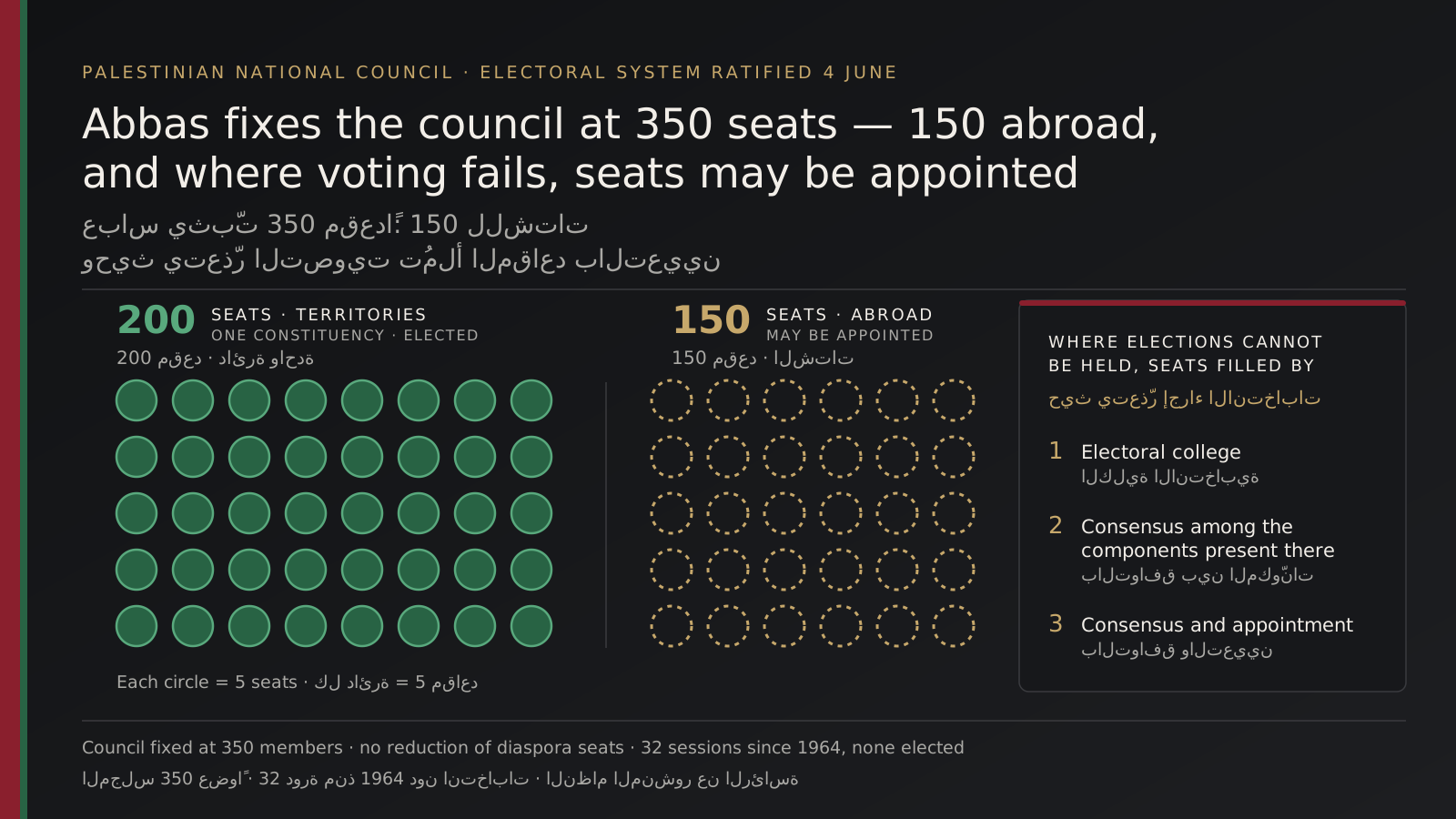
Graphic: Times of Palestine
Original Reporting
The Newsdesk gathers reporting from wire services and primary sources and rewrites every story in-house before publication. How our journalism is made →
Where Palestinians abroad cannot vote, their seats will be filled another way.
The electoral system for the Palestinian National Council that Mahmoud Abbas ratified on 4 June, as published by the presidency, fixes the council at 350 members — 200 for a single constituency covering the Palestinian territories and 150 for Palestinians abroad — bars any reduction of the seats allocated to diaspora constituencies, and provides that where elections cannot be held in a diaspora area, members will be chosen through an electoral college, through consensus among the Palestinian components present there, or by consensus and appointment.
That fallback, not the voting formula, is where the reform will be tested.
The scale of the problem is already documented.
The Vision Center for Political Development, in an experts' assessment published three weeks ago, argued that the vote's prospects vary sharply by geography: feasible in the West Bank under particular security and administrative arrangements, obstructed by Israel in occupied Jerusalem, and blocked in much of the diaspora because several host states, Jordan foremost among them, refuse to permit the process on their territory, which would strip large sections of Palestinians abroad of the right to take part and vote.
The same assessment held that Gaza's field and humanitarian conditions put elections outside residents' priorities, and that organising them is difficult given the absence of Authority institutions and the lack of agreement with the factions administering the Strip.
Apply the clause to that map and the arithmetic turns: the more places where voting is impossible, the more of the 150 protected diaspora seats are filled by agreement among unelected bodies. Seats guaranteed on paper can still be delivered by appointment.
The figures have also moved. When Abbas first ordered the vote, Al Jazeera Arabic reported that his decision set a 350-member council with two-thirds from inside Palestine and one-third from abroad and the diaspora, and that the council had held 32 sessions since its founding in 1964 without any elections.
The system ratified in June sets the split at 200 and 150. The diaspora's share rose; the mechanism for filling it did not become an election everywhere.
Who may stand is settled by a separate instrument.
The Times of Israel reported in January that Abbas signed a decree, announced by the Central Elections Committee, requiring every candidate to sign a statement accepting the PLO's national programme — a reference to PLO resolutions including recognition of Israel, renunciation of terrorism and the pursuit of a two-state solution — and noted that Hamas, the Popular Front for the Liberation of Palestine and other factions have long refused to accept those policies.
Reporting the same decree, The Jerusalem Post said the amendment obliges any candidate to first recognise the PLO, its policies and UN resolutions on the conflict.
On the legislative vote set for 28 November, the Times of Israel reported it is unclear whether Hamas or Hamas-linked parties can participate at all under an election law Abbas signed the previous month carrying the same requirement.
The April municipal elections showed what the condition produces.
The Institute for National Security Studies, an Israeli research centre, recorded voting across 403 cities and local councils on 25 April with turnout of roughly 53 per cent — about 56 per cent in the West Bank and about 23 per cent in Deir al-Balah — and Hamas boycotting over the requirement that candidates recognise the PLO and the agreements with Israel.
Against all this stands a serious counter-argument, and it deserves its strongest form. Nothing like a PNC election has ever been held in the organisation's history.
The June system uses full proportional representation by list and treats each area of Palestinian presence abroad as its own constituency — a structure that, if used, would give refugees a direct vote in the body that formally sets PLO policy for the first time.
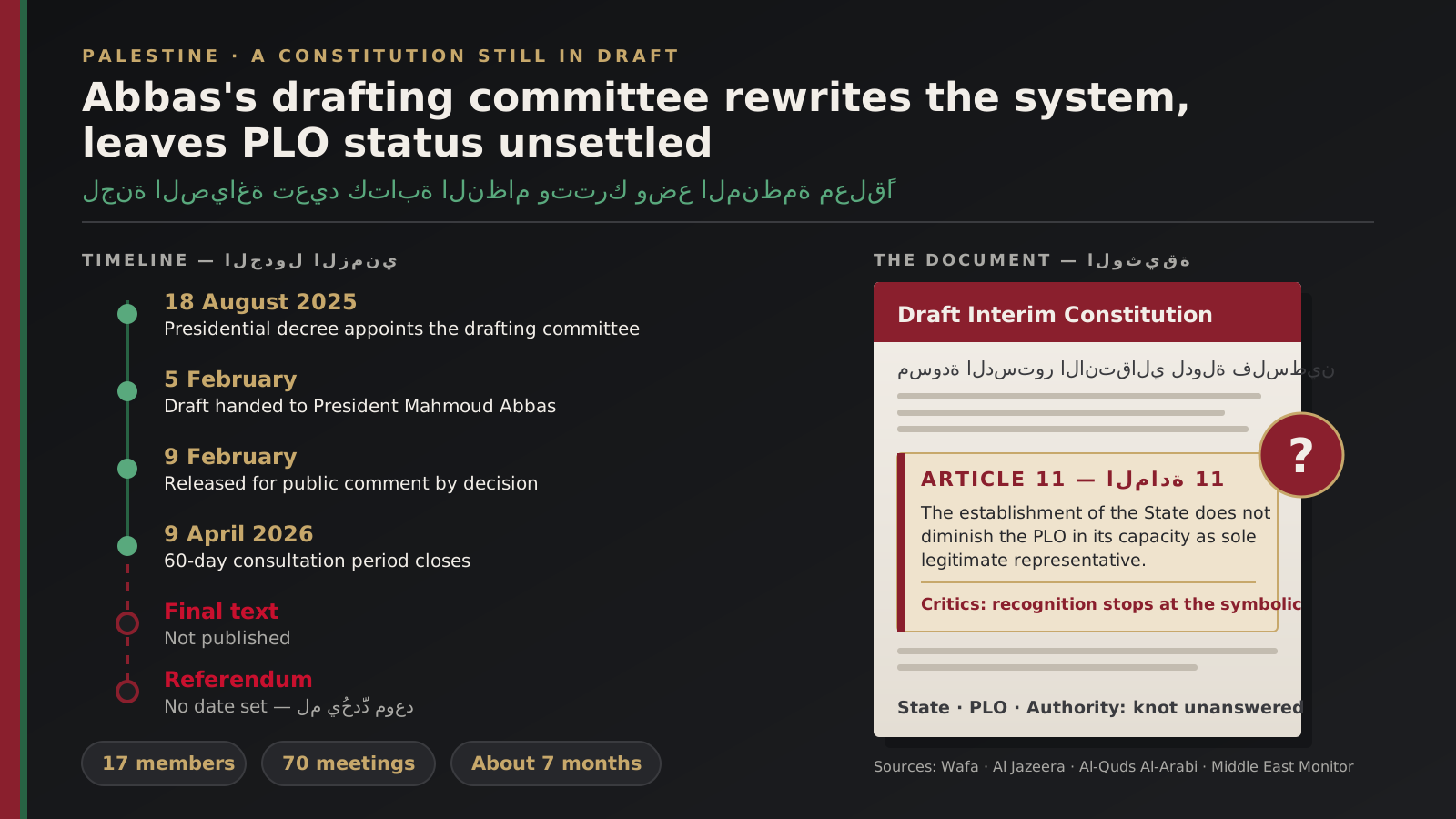
Local elections did take place, including inside the rubble of Gaza. A draft interim constitution of 162 articles was opened for a 60-day public consultation, and the Global Campus of Human Rights noted the draft recognises the role of the Independent Commission for Human Rights.
The writer Nabhan Khreisheh, in Ultra Palestine, recorded growing calls from independent national figures and political forces to take part on the view that boycott is no longer useful and that contesting could open a window for reforming the PLO.
The case against is made on the same record. The Global Campus analysis found the constitutional process responds less to internal mobilisation than to the new recognitions of the State of Palestine and external demands for institutional reform.
The International Center for Not-for-Profit Law reported that the February draft drew significant criticism from legal experts, civil society organisations and rights groups over the representativeness of the drafting committee, the absence of a functioning parliament, and doubts about the process's democratic legitimacy.
The National reported in February that the National Council, a body meant to represent Palestinians at home and abroad, has been largely inactive and dominated by Fatah, and that reform pressure from Arab and Western states is aimed at the Authority while the council vote avoids changes affecting it directly.
Nor does the electorate hold the decisive lever over Gaza. The Board of Peace's published plan places the Strip under a technocratic, apolitical Palestinian committee with oversight and supervision by the international body chaired by Donald Trump, and Britannica records that the National Committee for the Administration of Gaza is headed by Ali Shaath and that the Security Council endorsed the arrangement in November 2025. No Palestinian voter selected it.
The public's own verdict is on file. The Palestinian Center for Policy and Survey Research, polling between 5 and 8 August, found Marwan Barghouti taking 54 per cent among likely voters against 26 per cent for Khalil al-Hayya and 14 per cent for Abbas, with Fatah and Hamas tied at about a quarter each in partisan identification.
Whether Jordan and Lebanon will permit polling on their soil is not established. Whether Israel will allow voting in East Jerusalem is not established either; Time reported in July that residents there would need Israeli permission and that nearly two million people remain displaced in Gaza. How many of the 150 seats end up filled without a ballot is the number to watch on 1 November.