The Diaspora
Chile's Rania Sansur plays her way into Palestine's team
Graphic: Times of Palestine
Original Reporting
The Newsdesk gathers reporting from wire services and primary sources and rewrites every story in-house before publication. How our journalism is made →
A footballer born in Santiago, whose family left the hills between Bethlehem and Beit Jala a century ago, is now in the midfield of the Palestinian women's national team.
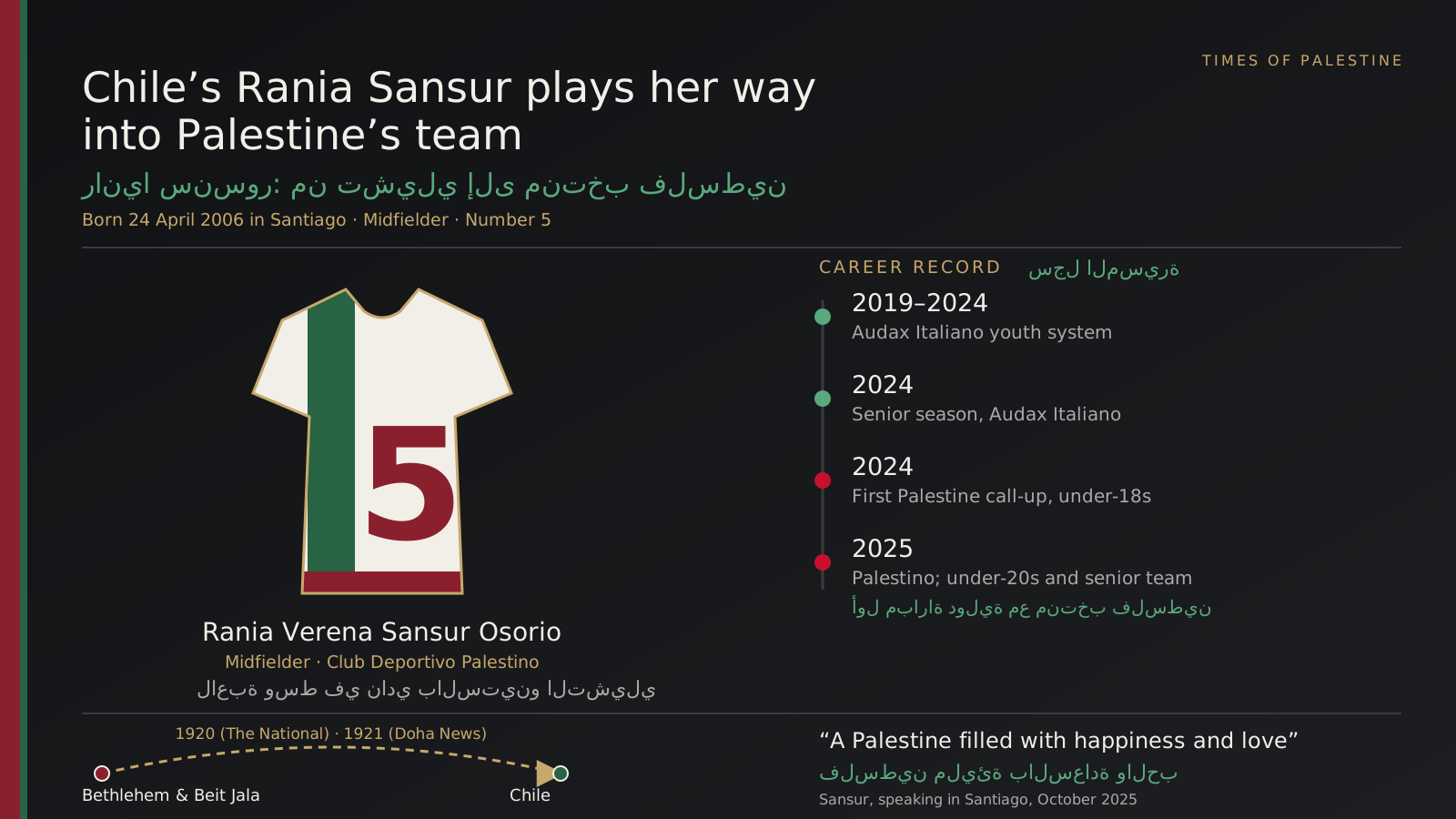
Rania Verena Sansur Osorio was born on 24 April 2006 in Chile, according to the squad database playmakerstats, which lists her as a midfielder registered with Club Deportivo Palestino. She turned 20 in April.
The National, reporting from Santiago in October 2025, described her as the first player to turn out both for Palestino's women's side and for the Palestinian national team. She wears number five.
Her route was ordinary until it was not. Wikipedia's career record for Sansur shows her in Audax Italiano's youth system from 2019 to 2024, a senior season at the same club in 2024, and a move to Palestino in 2025. The same record dates her first Palestine call-up to the under-18s in 2024, followed by the under-20s and the senior team in 2025.
The family history behind that call-up is told slightly differently in the two published interviews she has given. The National reported that her grandparents left Bethlehem and Beit Jala in 1920 and made a home in Chile.
Doha News, covering a Qatar Museums Years of Culture volunteer trip that ended in Chile in October 2025, quoted her saying her father's family was evicted from Palestine and arrived in Chile in 1921.
The one-year gap is unresolved in the record; both accounts place the departure in the same period of upheaval that scattered Palestinian families across South America.
Speaking to The National, Sansur linked the war in Gaza to that departure. "There are a lot of innocent people suffering, the same reason why my family had to leave," she said, adding that she dreams of a free Palestine, "a Palestine filled with happiness and love."
At the Doha News event she said she was proud to represent both — the country she was born in and the one her grandparents were forced out of.
The club she plays for was built by people in exactly that position. Palestino was founded on 8 August 1920, when a group of Palestinians in Chile entered a competition in Osorno, according to the club's published history. It reached the Copa Libertadores in 1979.
It is backed by Chile's Palestinian community, which is the largest outside the Arab world, and the club funds football schools in the Palestinian territories and supports women's football at home.
That community's early decades in Chile were not comfortable. Historians writing in The Conversation record that Palestinian arrivals, along with others who had fled Ottoman territory, were commonly called turcos as an insult, and that prejudice followed successive generations even as they prospered.
Sansur is not the first Chilean-Palestinian to carry the connection back across the Atlantic. These Football Times records that Nicola Shahwan, a descendant of Palestinian immigrants in Chile, was hired to manage the Palestinian national team in 2002.
CBC News, in a report from Santiago in May 2025, noted that several Palestino players have gone on to represent Palestine, among them Nicolás Zedán, whom a teammate remembered as always having dreamed of playing for the national side because of his Palestinian descent.
The pipeline runs in one direction for a reason. Palestinian football inside the West Bank and Gaza has spent two years under a war that has closed grounds, killed players and made travel between the territories and the outside world a matter of permits and crossings.
Neither of Sansur's published interviews says whether she has been able to visit Bethlehem or Beit Jala, and no record of such a trip has been published.
The politics around her club have sharpened as the war continued. The National reported that Chile's government has withdrawn its military attachés from Israel, while stopping short of severing relations.
Palestino's shirts, its crest and its terraces have become one of the most visible expressions of Palestinian identity in Latin America — a point the same report made in describing the club as more than a football team to the people who fill its stadium.
For Sansur the achievement is narrower and more personal: a professional contract at 19, a national team debut in the same year, and a place in a squad that draws players from Chile, from the West Bank, from wherever the family scattered. Women's football in Palestine has had no continuous domestic league through the war, and the national team's fixtures have depended heavily on players based abroad.
What comes next for the senior side is not something the published record settles. Her club season with Palestino continues in Chile, and her call-ups have so far come in every year since 2024.
She put her own terms on it in Santiago last October, when The National asked what she was playing for: a Palestine filled with happiness and love.