Money & Access
Israeli strikes cut the networks Gaza's new digital money needs
Graphic: Times of Palestine
Original Reporting
The Newsdesk gathers reporting from wire services and primary sources and rewrites every story in-house before publication. How our journalism is made →
The payment system that Gaza built during the war runs on exactly the connection that Israeli strikes have repeatedly severed, and the offline alternatives promoted as a remedy leave no trace in any published record of use inside the Strip.
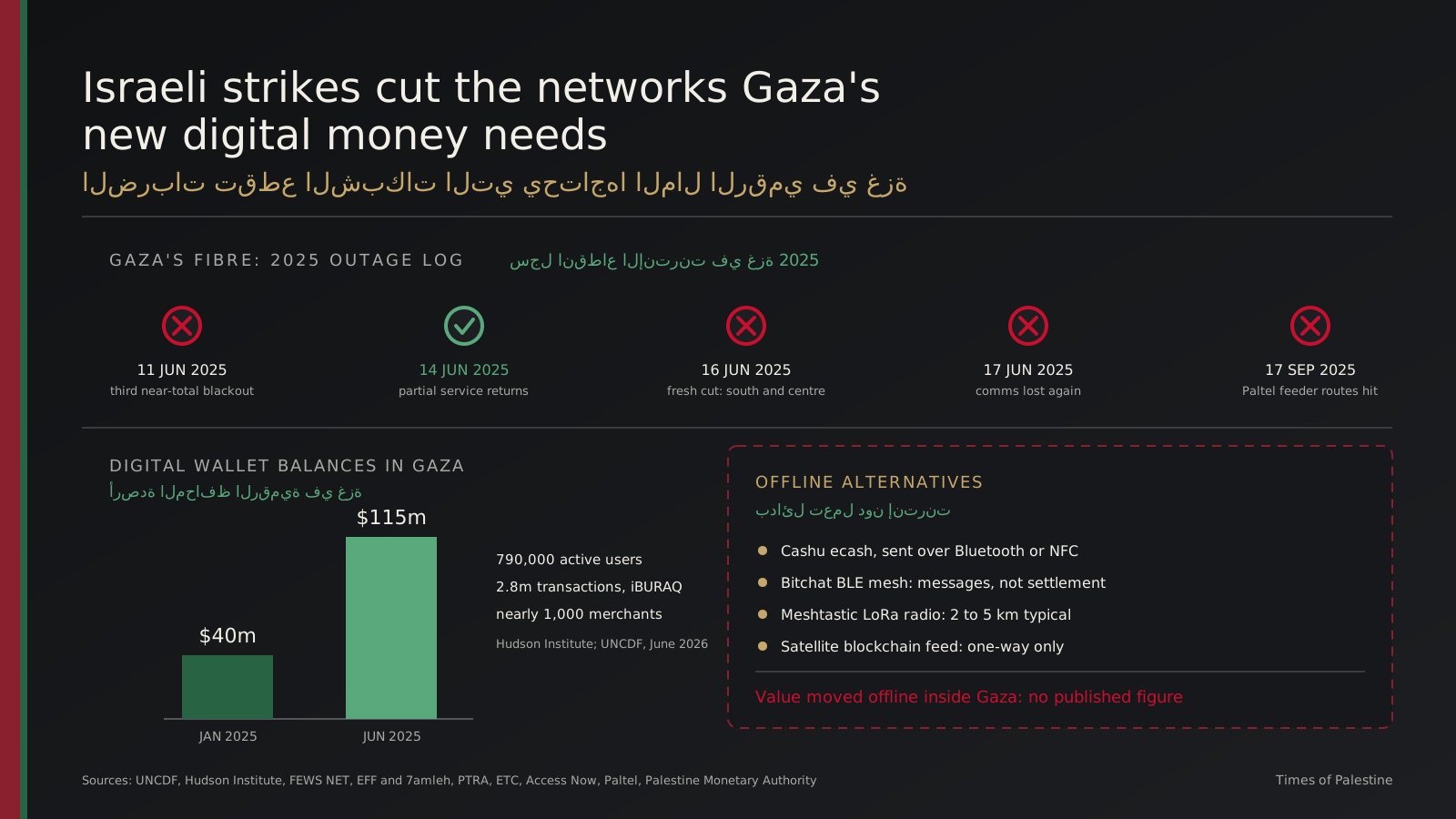
The shift to digital money is measurable. The UN Capital Development Fund reported in June 2026 that nearly 1,000 merchants, many of them small vendors and informal businesses, were brought into a digital payments system through 2025, with more than 90 percent actively using digital tools.
The Hudson Institute, a Washington think tank, put balances held in digital wallets in Gaza at roughly $40 million in January 2025 rising above $115 million by June, with over 790,000 active users, and said one platform, iBURAQ, processed about 2.8 million transactions.
FEWS NET recorded in October 2025 that the cash shortage had driven rapid adoption of mobile payments and e-wallets, which surged during 2025.
That system needs a live network. Gaza's has gone dark repeatedly. The Electronic Frontier Foundation, citing the Palestinian digital rights group 7amleh, reported that Gaza faced its third near-total telecommunications blackout since October 2023, an outage beginning on 11 June 2025 that lasted three days before partial service returned on 14 June.
The Palestinian Telecommunications Regulatory Authority announced on 12 June 2025 that all internet and fixed-line services in the Gaza Strip had stopped after the last main fibre route was hit, describing an escalating digital isolation caused by systematic targeting of telecommunications infrastructure.
The Emergency Telecommunications Cluster reported on 16 June 2025 that the partial restoration two days earlier had given only a fragile reprieve, with a fresh fibre cut disconnecting southern and central Gaza. Access Now and the #KeepItOn coalition said large parts of central and southern Gaza lost communications again on 17 June 2025.
Paltel said on 17 September 2025 that fixed internet and landline services had been cut in Gaza and North Gaza governorates after several main feeder routes were struck, and that its crews were working around the clock.
Cash is not a fallback.
According to the Palestine Monetary Authority, cited in reporting published last week, Israeli attacks destroyed more than 50 bank branches across Gaza and dozens of cash machines, with large quantities of banknotes trapped in the vaults of damaged buildings; after the October 2025 ceasefire allowed some branches to reopen, services stayed largely administrative and brought no new liquidity.
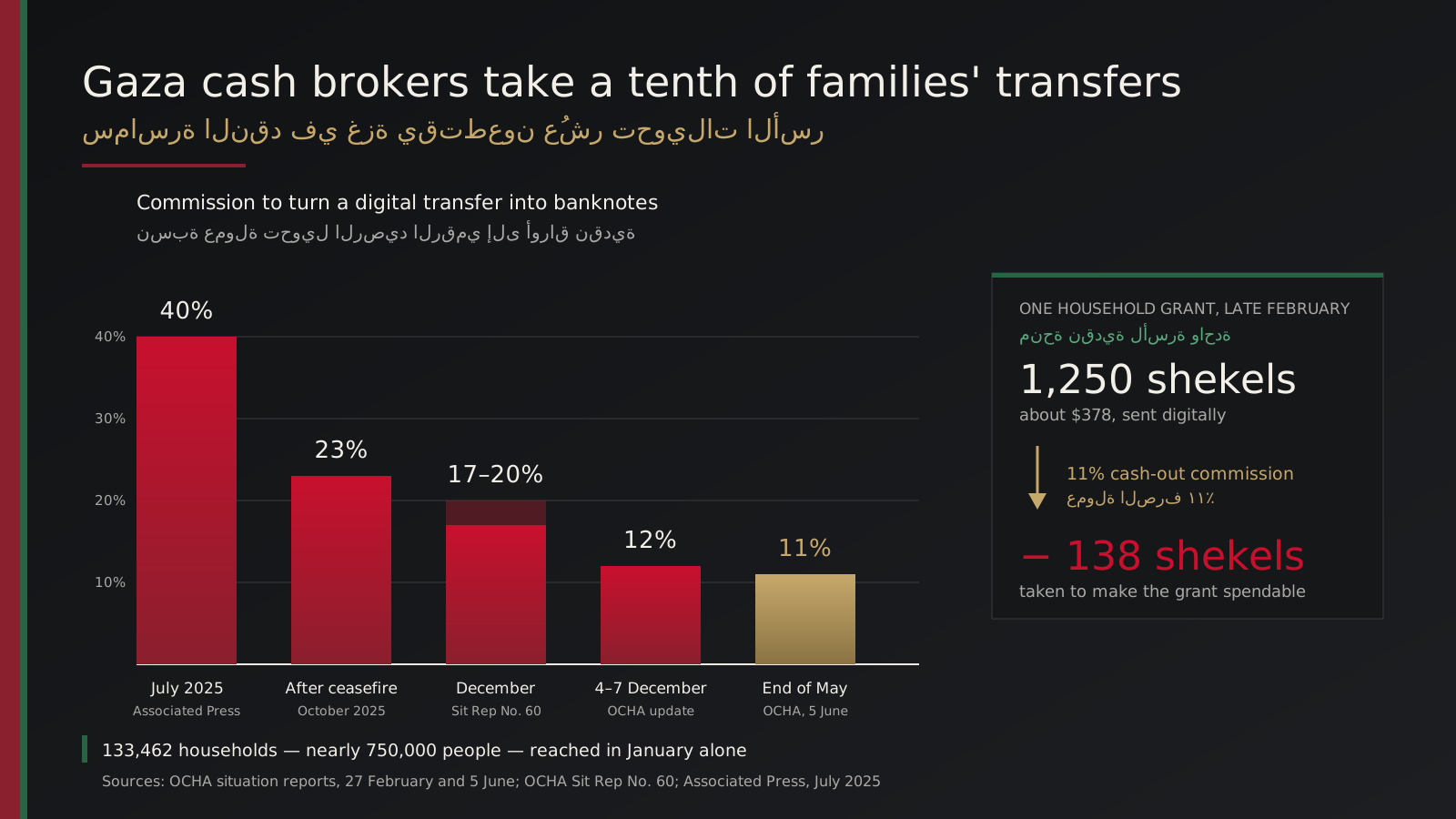
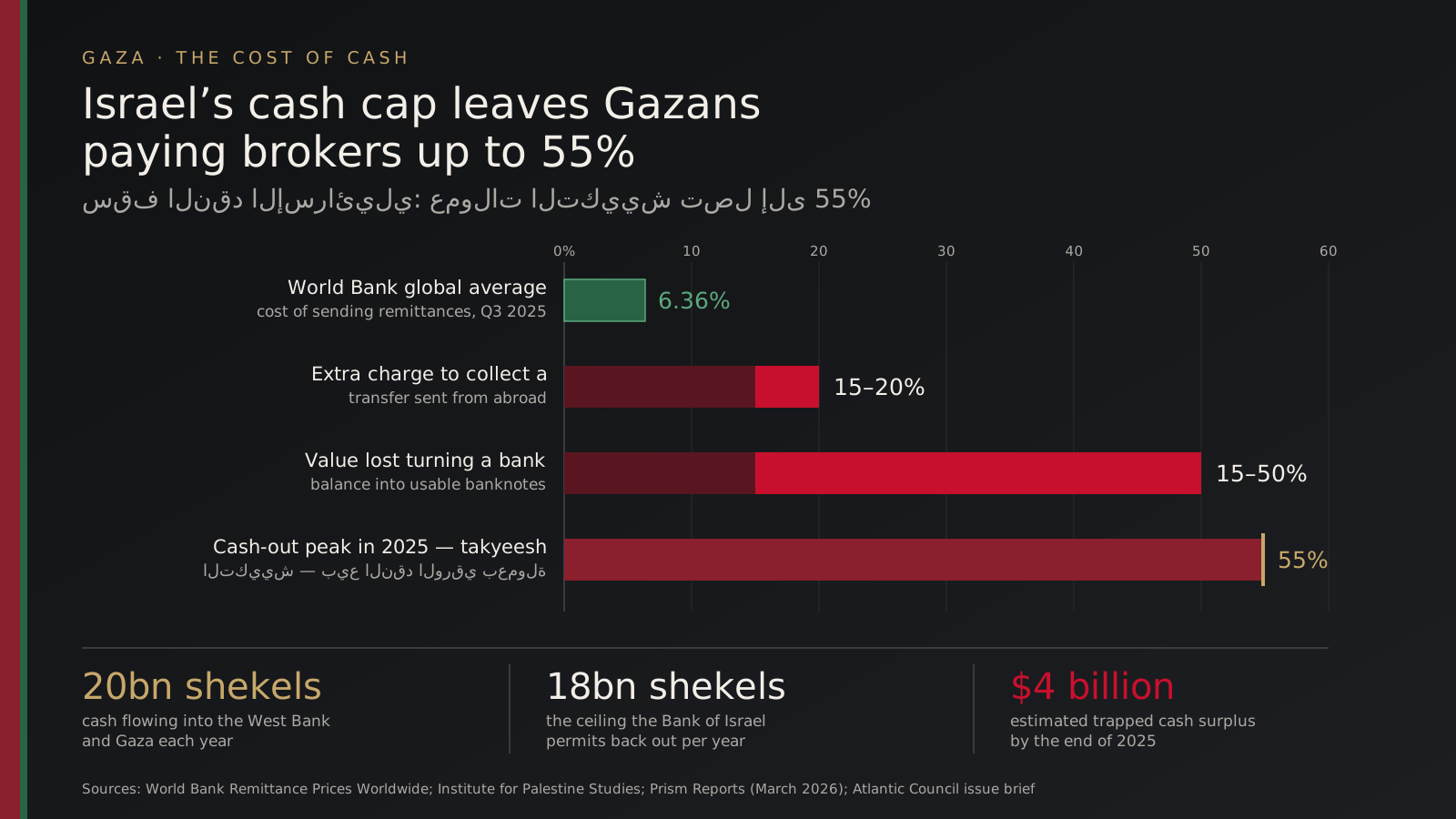
The Institute for Palestine Studies has documented the resulting commission economy, in which a $500 transfer can shrink to roughly $350 in an account and around $200 or less in hand, and a trade in repairing worn banknotes with tape and recolouring has emerged because merchants refuse damaged notes.
Jewish Currents reported in November 2025 that brokers converting digital transfers into scarce physical cash charge commissions ranging from 1 to 50 percent.
What Gazans adopted instead is still online money. Jewish Currents described shoppers in central Gaza paying at supermarket tills from phone wallets holding USDT, a dollar-pegged stablecoin, by scanning a QR code. A food merchant told the magazine that with banknotes damaged and banks gone he can only trade and import using cryptocurrencies. Those transfers settle on public blockchains and need bandwidth.
The tools marketed as blackout-proof are a different category. OpenSats, which funds the Cashu ecash protocol, states that its tokens can be sent offline over Bluetooth or NFC and that the issuing mint cannot trace who spent what.
One open-source project, bitpoints.me, combines a Cashu wallet with Bluetooth mesh relaying and nostr for peer-to-peer transfers without internet. Researchers publishing the LNMesh paper in 2023 argued that neighbourhood wireless mesh networks could carry Lightning payments where no internet exists, noting that Lightning nodes normally need an active connection to operate securely.
Meshtastic, a LoRa radio mesh, advertises typical ranges of two to five kilometres. Blockstream broadcasts the bitcoin blockchain by satellite worldwide without internet, though its own documentation notes the link is one-way: a node that misses part of a block cannot request the missing data.
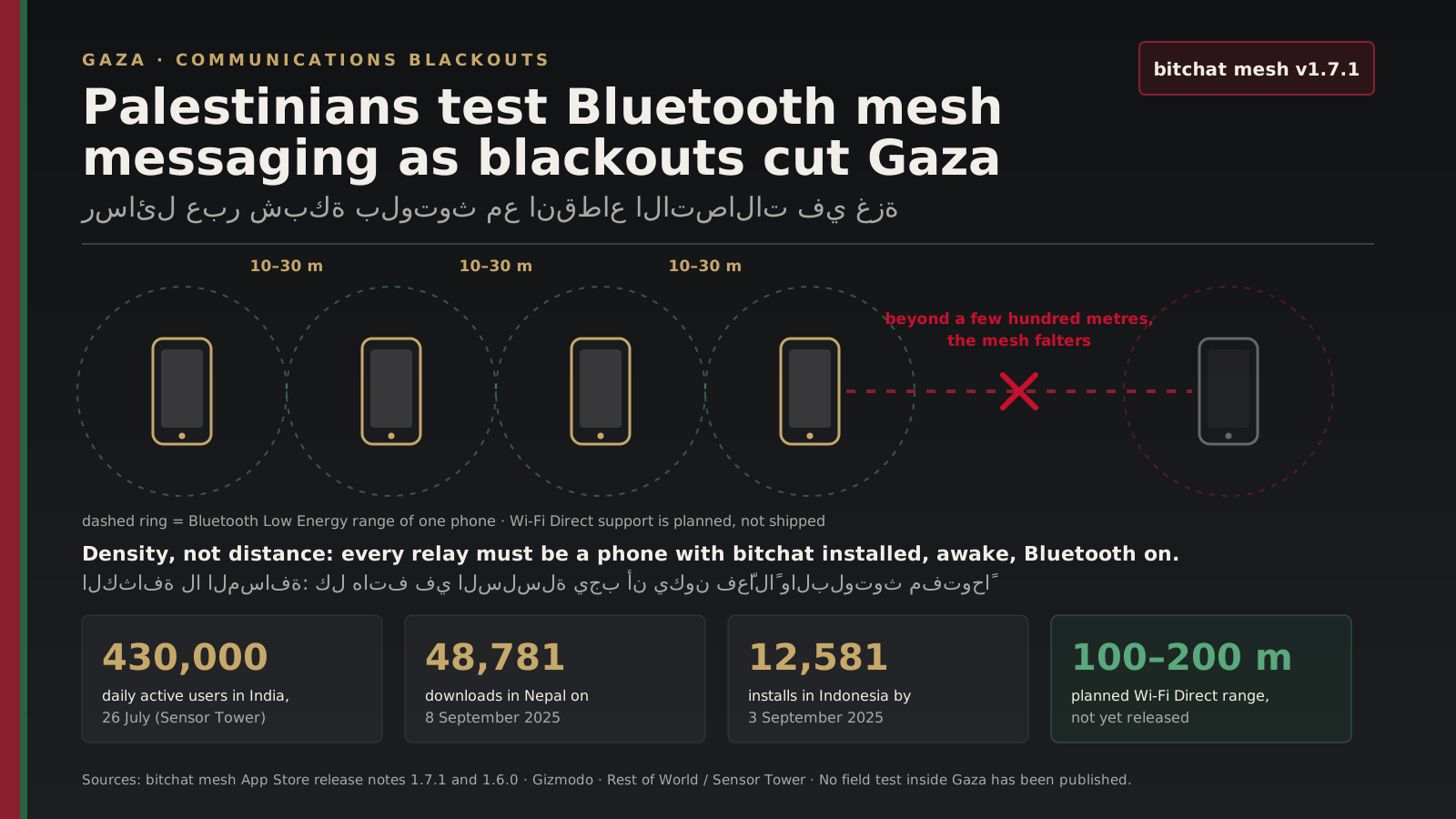
None of that is a Gaza deployment. The one Gaza-specific effort in the retrieved record concerns messaging, not money: Tech for Palestine published a guide in November 2025 to Bitchat, whose mesh channel extends as far as the number of connected devices relaying it, paired with renewable eSIMs.
Bitchat, announced by Jack Dorsey in July 2025, sends messages over Bluetooth Low Energy mesh without internet or cellular service — text, not settlement.
Crypto rails carry a separate exposure. Israel's National Bureau for Counter Terror Financing ordered the seizure of 84 crypto wallets in July 2021 under section 66 of its counter-terrorism law, and in 2022 the defence minister ordered 30 wallets and 12 accounts seized, linked to the Gaza exchange company Al-Mutahadun.
Finance Magnates reported a separate NBCTF action against 80 Binance accounts belonging to three Gaza money-exchange companies holding over 500,000 shekels. Administrative seizure requires no conviction.
UNCDF calls digital payments a more resilient alternative to cash; the outage record and the liquidity data describe a system that stops when the fibre is cut.
No published figure records how much value, if any, has moved offline through ecash or mesh inside Gaza, and no regulator's guidance on such tools appears in the public statements of the Palestine Monetary Authority.
Whether the regulated wallets now carrying humanitarian cash will be built to clear payments without a network is unsettled before the next cut.