Culture & Arts
Foreign funds sustain Palestinian cinema as US distributors stay away
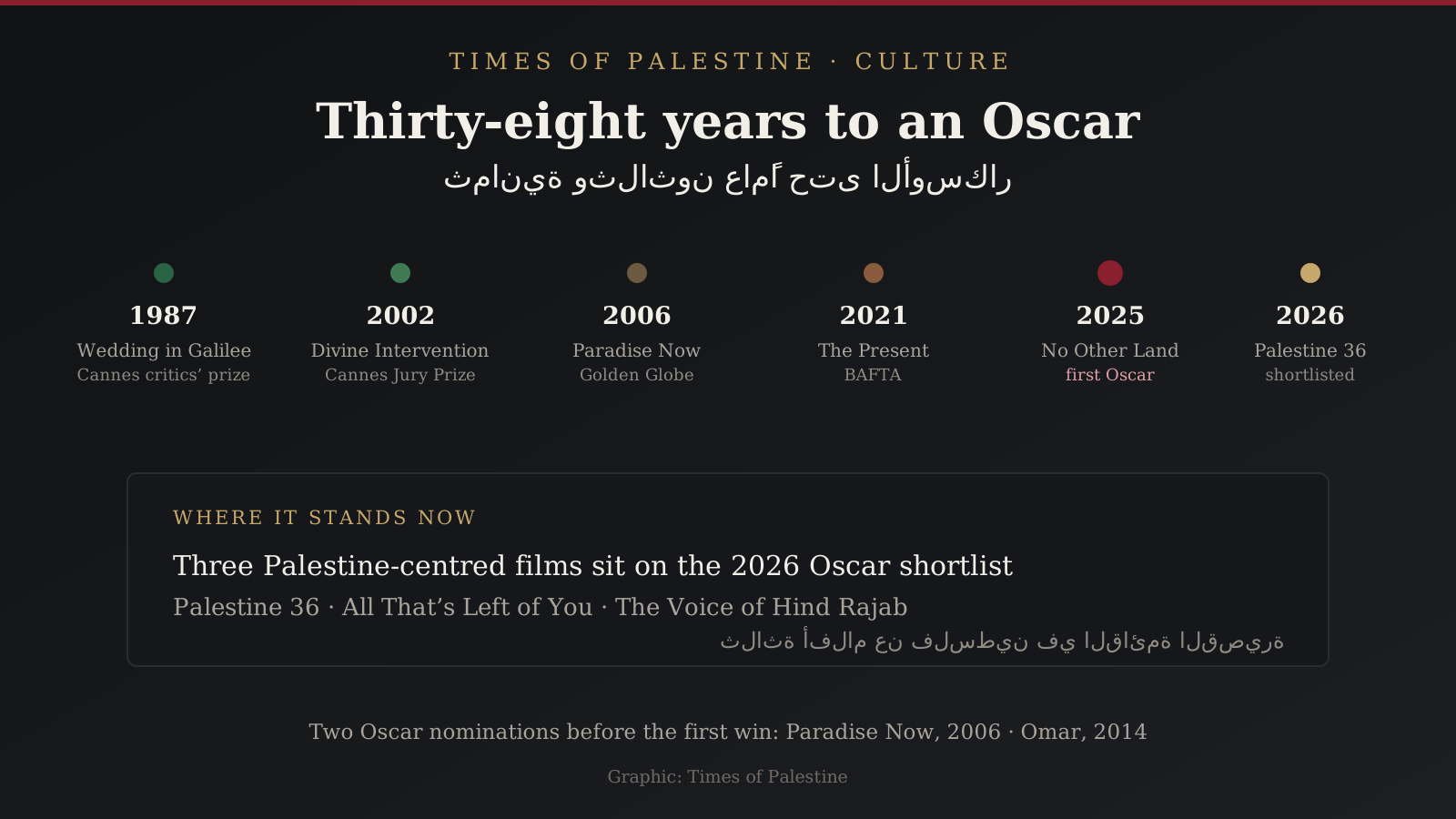
Graphic: Times of Palestine
Original Reporting
The Newsdesk gathers reporting from wire services and primary sources and rewrites every story in-house before publication. How our journalism is made →
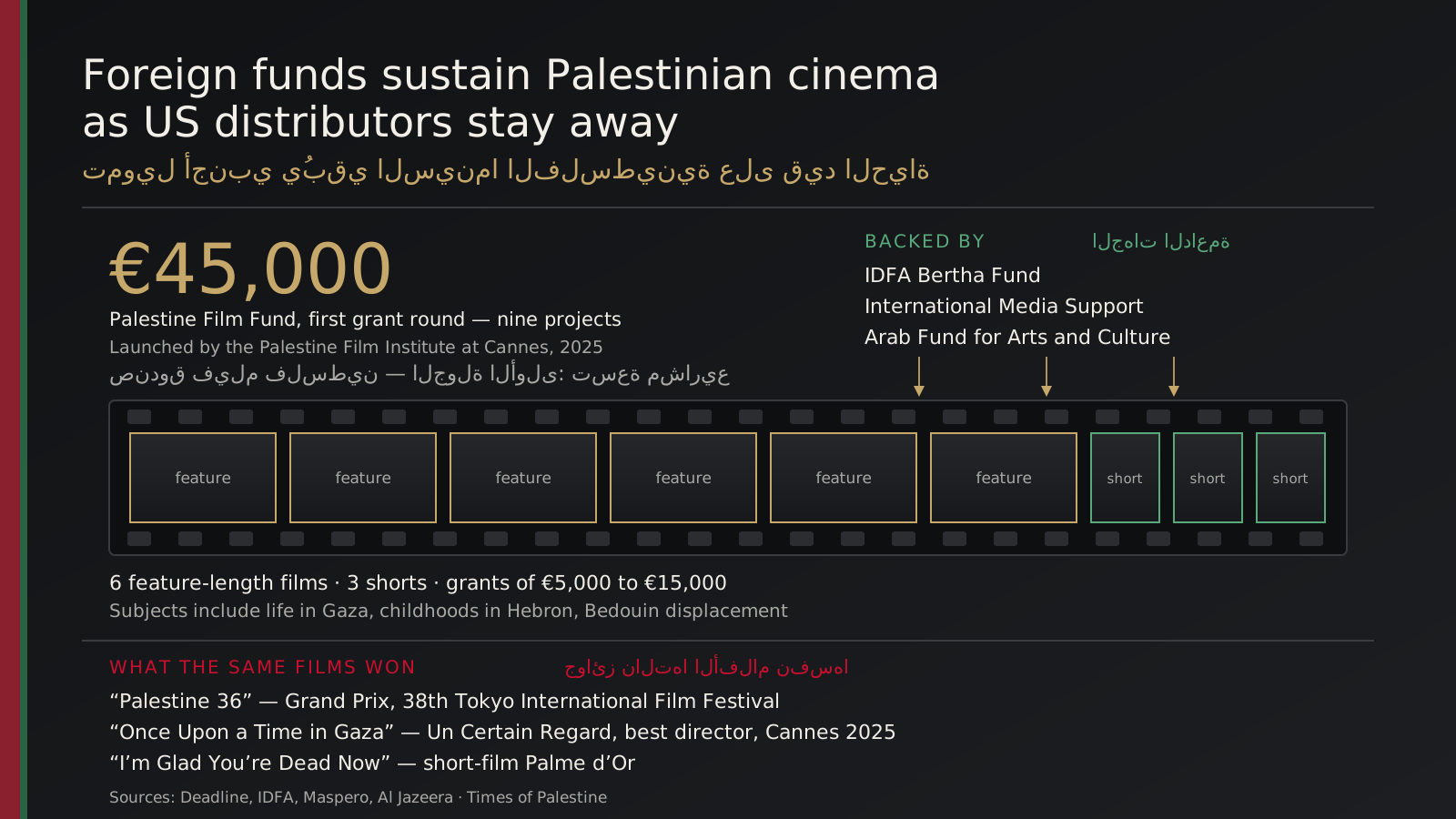
The first grant round of the Palestine Film Fund distributed a total of €45,000 among nine projects, Deadline reported in February — six feature-length films and three shorts, covering subjects including life in Gaza, childhoods in Hebron and Bedouin displacement.
That is the scale of the only dedicated pot for Palestinian filmmaking.
The fund, launched by the Palestine Film Institute at the Cannes festival in 2025, offers grants of between €5,000 and €15,000 for work in development and production, and is open to Palestinian filmmakers regardless of where they live, according to the announcement published by IDFA.
Deadline reported that its backers are the IDFA Bertha Fund, International Media Support and the Arab Fund for Arts and Culture.
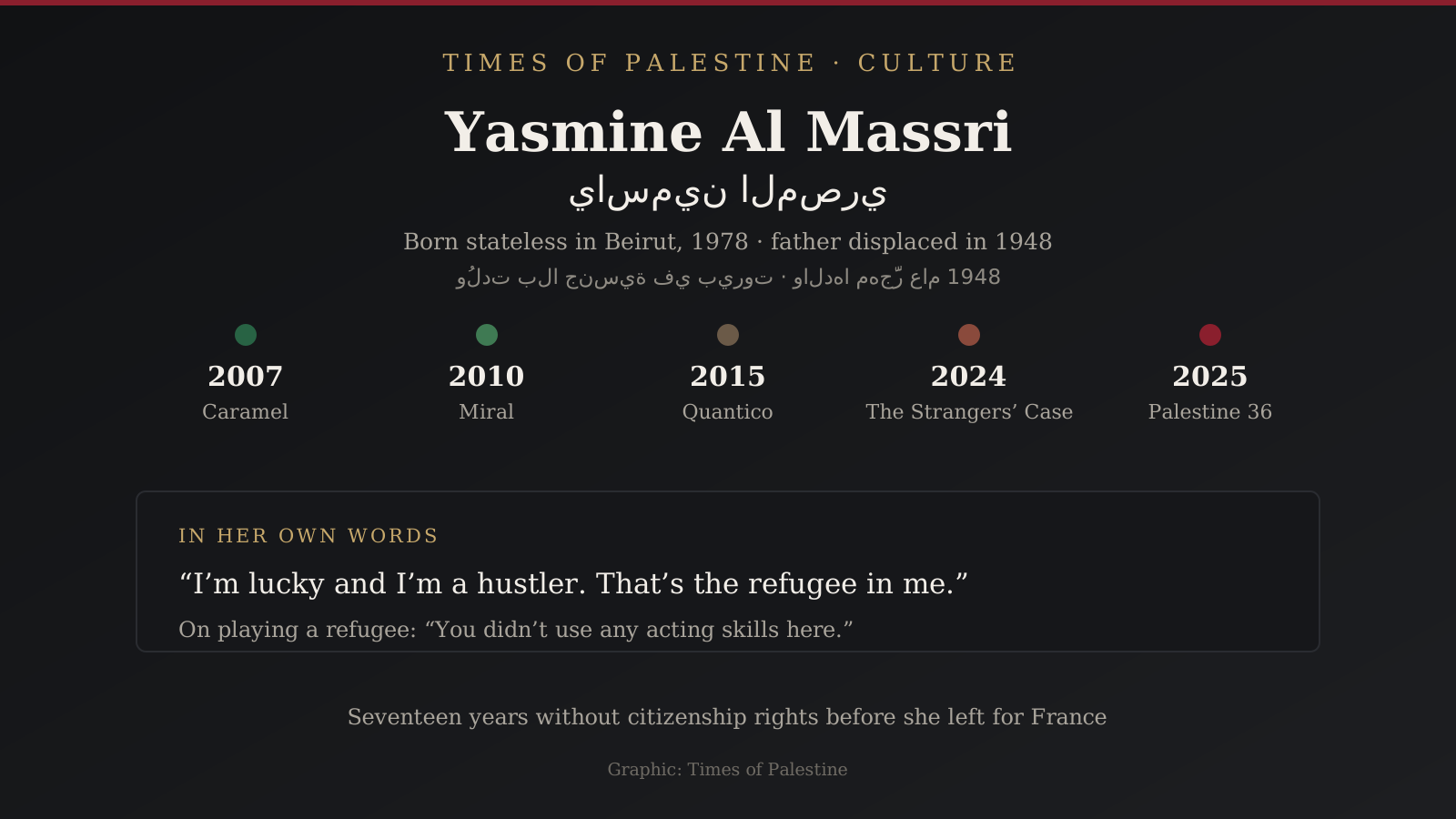
The money is small next to what the same films achieved. The Palestinian historical drama "Palestine 36", directed by Annemarie Jacir, won the Grand Prix at the 38th Tokyo International Film Festival, the Egyptian state broadcaster Maspero reported in November, becoming the first Palestinian film to take that award.
At Cannes in 2025, Deadline reported, the Palestinian brothers Arab and Tarzan Nasser won the Un Certain Regard prize for best director with "Once Upon a Time in Gaza". Al Jazeera's documentary channel reported that the festival's short-film Palme d'Or went to "I'm Glad You're Dead Now".
Behind the credits is a chain of foreign institutions. "Palestine 36" was financed as a co-production between Palestine, Britain, France, Denmark, Qatar, Saudi Arabia and Jordan, according to Emarat Al Youm and Maspero. Deadline listed "Once Upon a Time in Gaza" among the titles supported by the Doha Film Institute.
Those chains broke after October 2023. France 24 reported from Cannes that the producer of "Once Upon a Time in Gaza" said he struggled to finance the film after the Hamas-led attacks, as several partners — among them some Arab countries — withdrew funds they had pledged.
Distribution follows the same pattern of dependence. Arab-world rights to "Palestine 36" went to MAD Distribution, Emarat Al Youm reported; Reuters, in a report carried by Sharjah24, said the US and Canadian rights are held by Watermelon Pictures, the Palestinian-owned distributor launched in April 2024.
IndieWire reported that the company opened a streaming platform, Watermelon+, carrying titles including "From Ground Zero", Palestine's 2025 Oscar entry, alongside "Omar", "Five Broken Cameras" and "Theeb".
The gap that made such a company necessary was set out by the case of "No Other Land". Variety reported that the Palestinian-Israeli documentary was picked up in 24 countries, including Britain and France, but found no established American distributor and opened theatrically in the United States without one.
IndieWire reported that the film won the documentary award at the Berlinale and was shortlisted for the Academy Awards while still lacking a major US distributor. Co-director Yuval Abraham told The New York Times, in remarks quoted by the Forward, that distributors' resistance might be explained by a view that the subject is "sensitive".
Exhibitors who did show it drew official pressure. The Washington Post reported in March 2025 that the mayor of Miami Beach moved to cut city funding to an independent cinema and terminate its lease after it screened the film.
Hyperallergic reported that the resolution sought to end the lease on city-owned property and withdraw $80,000 in public grant money, and that the cinema, after initially conceding, went ahead with the screenings.
Mayor Steven Meiner described the film as "a false one-sided propaganda attack on the Jewish people", according to a report carried by Yahoo News. He withdrew the proposal after a crowded city commission meeting, NBC News reported.
An attorney representing the cinema, Daniel Tilley, told Prism that government is not obliged to fund the arts, but if it does so it must be viewpoint-neutral.
Festivals have been squeezed from more than one side.
The Hollywood Reporter reported that the Toronto International Film Festival declined to screen a Canadian documentary about October 7, "The Road Between Us", after inviting the filmmaker, then restored it to the 2025 line-up, with chief executive Cameron Bailey saying he was "committed to working with the filmmaker to meet TIFF's screening requirements".
CBC News reported protests on the festival's main strip over the screening. The Israeli outlet Mako has reported that a screening of the Lebanese film "The Insult" at the Days of Cinema festival in Ramallah was cancelled over objections to the director's earlier work on normalisation grounds.
State money carries its own conditions. A Haaretz opinion column in July described a primary campaign video in which Israel's culture minister claimed his reform had put an end to films "that Israel-haters love".
Ynet reported an earlier dispute over a film funded by Israeli sources and presented as Palestinian, in which filmmakers wrote that they regard themselves as a Palestinian national minority in Israel and expect Israeli funds to recognise that identity.
In Gaza, the industry's problem is not financing but survival.
The photojournalist Fatima Hassouna, the subject of Sepideh Farsi's "Put Your Soul on Your Hand and Walk", was killed in an Israeli strike on 16 April 2025, the day after the film's selection for Cannes' ACID sidebar was announced, according to a statement issued by nearly 400 film industry figures condemning Israeli conduct in Gaza; the same strike killed ten of her relatives, including her pregnant sister.
The statement records no Israeli military explanation for the strike.
"From Ground Zero", made as 22 short films by filmmakers inside Gaza, was produced through the Masharawi Fund for Films and Filmmakers in Gaza with Coorigines Production, Hyphen reported.
There is nowhere in Gaza to show any of it.
The Times of Israel reported that screenings there date to the 1940s and the Samer Cinema, whose building later housed a car dealership, and that cinemas were forced to close in the late 1980s during the first intifada after a 1987 fire widely attributed to Islamists.
Lit Hub reported that the Al-Amer, Al-Samer and Al-Nasr cinemas were attacked and burned in the mid-1990s. The last reported public screening at the Samer was a single night in 2017, when about 300 people watched a film about Palestinians in Israeli prisons, according to an AFP report carried by Khaleej Times.
Whether the nine newly funded projects can be shot where they are set is not established by any published record. Nor is it clear whether the American distribution market has opened to the titles that followed "No Other Land".