The Diaspora
Paris Palestinians build France's first permanent house for their culture

Image credit: Rue Ramey, Paris XVIII, 2026 — Chabe01 via Wikimedia Commons (CC BY-SA 4.0) · License
Original Reporting
The Newsdesk gathers reporting from wire services and primary sources and rewrites every story in-house before publication. How our journalism is made →
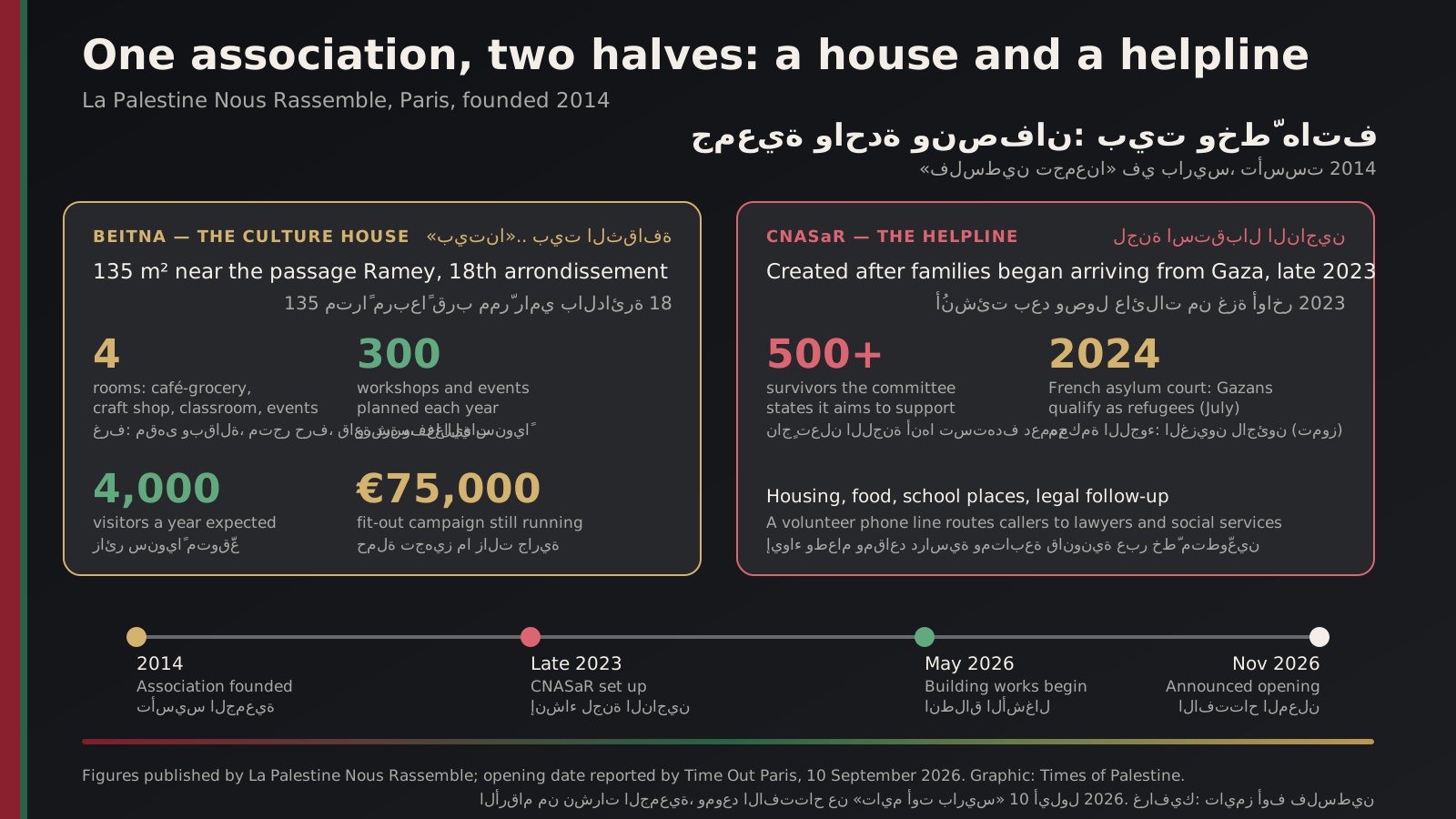
Behind a shopfront near the passage Ramey, in the eighteenth arrondissement of Paris, builders have been at work since May on 135 square metres that the street will come to know by an Arabic word. Beitna. Our house.
The association carrying the project, La Palestine Nous Rassemble, has been putting the plan to donors all year. Time Out Paris, writing on 10 September, set the opening in November and called the place the first permanent space in France given over to Palestinian culture and craft.
What goes inside is laid out on the association's own site. A café-restaurant with a fine grocery counter, a boutique for craft brought in from Palestinian workshops, a classroom that folds away, and a room for events.
Four rooms, one lease. The association expects roughly 4,000 visitors a year across some 300 workshops and evenings — dabke, calligraphy, cooking, literature, cinema, craft, argument.
A dinner served before the house existed#
On 5 May the association took over La Halle aux Oliviers at La Bellevilloise and served what it billed as a first taste of Beitna outside its own walls.
Two Palestinian chefs cooked. Ruba Khoury, who runs the Paris bar and kitchen Dirty Lemon, took the ninth season of Top Chef in the Arab world this year, a win the Beirut magazine Laha and the daily An-Nahar both carried; she works Palestinian flavours through the technique she trained in across New York and Paris. Aïda Damiri cooked beside her.
The programme published for the evening put the singer Camélia Jordana in the host's chair and the actor Manon Azem on the microphone, and billed three guests: the singer Nawel Ben Kraïem, the Nobel laureate in literature Annie Ernaux, and Nour Elassy.
Elassy is the poet and journalist who wrote through the war from Gaza and left in July 2025. Asharq al-Awsat reported this summer that French PEN had opened a campaign to fund her graduate study in Paris, after a Paris school of advanced social-science studies accepted her.
That is an unusual guest list for a room that does not exist yet. It is also the point: the association has been paying for the house by putting Palestinian work on a stage and charging for the seat.
The half of the association that answers the phone#
La Palestine Nous Rassemble was founded in 2014, by and for Palestinians in France, and for most of its first decade it did culture — the Falastiniyat series of events, workshops for young people, a founding hand in the Artists Against Apartheid network.
Then families began arriving from Gaza at the end of 2023, and the association built a second body to meet them. It is called CNASaR, the national committee for the reception and support of survivors of the genocide in Palestine, and the name is the association's own.
Its stated aim is to carry more than 500 survivors through the French system: emergency housing, food and clothing, school places for children and teenagers, and social and legal follow-up that does not stop at the first refusal.
Volunteers staff a telephone line, take the requests as they come and put callers through to lawyers and social services. Razan Nidal, the member who runs the committee, set the work out to Agence Média Palestine.
The legal ground under all of it moved once, and recently. France's national asylum court ruled in July 2024 that Palestinians from Gaza face persecution by reason of their nationality and therefore qualify as refugees under the Geneva Convention — a departure from the earlier practice of treating them as civilians caught in a war rather than people targeted as such. Agence Média Palestine traced the sequence.
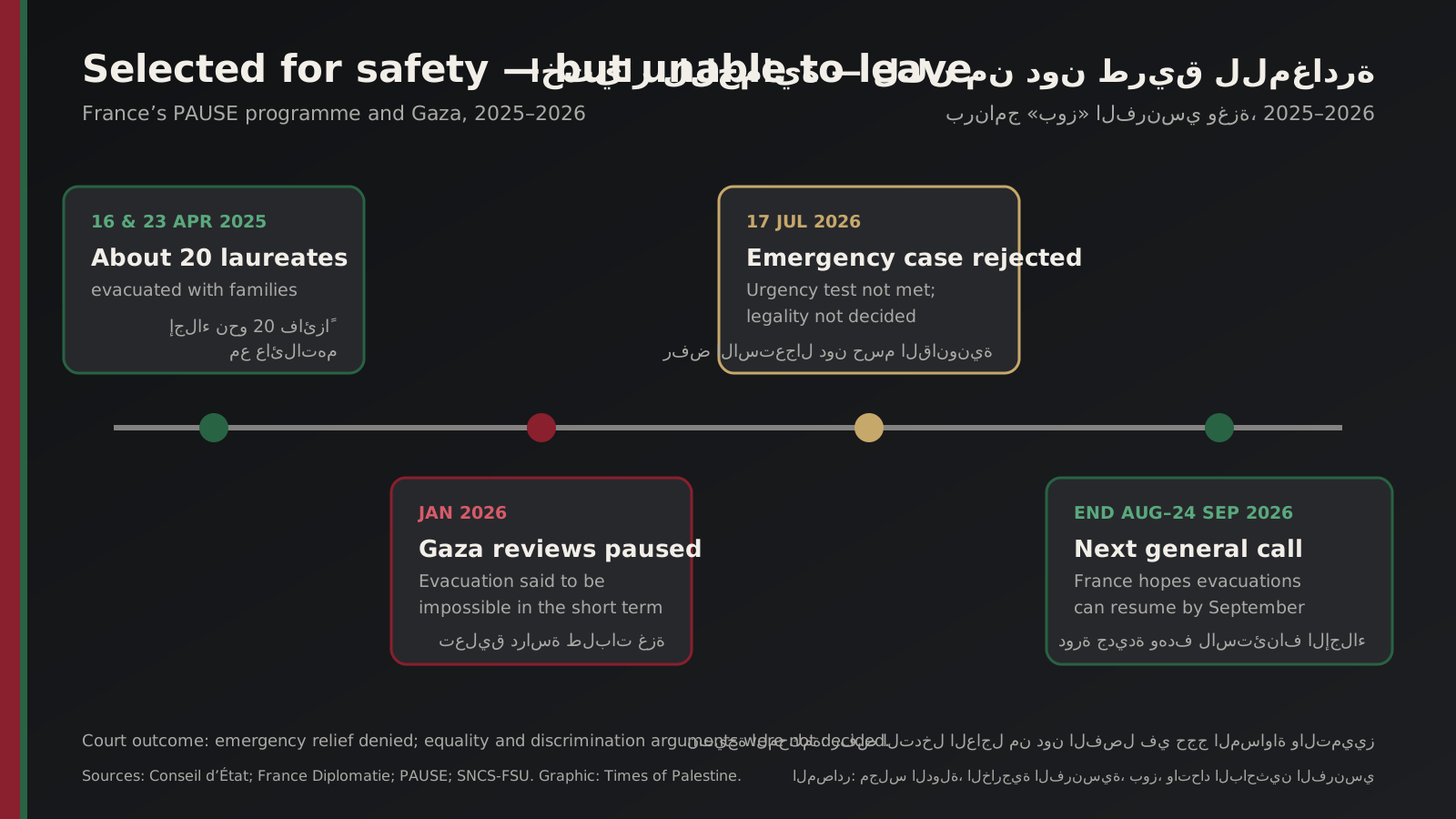
The state channel, meanwhile, opens and shuts. On 1 August 2025 the French foreign ministry suspended evacuations from Gaza pending an internal review of how one Palestinian student had been admitted, InfoMigrants reported at the time, with the minister saying no operation of that kind would proceed until the affair had been drawn to a conclusion.
That is the gap a volunteer helpline sits in. Families reunited by visa arrive with a file and no one to read it; the committee reads it.
More than 500 survivors of the genocide in Gaza: emergency housing, food, school places, and legal follow-up.
CNASaR's stated objective, as published by La Palestine Nous Rassemble
Why a lease and not a pop-up#
Paris has carried Palestinian addresses before, and lost them. Ardi, a restaurant and craft store opened in 2020 by a French-Palestinian founder, Rania, near the Porte de la Chapelle, sold tableware and keffiyehs brought straight from Palestinian workshops and cooked the recipes she had grown up on.
Sortir à Paris, which had listed it as the one address in the city where you could find Palestinian craft, marked it closed in 2023.
What is different at the passage Ramey is the structure behind the door. An association twelve years old holds the lease. Its members come from Gaza, the West Bank, Jerusalem, the 1948 territories, the camps and the diaspora, and it describes the team as Palestinians and their allies together.
The programme is booked with partners rather than improvised: the Festival Ciné-Palestine, the Mahrajan festival, the Artists Against Apartheid network it helped start. When the rapper Médine ran a solidarity raffle with that network, donating a signed piece based on his album artwork, the takings went to CNASaR, the music magazine Tsugi reported.
What the money still has to buy#
The works began in May. The fit-out did not come with them, and the association has a crowdfunding campaign running on HelloAsso for €75,000 to close the gap.
The list is domestic and exact: finish the kitchen and the counter, buy the furniture, stock the grocery shelves, put the first books and the cultural equipment in, and pay for the materials the workshops will consume. Signed lease, running works, unfinished kitchen — that is the honest position at the end of September.
Dalia, who speaks for the association, put the harder question to the French outlet Bissai last summer. How do you pass on a culture in exile, she asked, when the culture may itself have reached you from a distance.
A room with a timetable is one answer. Three hundred workshops a year is a schedule for teaching dabke steps and letter forms and a grandmother's maqlouba to people who have never stood on the ground any of it came from.
If the schedule holds, a street in the eighteenth arrondissement will have a Palestinian kitchen, a classroom and a lawyer's telephone number behind the same door before the year ends.